
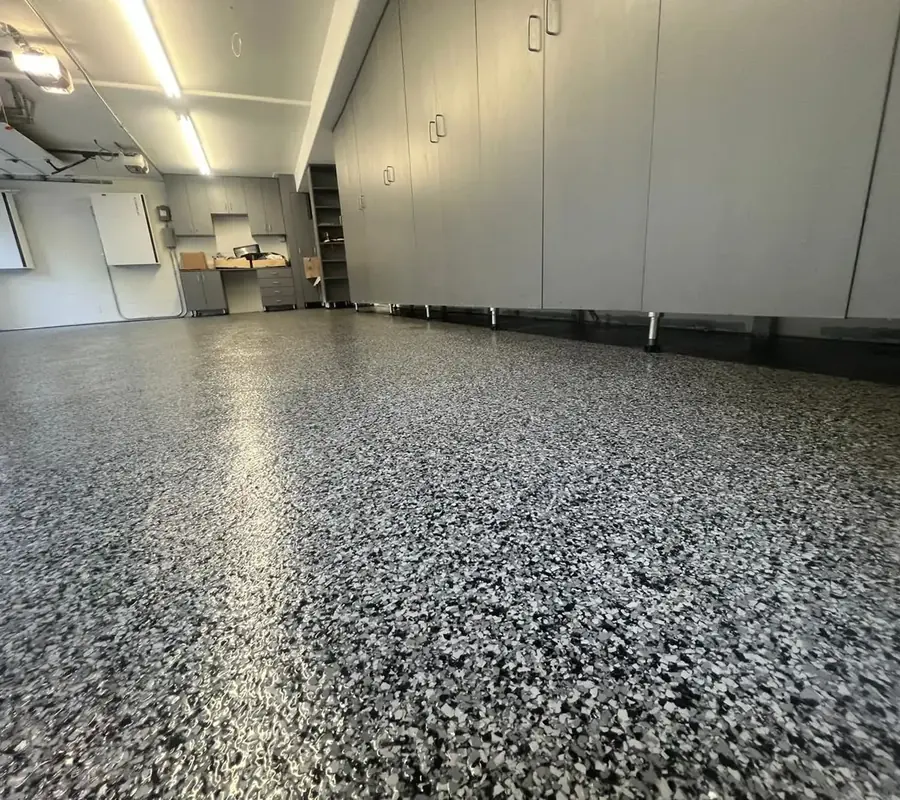
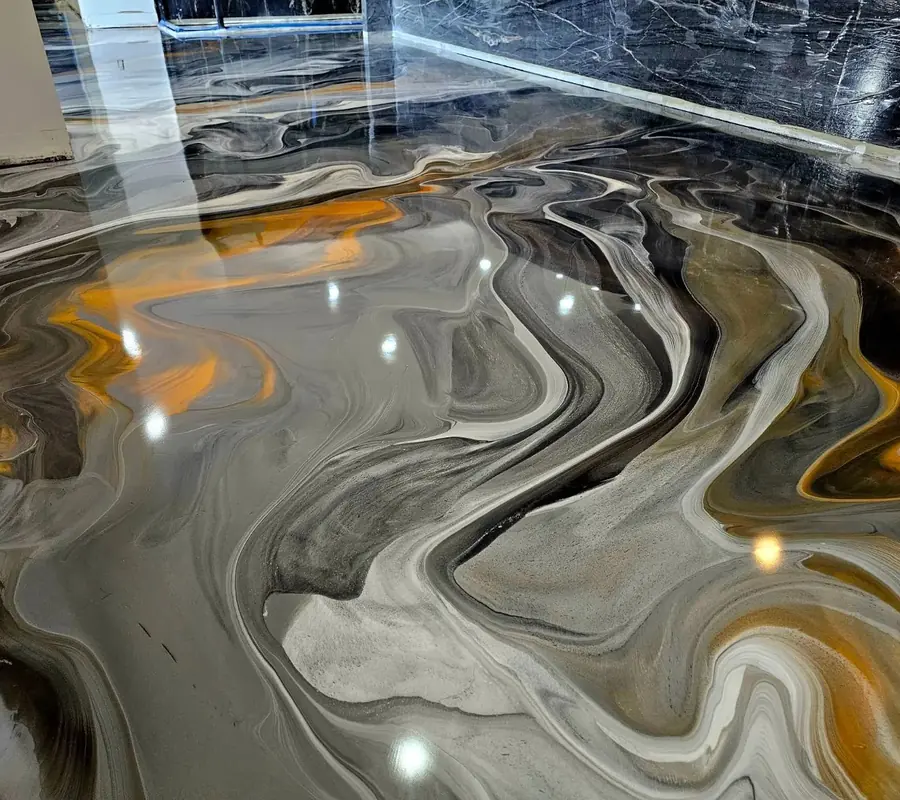
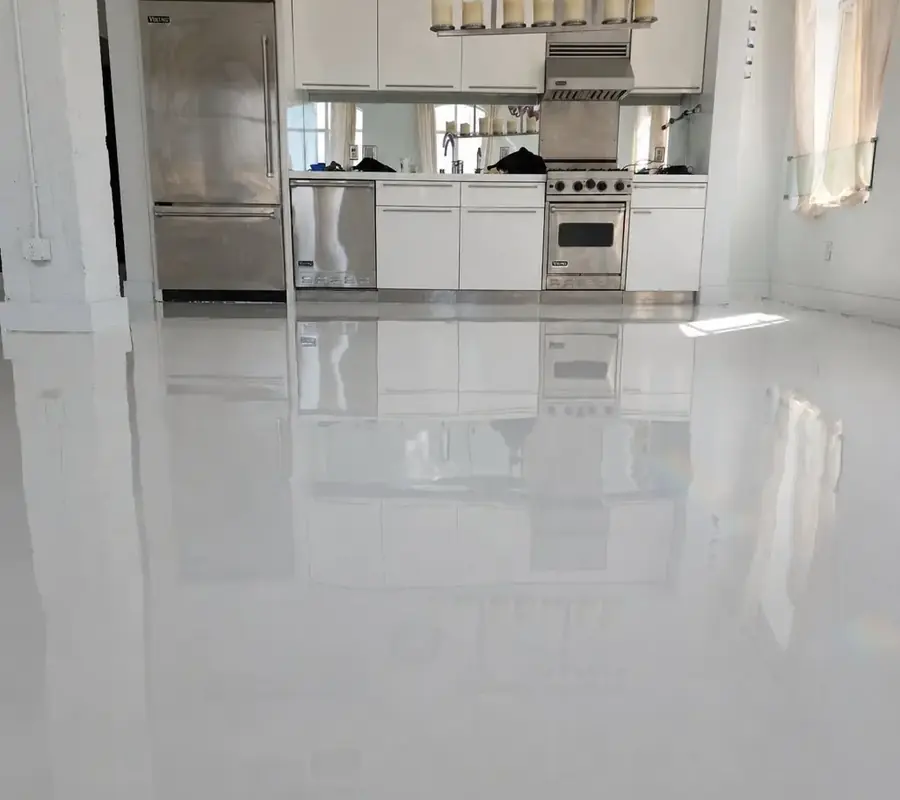
The questions people actually search for about epoxy floors, answered plainly by a Santa Clarita installer.
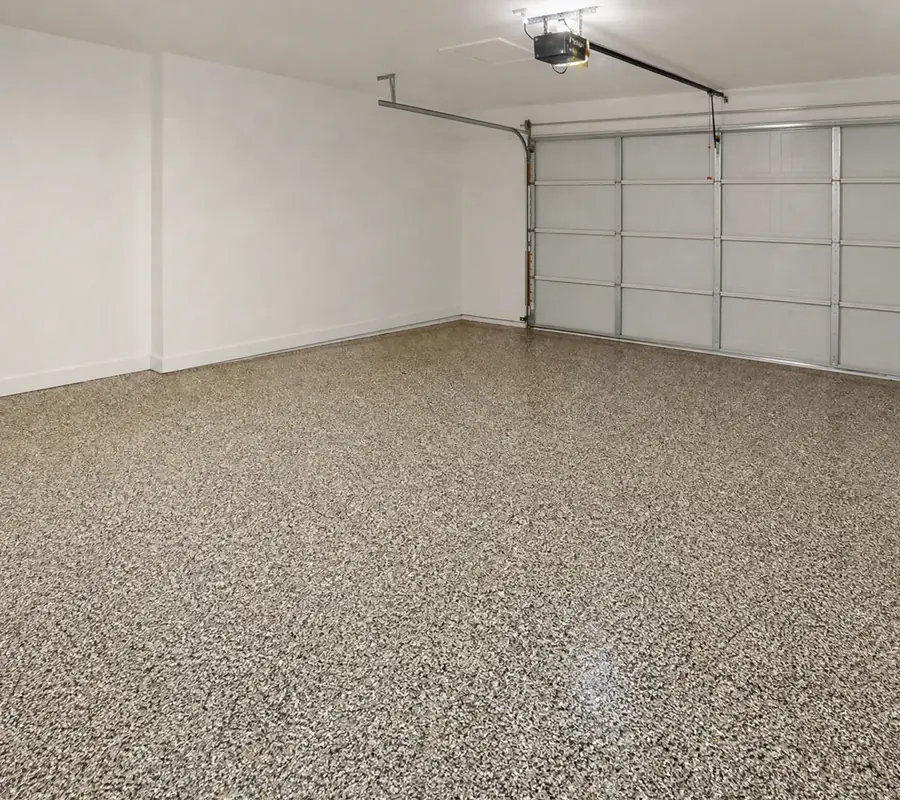
A 20x20 garage is 400 square feet. Our installed prices for it run from $2,600 to $4,000 for a flake system, with solid color, quartz, metallic, and grind and seal falling in other ranges. The final number depends on the system you choose and the condition of the slab.
Read the answer →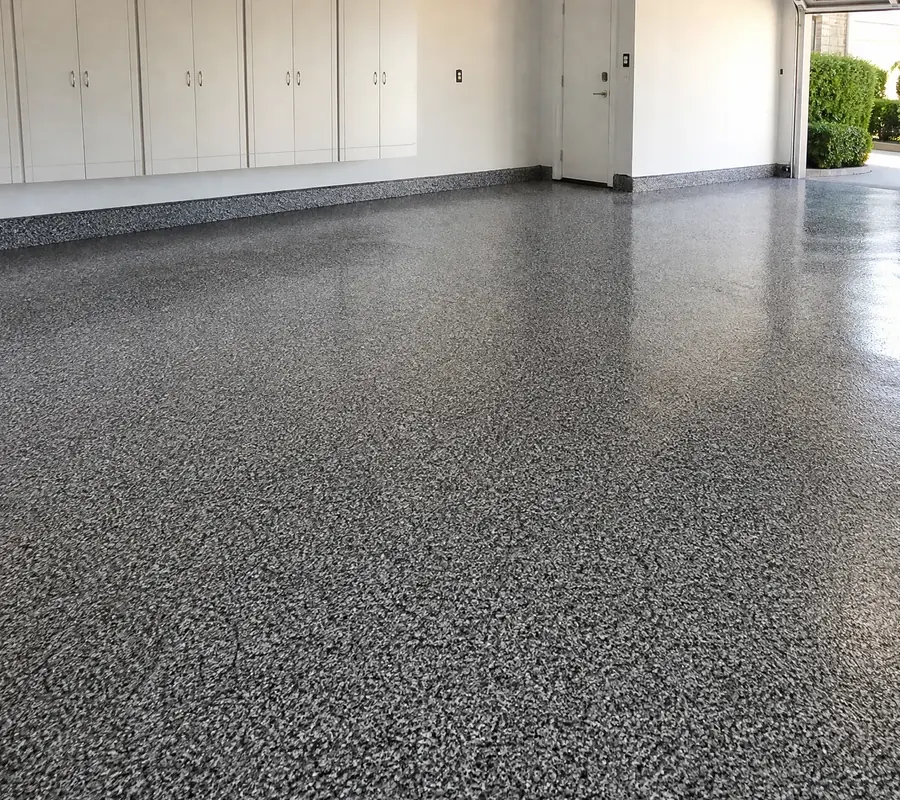
Yes, for most garages, epoxy is a good idea when the concrete is sound and the installer grinds the slab, repairs cracks, and uses a proper moisture-barrier basecoat with a UV-stable topcoat. A thin roll-on kit over unprepared concrete is where most disappointment comes from.
Read the answer →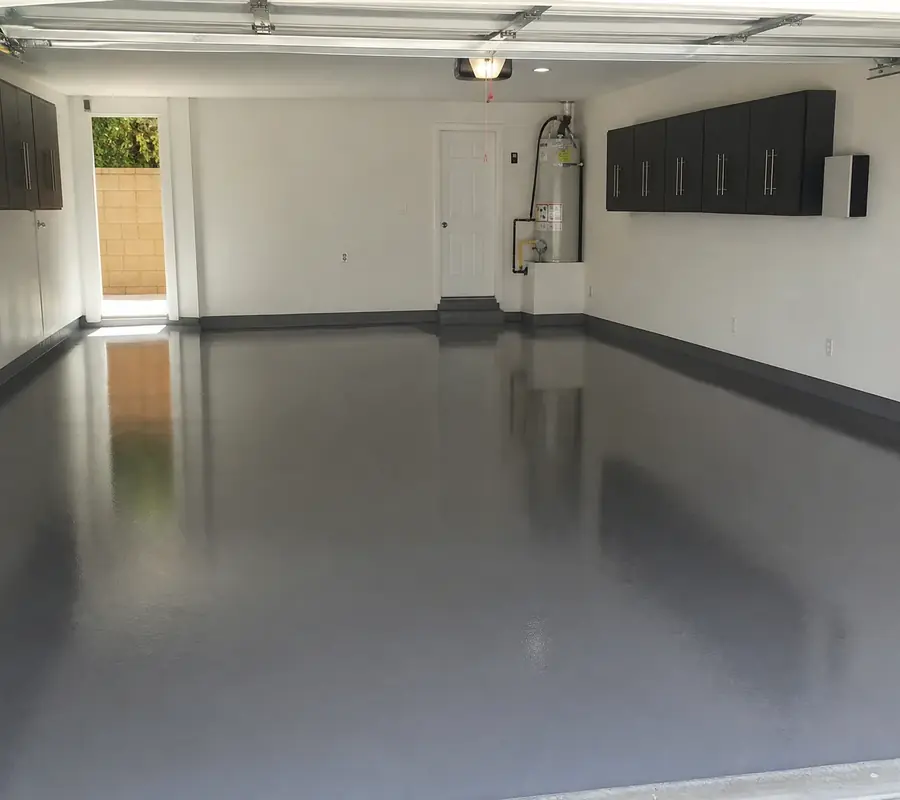
The real downsides are installation downtime, scratches under sharp impact, yellowing when an epoxy-only topcoat sees sun, slipperiness when wet without texture, and failures caused by moisture or poor prep. Most can be reduced with proper grinding, a moisture-barrier basecoat, a UV-stable topcoat, and added texture.
Read the answer →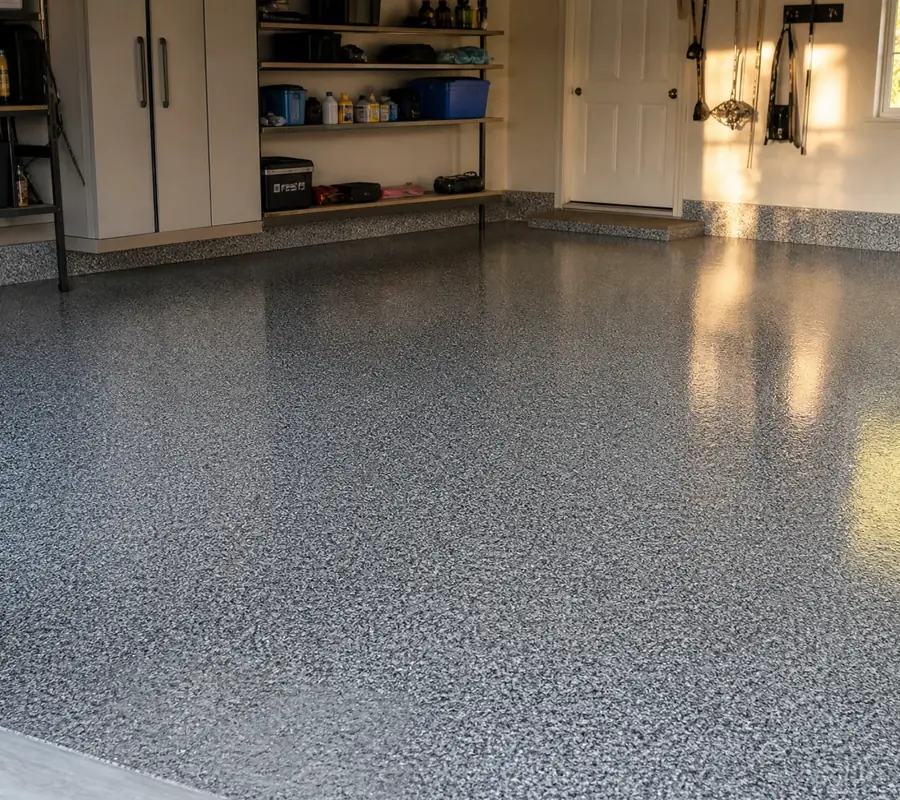
A well-prepared floor with a UV-stable topcoat usually looks much like it did at install, with some loss of gloss and light surface marks where cars and tools see the most use. Floors with thin coatings, plain epoxy topcoats, or poor prep can show yellowing, scuffing, or lifting by year five.
Read the answer →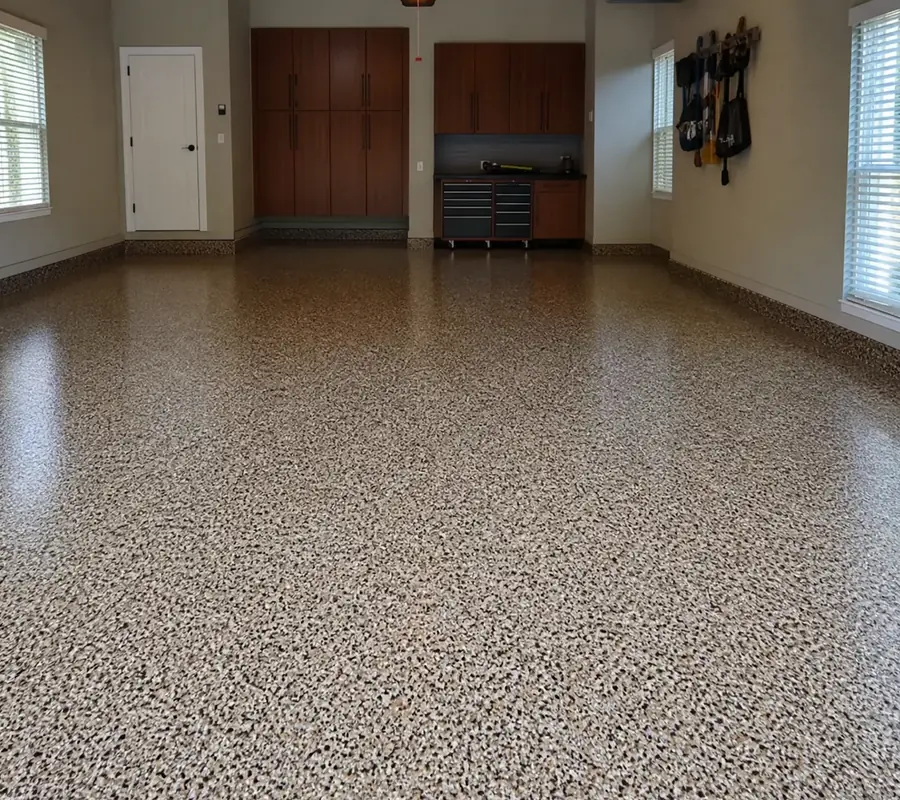
Choose flake for the best value and the most forgiving look, solid color for a clean uniform floor, and metallic for a one-of-a-kind showpiece. Flake takes about one day, solid color three days, and metallic three to four. Flake costs $6.50 to $10 per square foot, solid $9.50 to $11.50, and metallic $12.50 to $18.50.
Read the answer →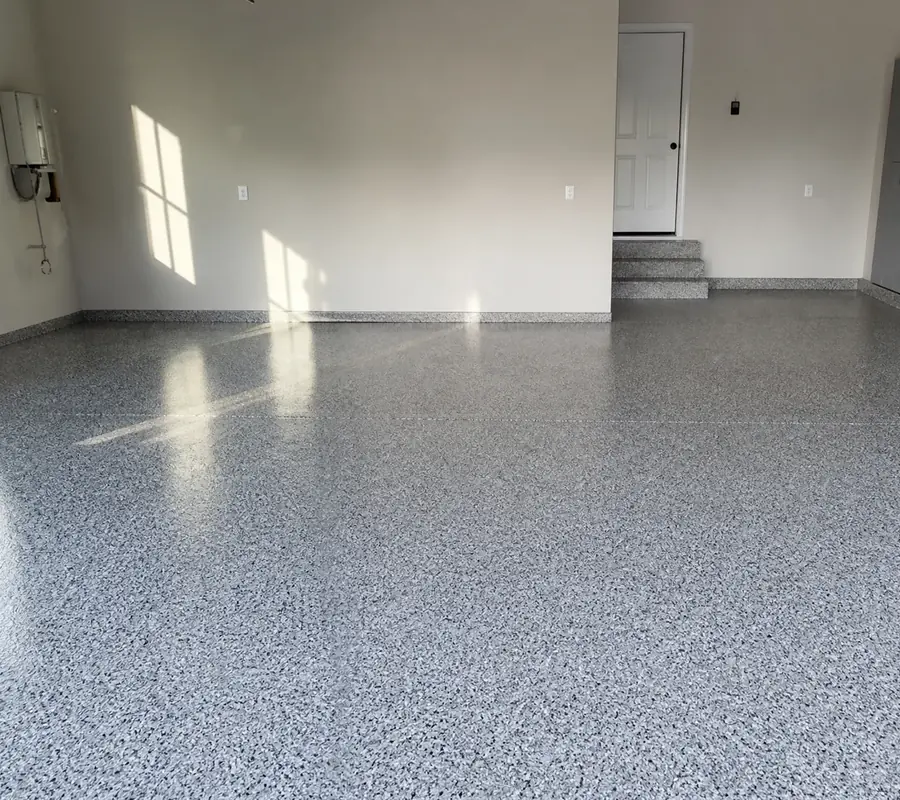
Neither is simply better. Epoxy bonds well to prepared concrete, builds thickness, and works as a moisture-barrier basecoat. Polyaspartic resists sun yellowing and cures fast, which makes it a strong topcoat. For most garages the best system pairs an epoxy basecoat with a polyaspartic topcoat, so each material does the job it does best.
Read the answer →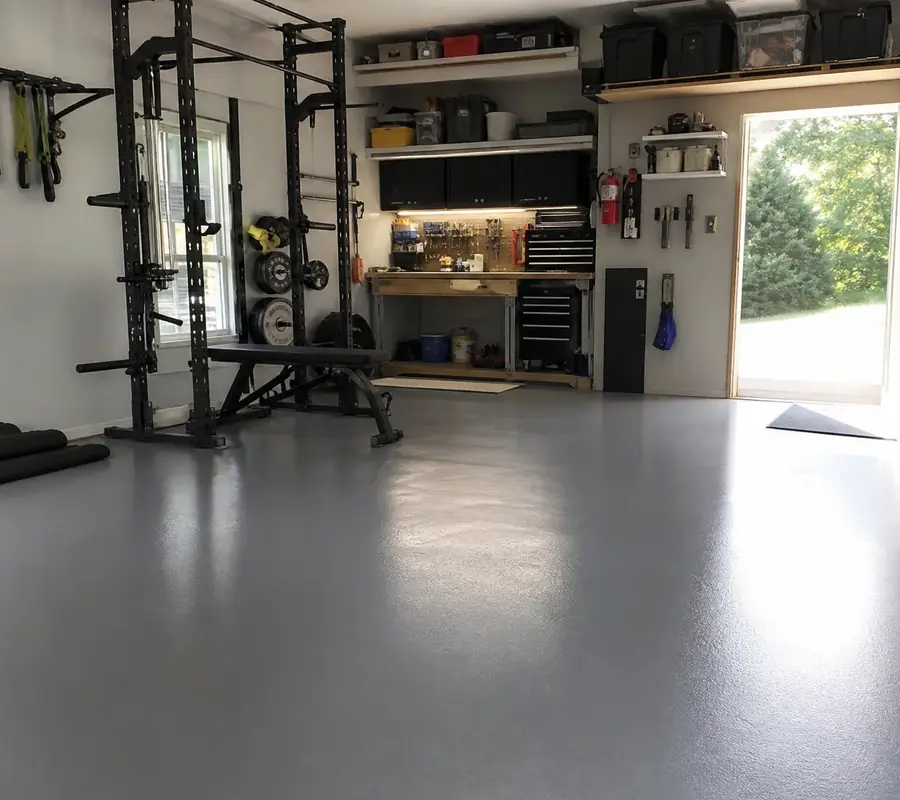
Hot tire pickup is when warm tires soften or pull at a garage floor coating, leaving marks, ridges, or peeled patches where the tires sit. You prevent it with thorough diamond grinding, a well-bonded quality basecoat, a UV-stable polyaspartic topcoat, and giving the floor its full cure time before parking.
Read the answer →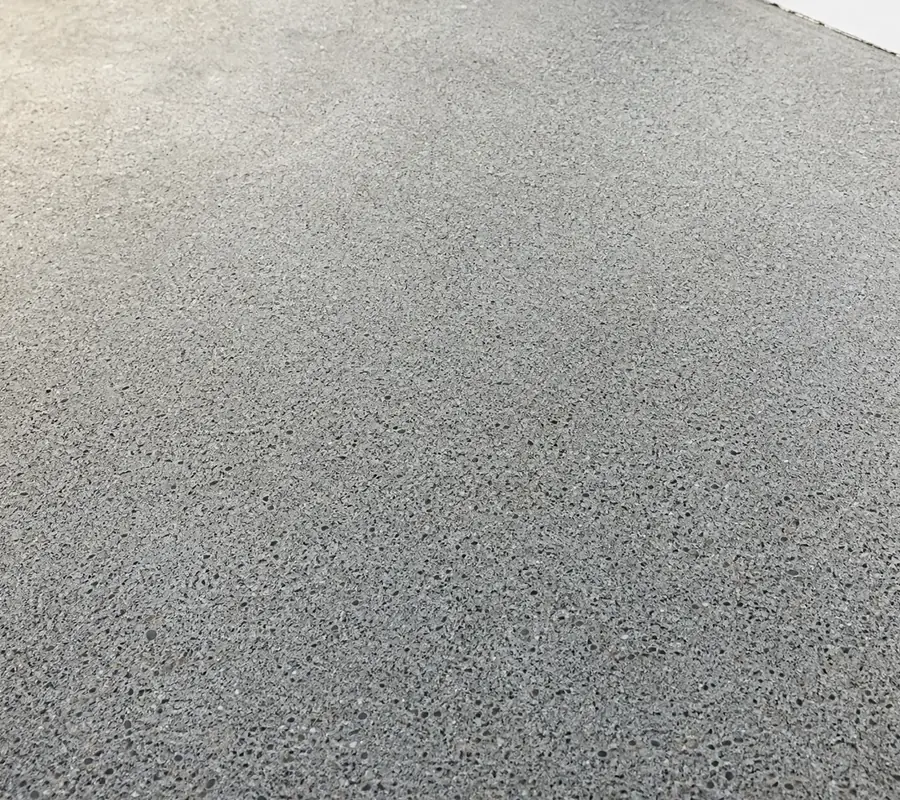
Epoxy peels when it never bonded properly to the concrete. The usual causes are poor surface preparation, moisture vapor rising through the slab, a thin or low-quality coating, oil or old sealer left on the surface, and driving or parking on it before it cured. Fixing it means removing the failed coating and re-preparing the slab.
Read the answer →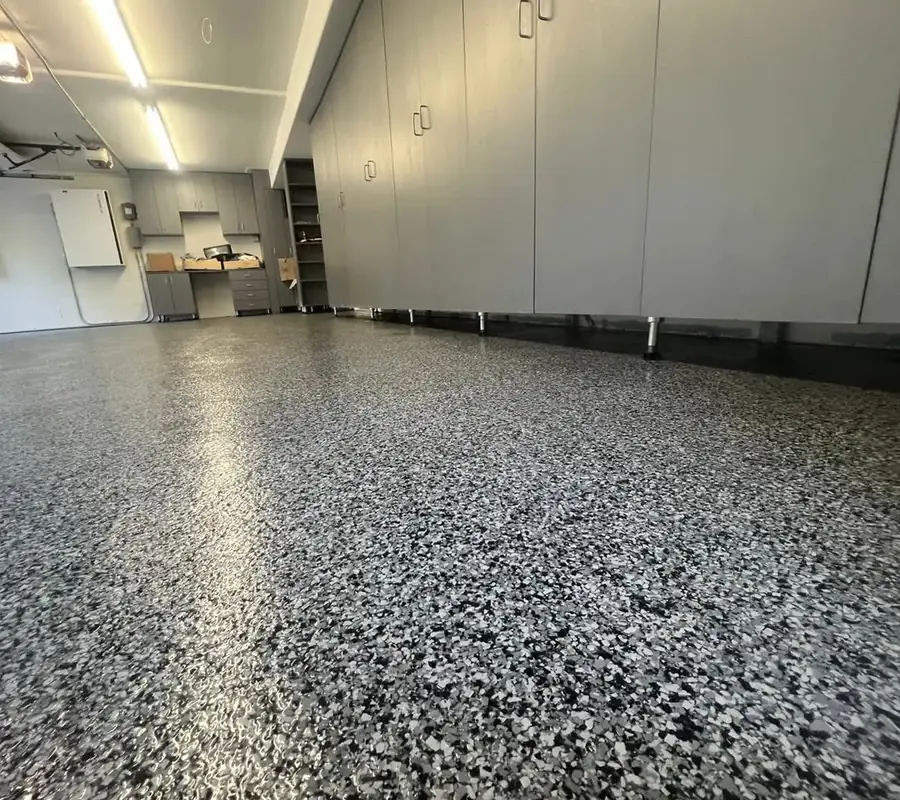
It depends on the coating system, the products used and the temperature, so get a return-to-service date in writing. Expect to walk on the floor first, drive on it later, and reach full cure after that. Install time is a separate number: flake takes one day, solid color three, metallic three to four, quartz two to three.
Read the answer →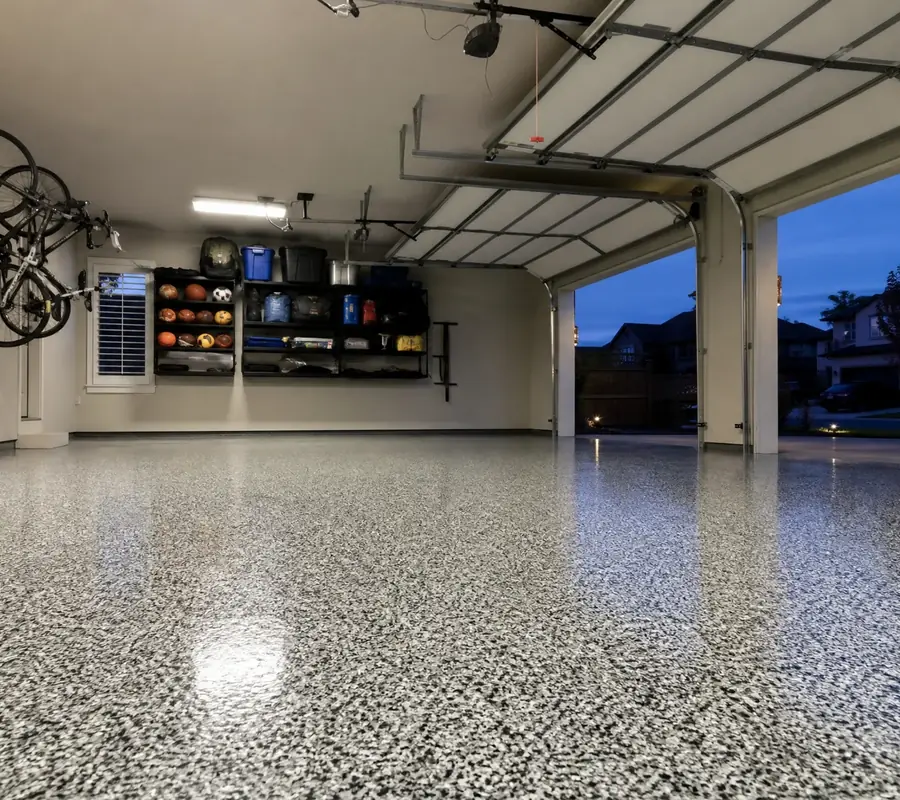
A properly prepared and fully cured floor generally handles Santa Clarita summers well, but heat exposes weak spots. The main risks are hot-tire pickup on a poorly cured or poorly prepped coating, yellowing near sun-facing doors, and hot surfaces underfoot. Diamond grinding and a UV-stable polyaspartic topcoat address most of them.
Read the answer →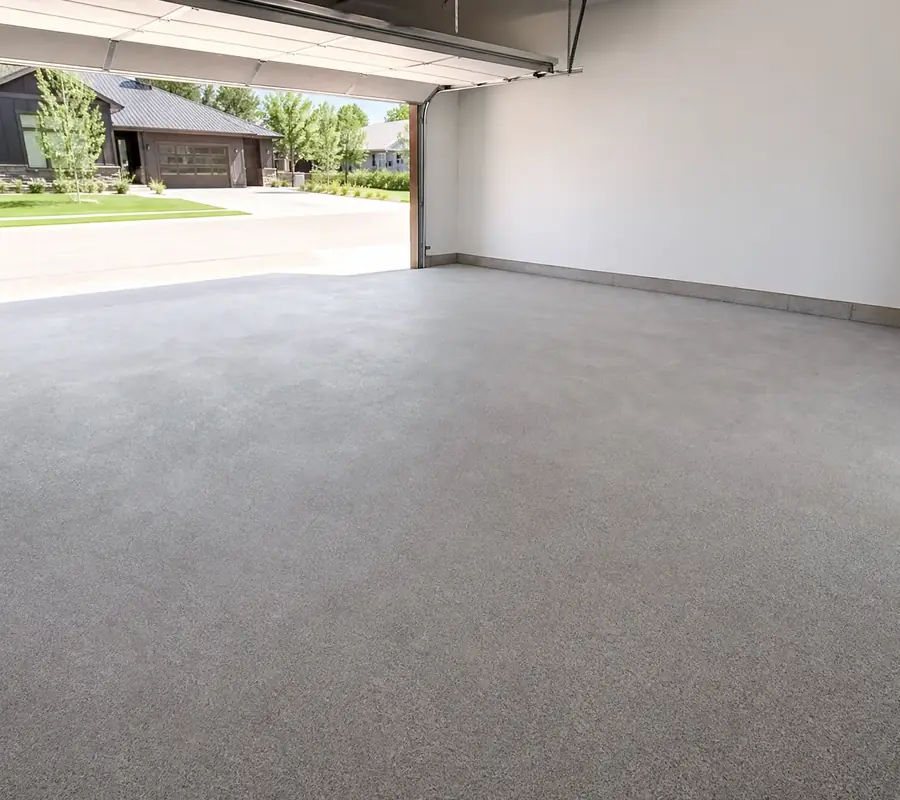
Yes, you can epoxy a garage floor with cracks and stains, but not by simply rolling coating over them. Cracks should be repaired, oil stains need to be ground out or treated, and the slab must be prepared first. Wide or shifting cracks may need a closer look before any coating goes down.
Read the answer →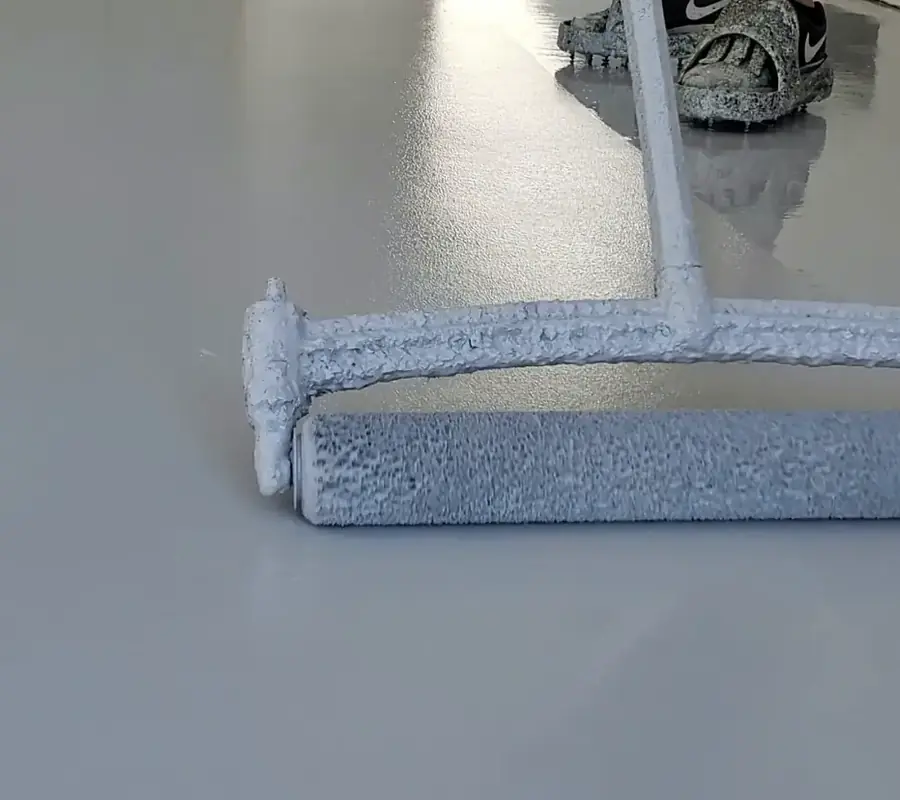
It depends on your slab and your tolerance for risk. A DIY kit can work on a clean, dry, sound garage floor if you grind properly and follow cure times, but most kits are thin and offer no moisture protection. A professional flake system runs $6.50-$10 per square foot and is built to last longer.
Read the answer →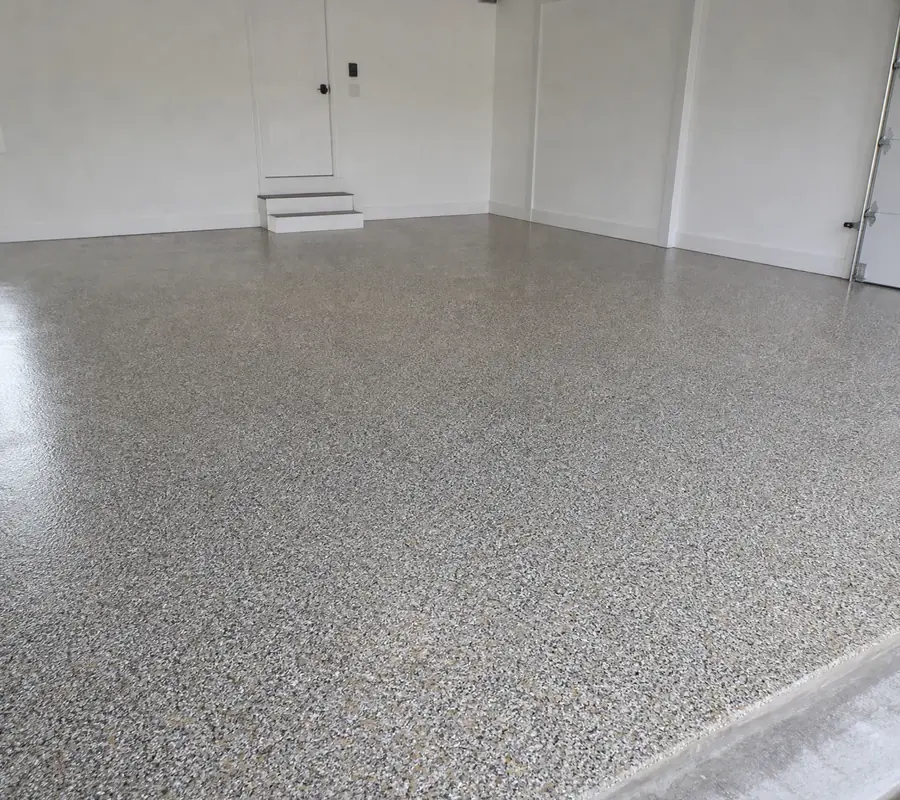
There is no honest single number, because lifespan depends on the system and the conditions. A floor with proper diamond grinding, a moisture-barrier basecoat and a UV-stable topcoat can stay in good shape for a long time. Poor prep, moisture, sun and hot tires shorten it, and the topcoat usually wears first.
Read the answer →
We cannot tell you your association's rule, because HOA documents differ from one community to the next. Check your CC&Rs and ask the board or management company whether a garage floor coating needs approval. For permit questions, ask the City of Santa Clarita Building and Safety. Get every answer in writing before work starts.
Read the answer →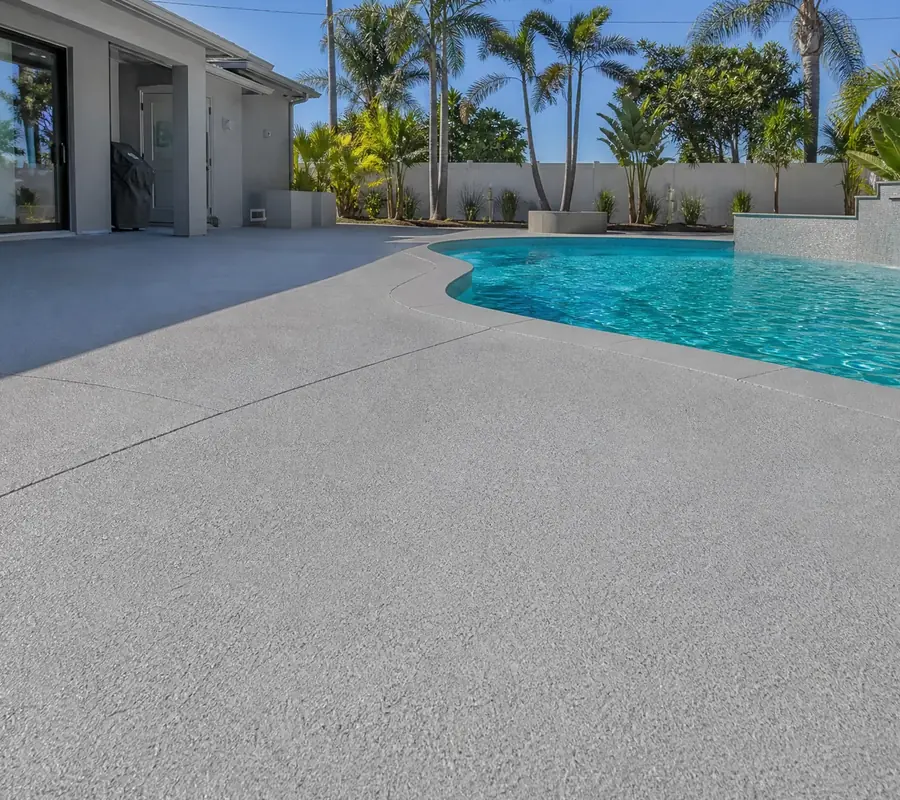
An epoxy-based pool deck coating is a thin resin film bonded to prepared concrete, while cool deck resurfacing is usually a thicker, textured cementitious or similar overlay made to stay cooler underfoot. Both cover worn concrete. They differ in thickness, heat, grip, color options and repair. Outdoor concrete coatings here run $8-$12 per square foot.
Read the answer →See how a garage floor is built, compare flake, solid color and metallic systems, pick a shade from the color chart, browse finished floors or book a free estimate.
Call (661) 457-5812 or send the form at the top of the page.