
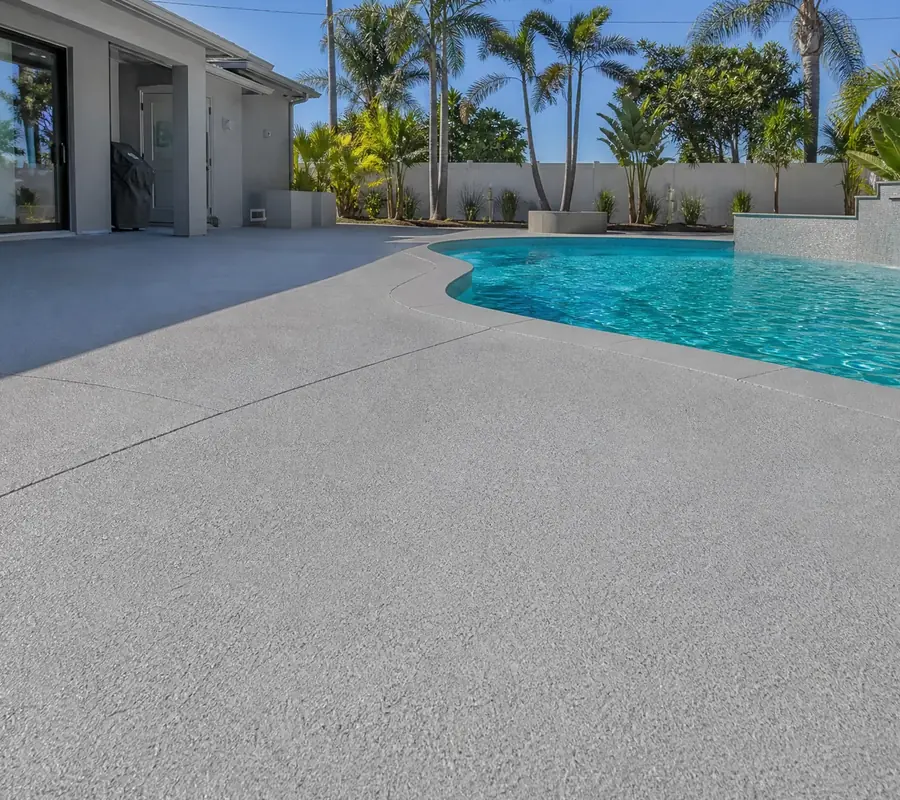
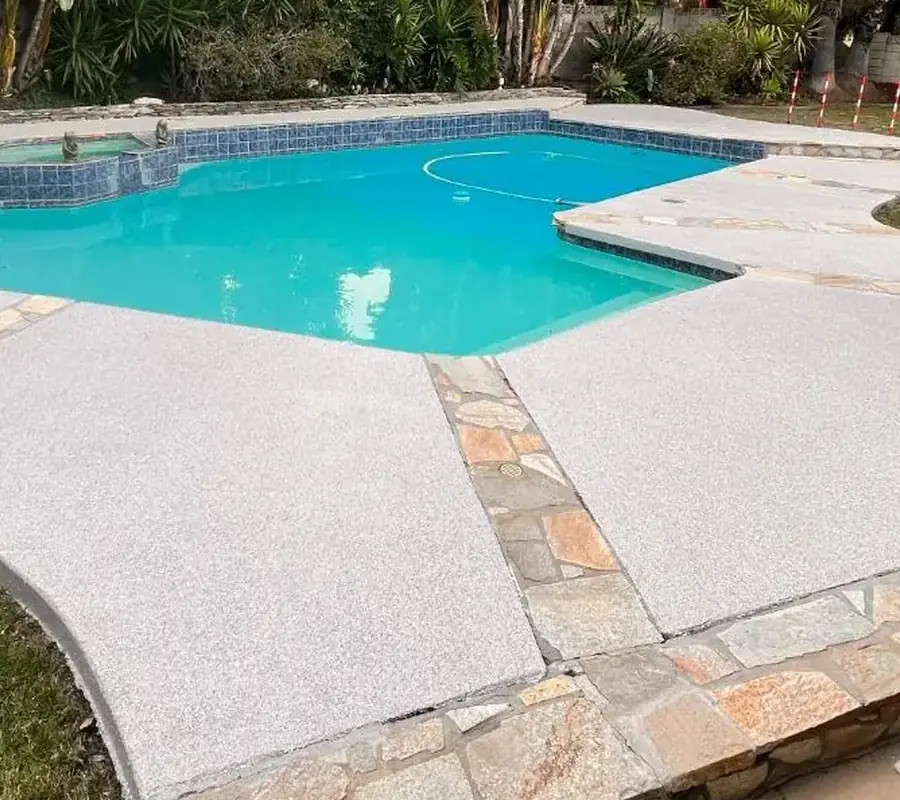
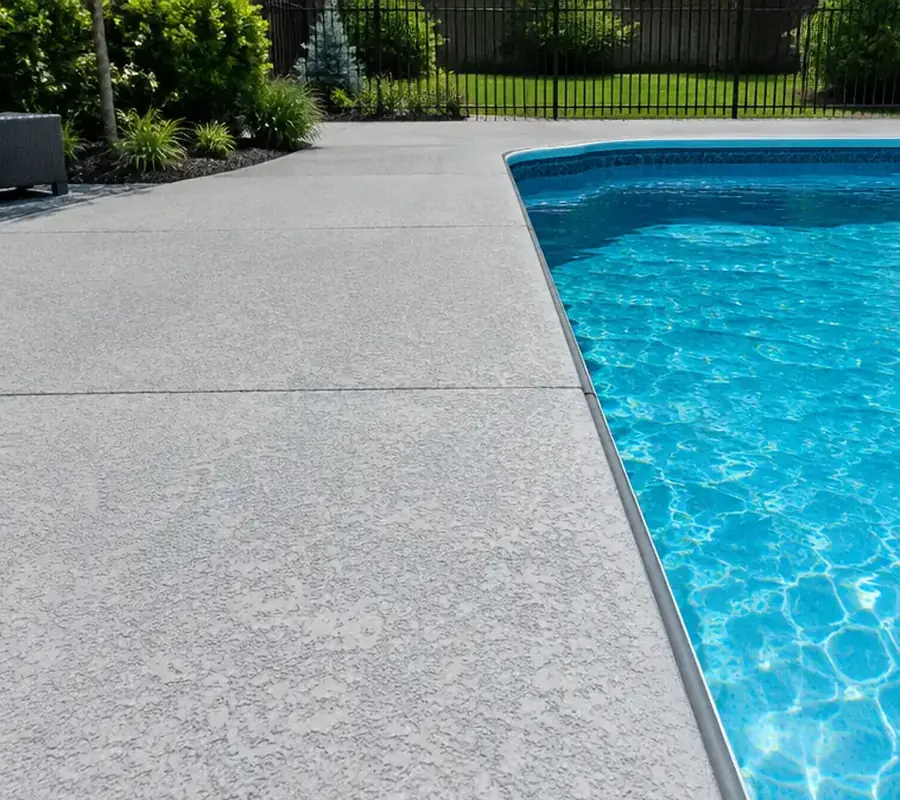
An epoxy-based pool deck coating is a thin resin film bonded to prepared concrete, while cool deck resurfacing is usually a thicker, textured cementitious or similar overlay made to stay cooler underfoot. Both cover worn concrete. They differ in thickness, heat, grip, color options and repair. Outdoor concrete coatings here run $8-$12 per square foot.
An epoxy-based pool deck coating is a thin resin film bonded to prepared concrete, while cool deck resurfacing is usually a thicker, textured cementitious or similar overlay made to stay cooler underfoot. Both cover worn concrete. They differ in thickness, heat, grip, color options and repair. Outdoor concrete coatings here run $8-$12 per square foot.
Pool deck concrete takes a beating from sun, chlorinated water, sunscreen, furniture and bare feet. When it cracks, stains or gets rough, homeowners usually compare two paths: a resin coating or a cool deck style resurfacing. The names get used loosely, so the comparison can be confusing. This post explains how each approach works, where each one has strengths and limits, and what questions to ask before you commit. It is written for Santa Clarita Valley yards, where summer sun is intense and a deck that burns your feet is not a minor annoyance. We will stay practical and note where the right answer depends on your pool and your slab.
A resin pool deck coating, such as an epoxy or polyaspartic system, is built in layers over a ground concrete surface: a primer or basecoat, color or broadcast media, and a clear UV-stable topcoat. It is thin compared with a cement overlay and follows the shape of the slab underneath. Cool deck resurfacing usually means a cementitious or acrylic-modified overlay, troweled, sprayed or stamped on, that is textured and lighter in color to stay cooler. Products vary a lot, and some brands are sold under their own names. So when you compare quotes, ask for the actual system: the layers, the thickness, the topcoat and the manufacturer data sheet. Two proposals that both say pool deck resurfacing can describe very different products, and the paperwork will show you the difference. The thickness matters for more than looks. A thin film shows the profile of the slab beneath it, including minor cracks and joints, while a thicker overlay can hide more surface roughness. A coating, in turn, is usually easier to clean and tends to keep the original grade and drainage of the deck, which matters near the pool edge.
Dark and glossy surfaces absorb more heat, and any concrete in direct sun can get uncomfortable. Cool deck overlays are formulated to reflect heat and are usually light in color, which is their main selling point. Resin coatings can be made in lighter colors too, and a light flake or quartz blend usually stays more comfortable than a dark solid color. Even so, no outdoor surface stays cool in an extended heat wave, so we do not promise a number. Sun also matters for the coating itself. Epoxy alone can yellow or chalk under constant ultraviolet exposure, which is why outdoor systems use a UV-stable polyaspartic topcoat. If bare feet matter most to you, choose a light color, ask for a sample board and test it on a sunny afternoon with your own hand before deciding. Color choice is the practical lever. Pale tan, light gray and off-white blends reflect more sun than deep browns, blues or charcoal, which can feel hot in the afternoon. Keep in mind that nearby walls, reflected light off the water and the time of day all change how a deck feels, so a sample is better than a guess.
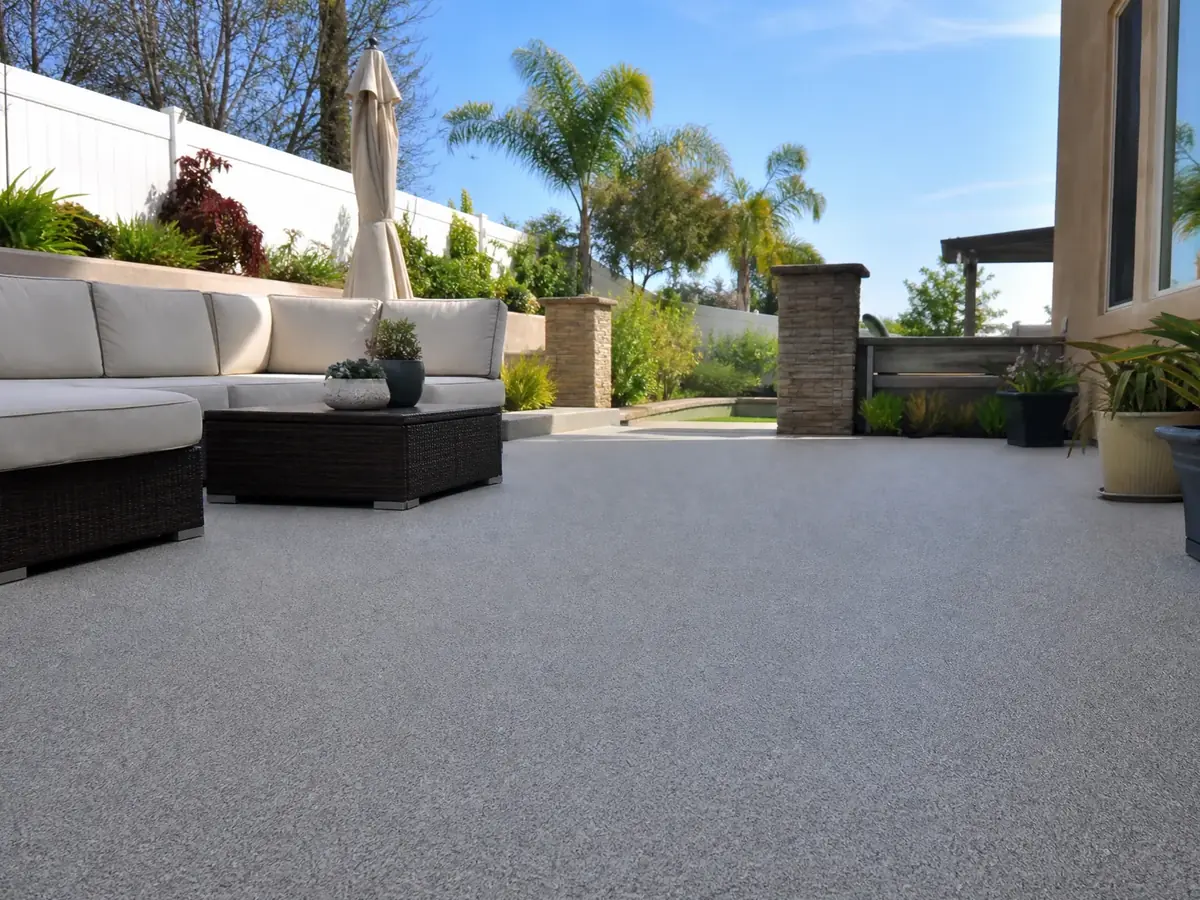
A smooth, wet resin surface is slippery, so any coating near a pool needs texture. In a resin system that can be a broadcast of quartz or sand, an aluminum oxide additive in the topcoat, or a flake blend with a textured finish. Cool deck overlays get their grip from the texture of the material itself, which is often a light broom or knockdown pattern. More texture means more grip and also more scrubbing when you clean, and it can feel rough on bare feet. Pick the level that suits your household, especially if there are children or older swimmers. Ask the installer how traction is built into the system, and do not accept a plain gloss finish for a surface that will be wet. Wet-foot traction should be a design decision from the start, not an afterthought. Maintenance habits affect grip as well. Algae, sunscreen film and mineral deposits from hard water can make a textured surface slicker than it was when new. Regular rinsing and an occasional scrub with a soft brush keep the texture working, and they are cheaper than replacing a surface that has become slippery from neglect.
Pool decks see chlorine or salt, splash-out, sunscreen oils and furniture feet. Resin coatings are non-porous once cured and can be wiped and rinsed, which helps with stains. Cement-based overlays can be more porous unless sealed, and they may need resealing as part of upkeep. Neither is immune to damage, and moisture in the slab remains a risk for both, especially with irrigation and hillside lots. Cracks have to be repaired before coating, and active movement cracks can reflect through any thin surface. Ask how the system handles expansion joints, the edge at the coping and the transition to the pool shell. Because pool chemistry varies, ask the installer to confirm that the product is rated for pool-deck use and splash exposure, and read the manufacturer data before work starts. Drainage and the slab itself matter just as much as the product. Water should run away from the house and off the deck instead of ponding, and a surface that holds puddles stays slick longer and stains faster. If your deck has low spots, ask whether they can be addressed first, because no coating fixes a slope problem.
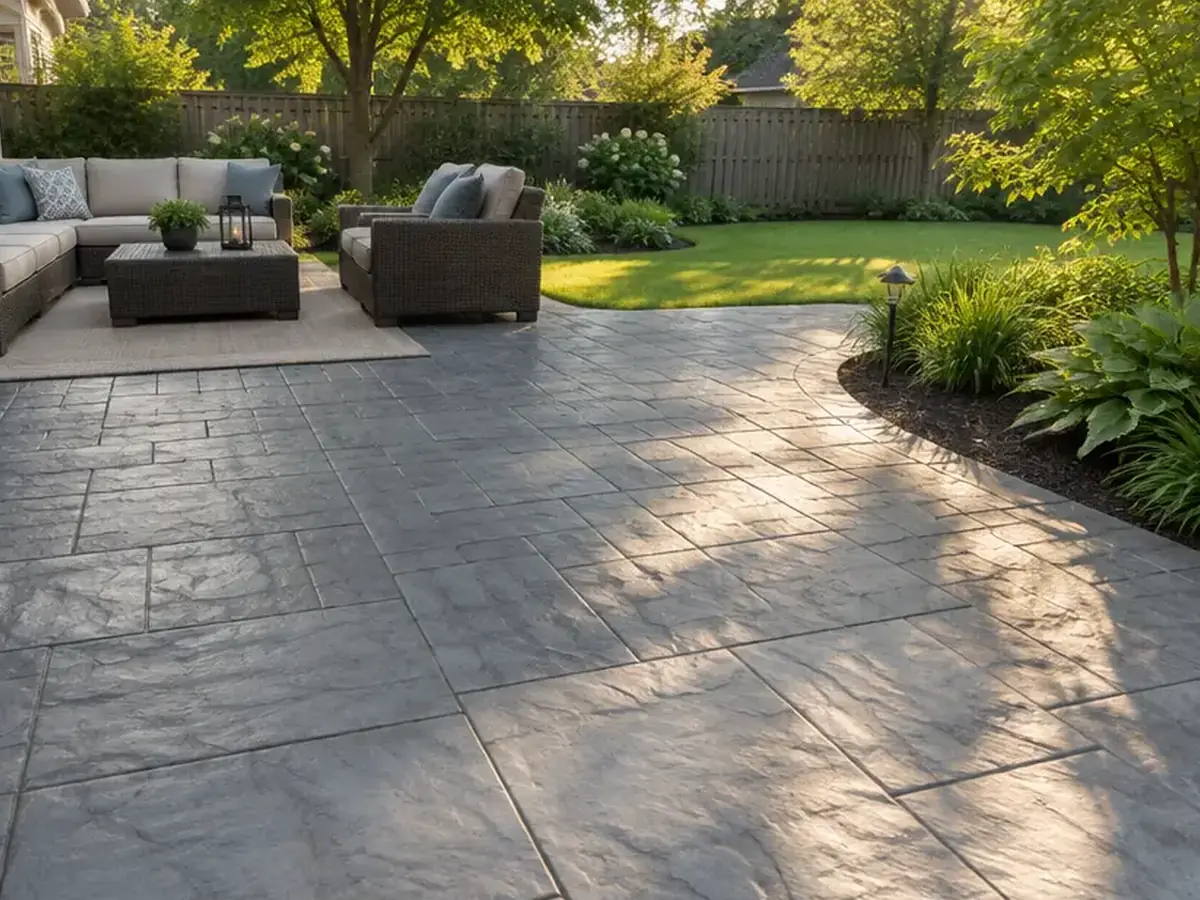
Outdoor concrete coatings such as patio, driveway and pool deck work are $8-$12 per square foot with us, or $3,200-$4,800 for a typical project, and larger areas are quoted after a visit. Cool deck resurfacing is priced by the installer and product, so compare each line item, not just a total. Repair is another difference. A resin coating can often be recoated after light surface prep, while an overlay may need patching that can show a color or texture difference. Residential outdoor work from us carries a 3 year warranty. To choose, weigh heat, grip, color, upkeep and budget, and look at real finished decks in similar sun. If you want a clear recommendation for your own pool area, ask for a free estimate and have the surface checked first. HOA rules and city requirements can apply to deck changes near a pool, including color and surface type, so check with your HOA and the City Building and Safety office before you choose. Also ask for written details on prep, cure time and when the deck can be used, since the pool will be out of reach for guests until then.
Resin coatings and cool deck overlays solve similar problems in different ways, and the right choice depends on heat, grip, upkeep and the condition of your slab. Ask for system details in writing and test samples in real sun. For a free look at your pool deck, call Elevate Epoxy Flooring at (661) 457-5812. Call (661) 457-5812 for a free estimate.
There is no single best option. Light colored resin coatings with texture and a UV-stable topcoat, and cool deck overlays, both work when applied over properly prepared concrete. Pick based on heat, grip, color and budget, and review the actual product data sheet.
Our outdoor concrete coatings, including pool decks, are $8-$12 per square foot, which is about $3,200-$4,800 for a typical project. Final pricing depends on size, concrete condition, cracks and the system chosen. We quote after seeing the deck.
At $8-$12 per square foot, a 400 square foot area comes to $3,200-$4,800 for an epoxy-type outdoor coating. Heavy repairs or special textures can change that. Cool deck pricing varies by installer, so get itemized quotes for comparison.
You can try, but it is difficult. Proper grinding or surface prep, crack repair, correct mixing and cure conditions all affect whether it lasts. Mistakes are costly on a wet surface, so many owners hire out the preparation at least.
Often yes. A sound coating can usually be cleaned, lightly abraded and recoated. A peeling or failing coating has to be removed first. Ask the installer to inspect adhesion before recommending a recoat.
It can be if no texture is added. A pool deck coating should include quartz, sand or an anti-slip additive so wet feet have grip. More texture means better traction and a rougher feel, so choose the level that fits your household.
UV-stable, slip-resistant coatings for patios, walkways, driveways and pool decks that stay cooler underfoot.
Learn more →Double-broadcast colored quartz or a sand finish for extra grip and durability on stairs, patios, mudrooms and commercial floors.
Learn more →Diamond-ground concrete finished with a clear sealer for a natural, low-maintenance floor at the lowest installed price.
Learn more →A 20x20 garage is 400 square feet. Our installed prices for it run from $2,600 to $4,000 for a flake system, with solid color, quartz, metallic, and grind and seal falling in other ranges. The final number depends on the system you choose and the condition of the slab.
Read the answer →Yes, for most garages, epoxy is a good idea when the concrete is sound and the installer grinds the slab, repairs cracks, and uses a proper moisture-barrier basecoat with a UV-stable topcoat. A thin roll-on kit over unprepared concrete is where most disappointment comes from.
Read the answer →The real downsides are installation downtime, scratches under sharp impact, yellowing when an epoxy-only topcoat sees sun, slipperiness when wet without texture, and failures caused by moisture or poor prep. Most can be reduced with proper grinding, a moisture-barrier basecoat, a UV-stable topcoat, and added texture.
Read the answer →Call (661) 457-5812 or send the form at the top of the page. We reply the same day.