
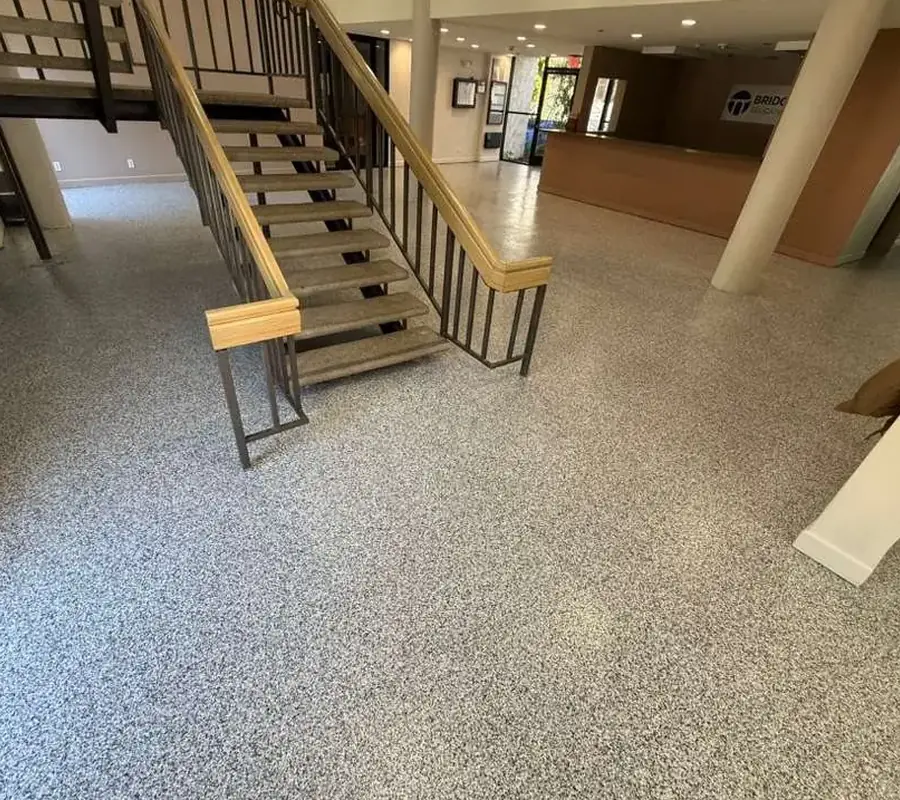
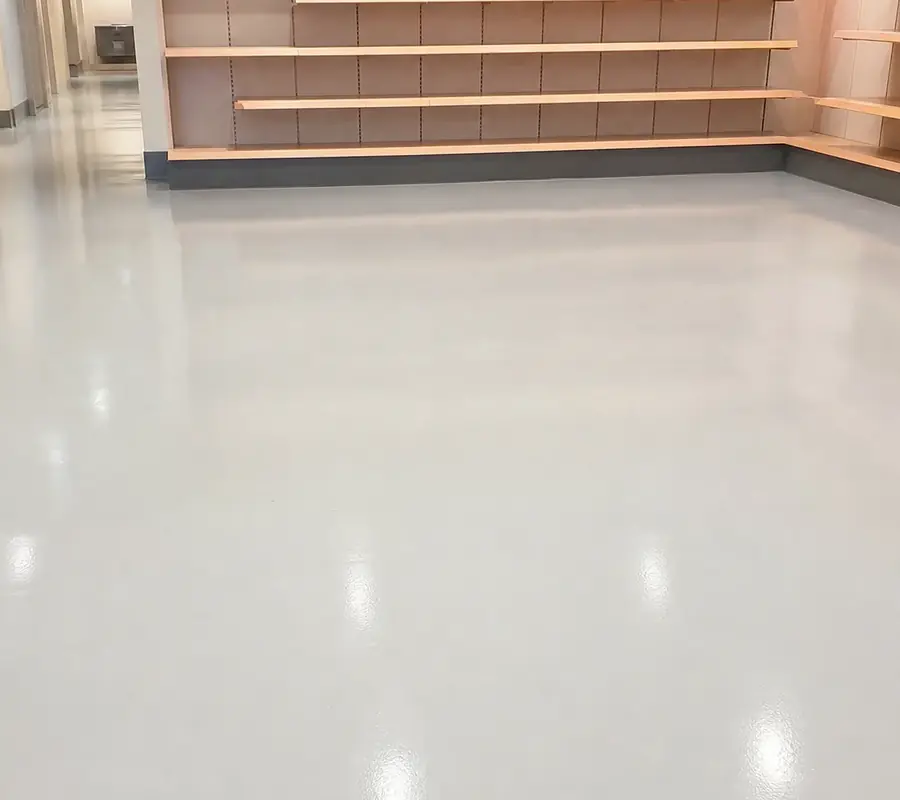
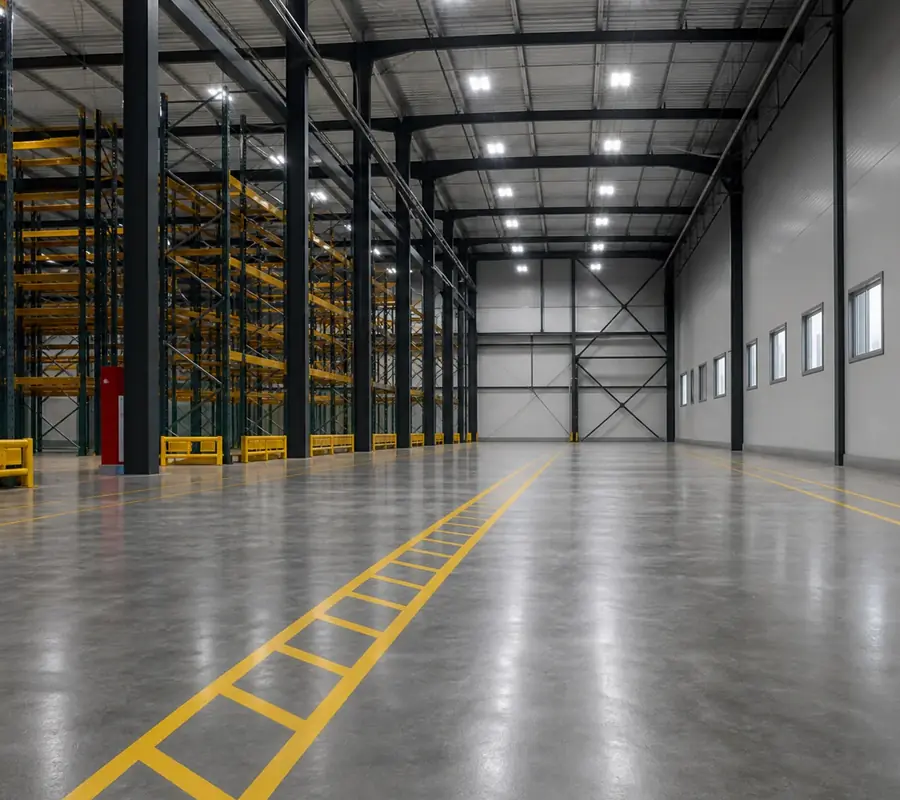
Seamless, chemical-resistant epoxy floors for offices, shops, kitchens and warehouses, installed in phases so your business keeps moving while the work gets done.
Commercial and industrial epoxy flooring is a seamless, resin-based coating system that turns worn concrete into a hard-wearing, easy-to-clean surface for working buildings. Elevate Epoxy Flooring prepares the slab by diamond grinding, installs the system in phases around your operations, and serves businesses across Santa Clarita and neighboring valleys.
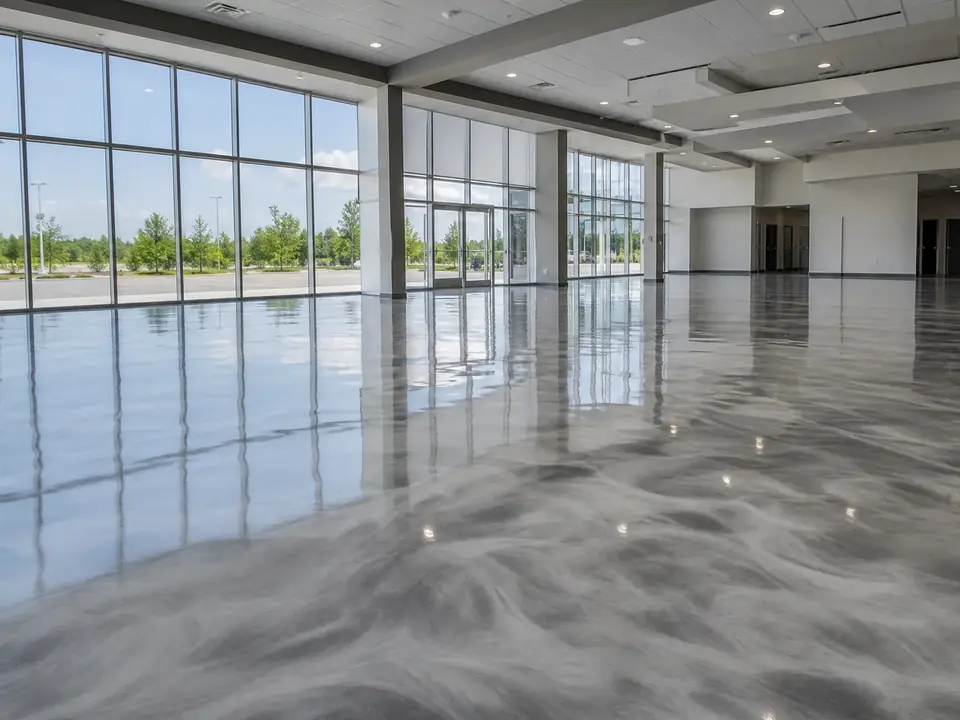
A commercial floor has a different job than a residential one. It carries rolling carts, pallet jacks, chairs, delivery traffic and constant cleaning, often with very little tolerance for downtime. Bare or painted concrete in these settings dusts, stains and cracks at the joints, and it soaks up whatever gets spilled. An epoxy system replaces that porous surface with a continuous, sealed layer that is simple to mop, resists staining and reflects light, which brightens a space and makes dirt easier to spot. Because the floor has no grout lines, it also removes the crevices where debris and bacteria like to settle.
Elevate Epoxy Flooring works with business owners, property managers and facility teams who need a floor that performs from the first day. Our service area covers the Santa Clarita Valley, the San Fernando Valley, Simi Valley and the Antelope Valley, and we are based in Santa Clarita. Typical spaces include offices, retail stores, showrooms, restaurants and commercial kitchens, medical suites, warehouses, workshops and light manufacturing plants. We begin with a site visit to measure the area, test the concrete and learn how the space is used, and the quote reflects what we find there. The finished system is matched to your traffic, equipment and cleaning routine.
Commercial schedules depend on square footage, the number of phases and the system selected, so we confirm the plan during the site visit. As a guide, a flake system takes 1 day, solid color 3 days, quartz 2-3 days and metallic 3-4 days per area. Each zone is closed to traffic while it cures, and we tell you when foot traffic can return and when carts, pallet jacks or other equipment can go back on the floor. Full cure comes later, so heavy loads are reintroduced gradually.
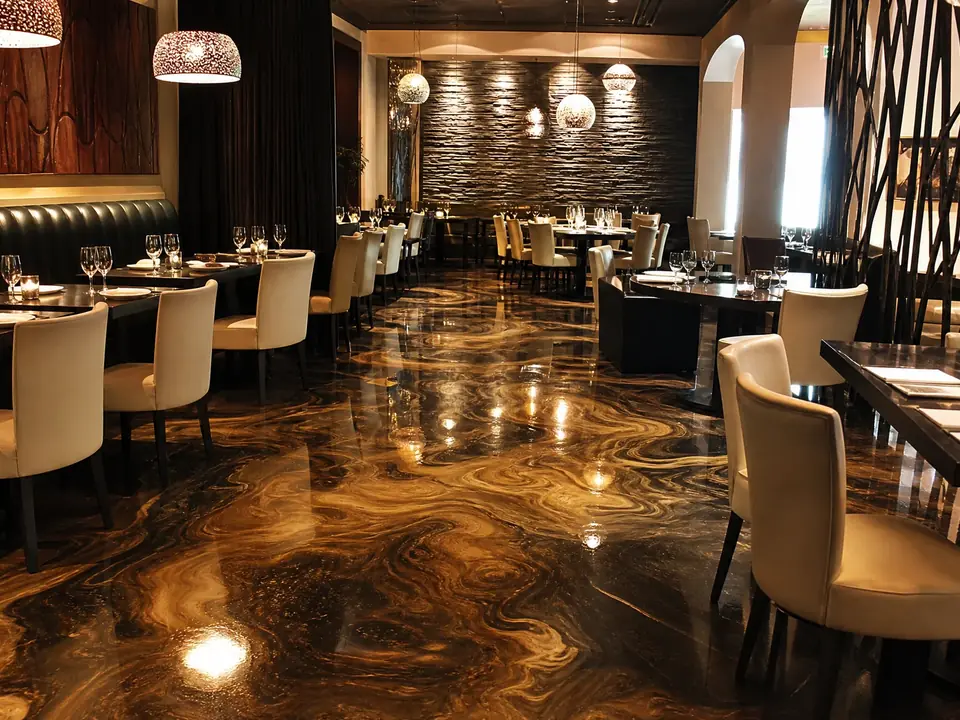
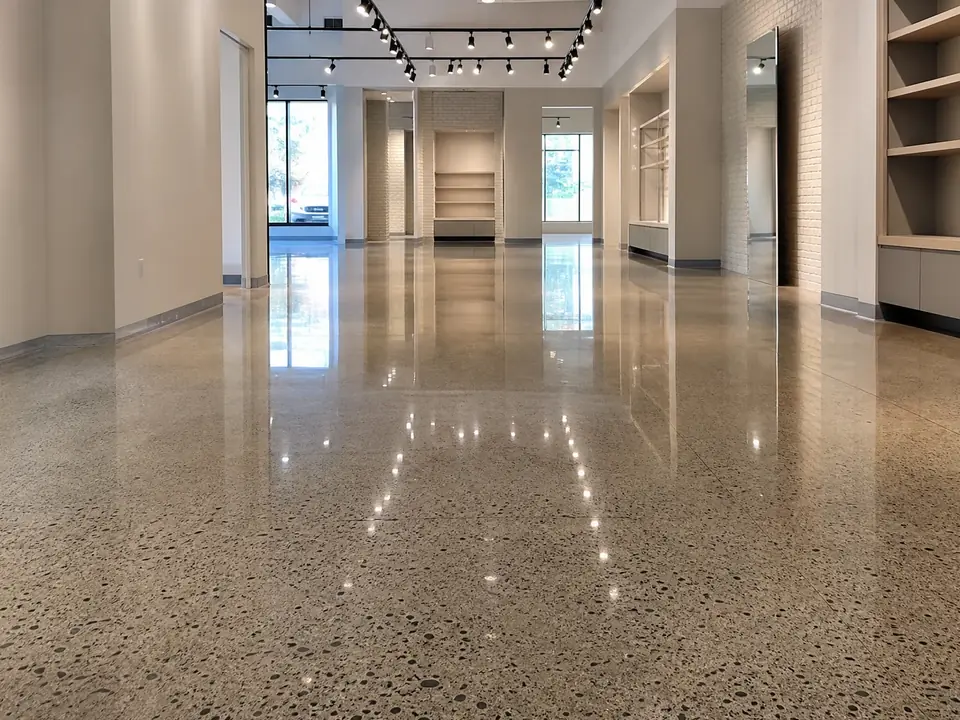
Pick a commercial system when the floor faces constant traffic, cleaning chemicals, equipment or hygiene requirements that residential finishes are not meant to handle. A solid color system suits offices, retail and shops that want a clean, uniform look. Flake adds texture and hides wear in busy utility areas. Metallic and quartz suit showrooms and lobbies where appearance sells the space. For plain back-of-house or storage slabs that need only dust control and sealing, a grind and seal can be enough. We recommend one after seeing how the area is used.
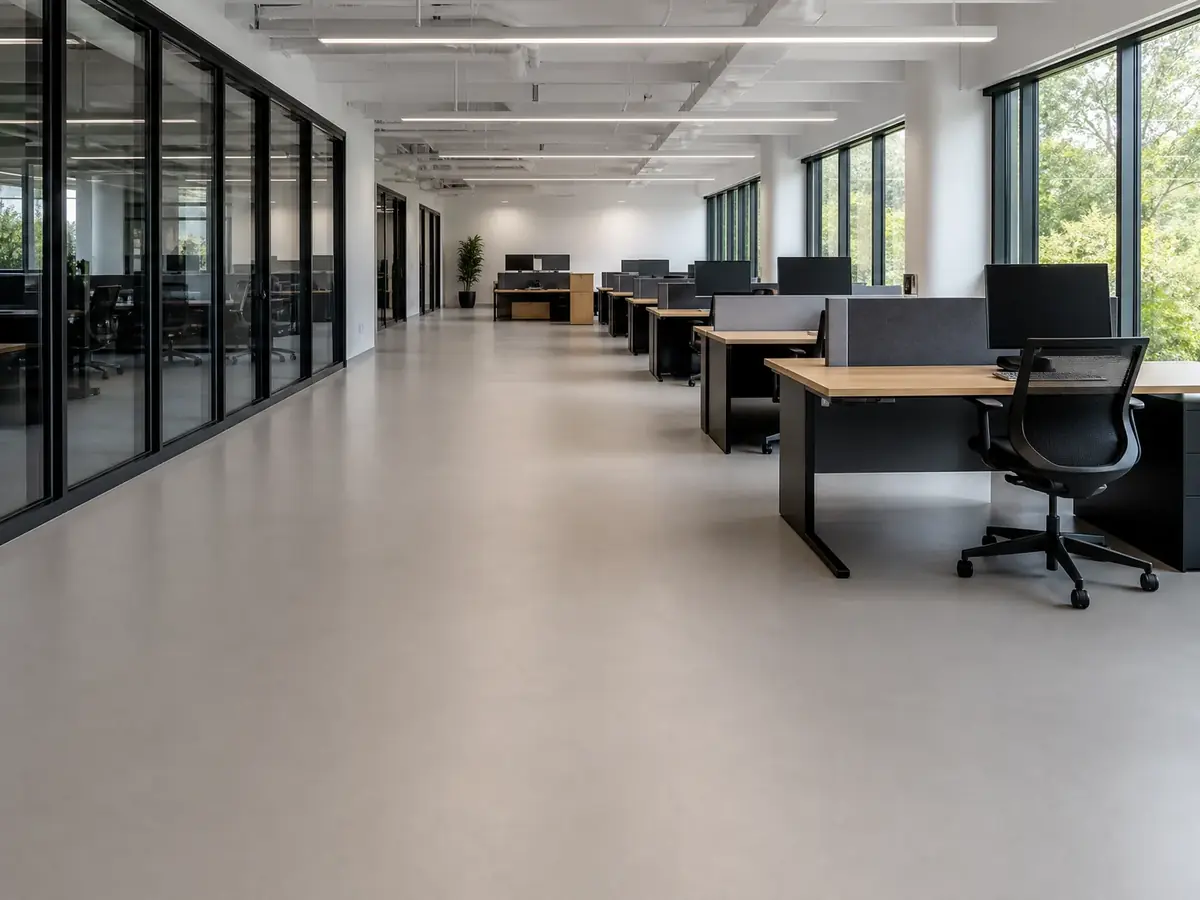
Downtime costs money, so scheduling is part of the scope. We can divide a large space into zones and complete them in sequence, keeping part of the building usable while another is being prepared and coated. Evening, overnight and weekend work can be arranged for spaces such as retail stores and offices, subject to the building's access rules. Before we start, we agree on the order of the phases, where equipment will stage and how to reach restrooms, exits and loading areas safely. Furniture, shelving and inventory moves are planned in advance. The aim is to change the floor with as little disruption to daily operations as the space allows.
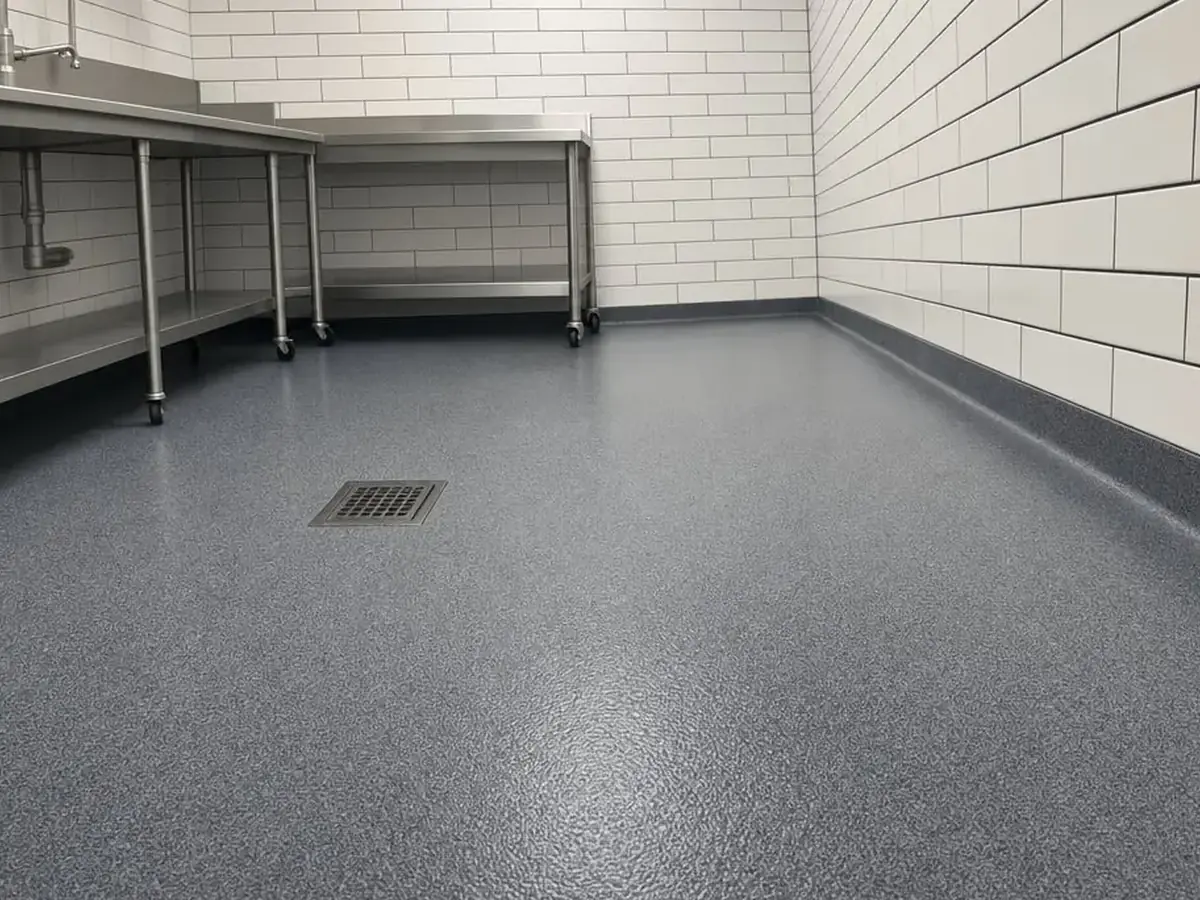
Restaurants, commercial kitchens, medical suites and workshops need floors that stand up to spills and frequent washdowns. A seamless epoxy surface has no open pores or grout lines for liquids to seep into, so it cleans with ordinary mopping and approved cleaners. Coved bases curve the floor up the wall, which eliminates the sharp corner where dirt and moisture collect and gives sanitation crews a smooth line to clean. We select resin and topcoat systems according to what the floor will meet, such as cooking oils, cleaning agents, automotive fluids or mild acids, and we ask about your chemicals before we recommend anything. The materials we use are VOC-free, which helps in occupied buildings.
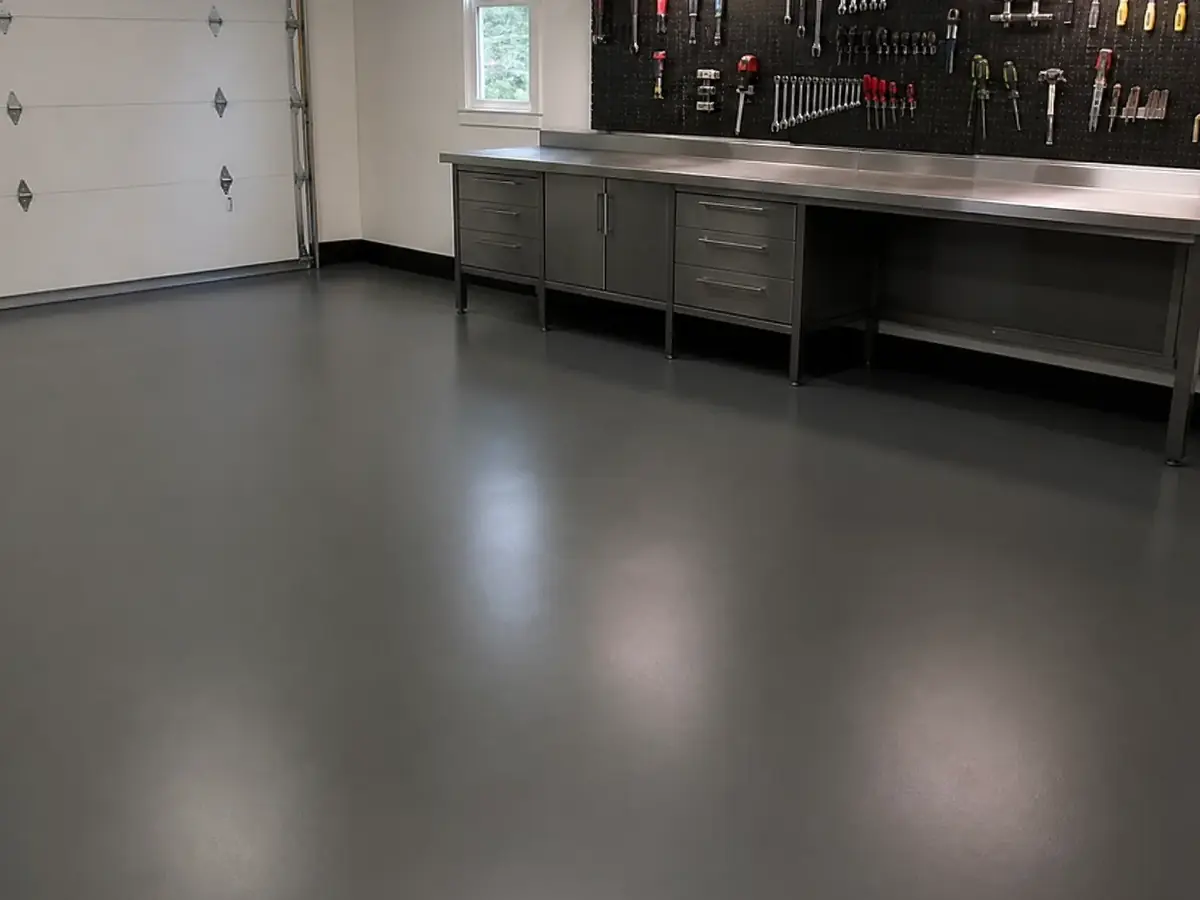
Heavy use is where epoxy earns its keep. A properly installed system bonds to the concrete and resists the abrasion of foot traffic, wheeled carts, forklifts and pallet jacks. For busier spaces we can build thickness with additional layers or broadcast aggregate into the system, which adds strength and texture. The UV-stable polyaspartic topcoat resists scuffing and keeps its gloss near loading doors and glass storefronts where sunlight reaches the floor. A topcoat also helps resist hot-tire pickup in service bays and shipping areas. We ask about the heaviest loads and turning points so the system is specified for the worst day rather than the average one.
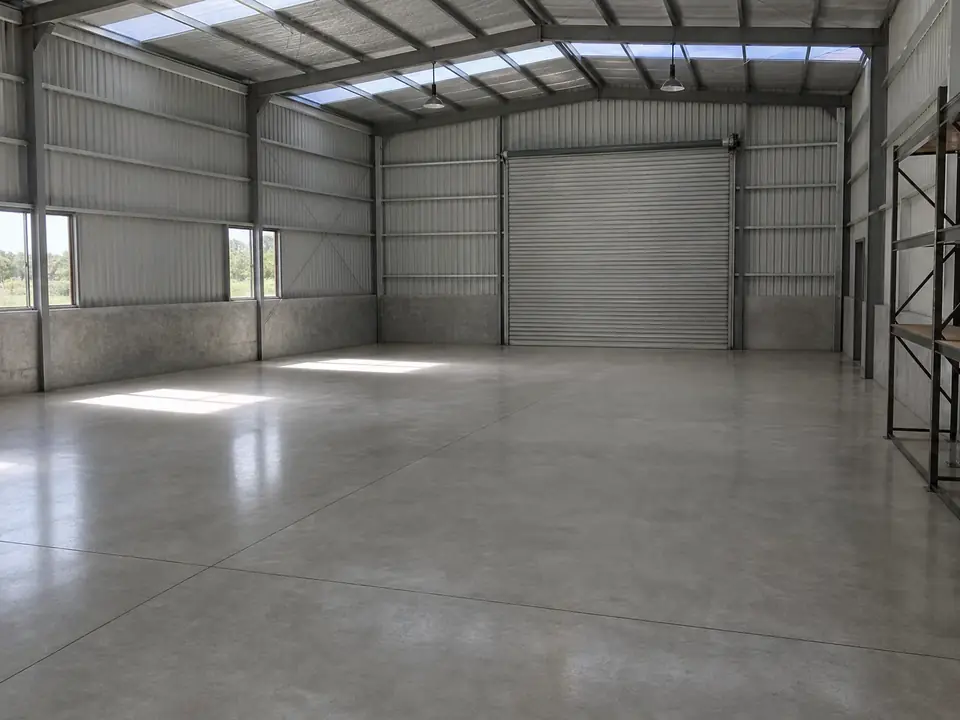
Industrial slabs often carry years of oil, tire marks, old coatings and patched damage, so preparation is the biggest part of the job. We diamond grind to remove contaminants and open the surface into a bonding profile, then repair spalls and cracks before any resin goes down. Control joints and saw cuts are treated deliberately: moving joints get flexible filler, while static cracks are stitched and filled so they do not reflect through the finish. Concrete in warehouses and shops can also hold moisture, so we evaluate the slab and use a moisture-barrier epoxy basecoat where the conditions call for it. Details at drains, columns and doorways get the same attention as the open floor.
A continuous floor has no grout lines or open seams, so liquids stay on top and cleaning crews can mop quickly instead of scrubbing dirt out of crevices.
Integral cove bases curve the coating up the wall, sealing the corner, protecting drywall edges from mop splash and giving kitchens, clinics and shops a smooth, sanitary perimeter.
Resin systems can be selected to handle oils, cleaning agents, automotive fluids and other substances your operation uses. Tell us what touches the floor and we specify accordingly.
Work is divided into zones and sequenced around your schedule, so part of the space can remain in use while other areas are prepped, coated and returned to service.
Routine care is sweeping and damp mopping. With no waxing or stripping cycle, a coated floor saves labor hours and keeps a consistent, professional look over time.
Adhesion to the slab is backed by our limited lifetime adhesion warranty, and we cover the specific terms with you ahead of time so there are no surprises after the job.
Typical ranges for the Santa Clarita Valley. Minimum project $2,600. Commercial and industrial work is quoted after a site visit.
| System | Price per sq ft | Typical project |
|---|---|---|
| Flake system (garage, up to 400 sq ft) | $6.50 – $10 per sq ft | $2,600 – $4,000 |
| Solid color system | $9.50 – $11.50 per sq ft | $3,800 – $4,600 |
| Metallic epoxy system | $12.50 – $18.50 per sq ft | $5,000 – $7,400 |
| Quartz & sand finish system | $9 – $16.50 per sq ft | $3,600 – $6,600 |
| Grind & seal (clear sealer) | $6.50 – $9 per sq ft | $2,600 – $3,600 |
| Patio, driveway & pool deck | $8 – $12 per sq ft | $3,200 – $4,800 |
| Commercial & industrial | Quoted after a site visit | Quoted per project |
Prices and details reviewed October 2026. Project examples assume a two-car garage up to 400 sq ft. Free on-site measurement and written estimate. See the color chart to pick your color.
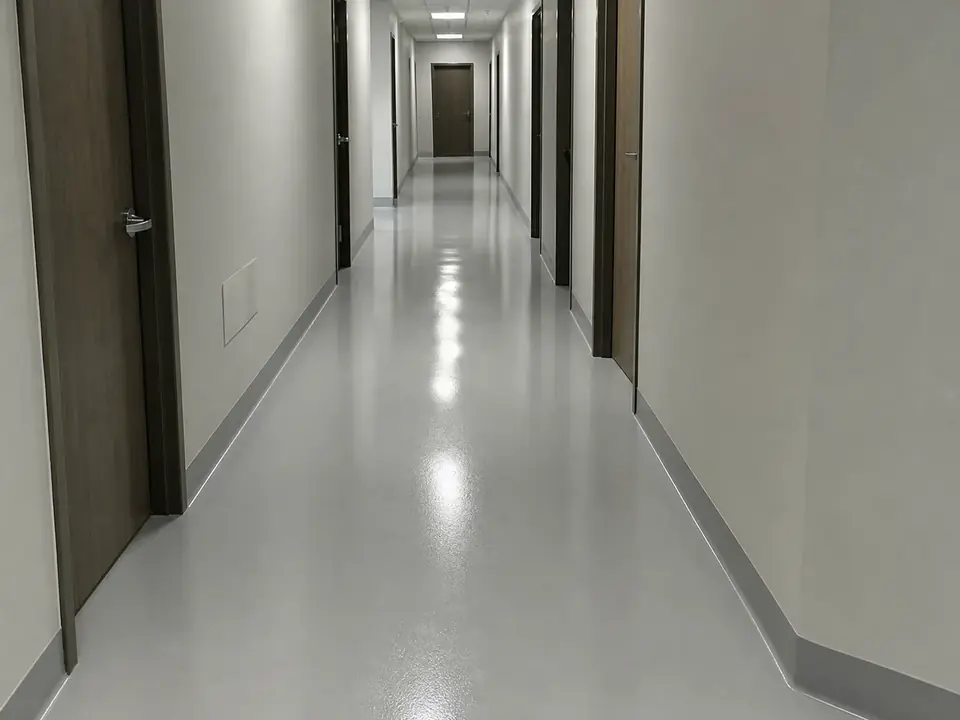
A 20x20 garage is 400 square feet. Our installed prices for it run from $2,600 to $4,000 for a flake system, with solid color, quartz, metallic, and grind and seal falling in other ranges. The final number depends on the system you choose and the condition of the slab.
Read the answer →It depends on the coating system, the products used and the temperature, so get a return-to-service date in writing. Expect to walk on the floor first, drive on it later, and reach full cure after that. Install time is a separate number: flake takes one day, solid color three, metallic three to four, quartz two to three.
Read the answer →A well-prepared floor with a UV-stable topcoat usually looks much like it did at install, with some loss of gloss and light surface marks where cars and tools see the most use. Floors with thin coatings, plain epoxy topcoats, or poor prep can show yellowing, scuffing, or lifting by year five.
Read the answer →We coat offices, retail stores, showrooms, restaurants and commercial kitchens, medical suites, warehouses, shops and light manufacturing plants. Whether the space is a single suite or a larger facility, the process is the same: a site visit, an assessment of the concrete and a system chosen for your traffic, equipment and cleaning needs. We serve the Santa Clarita, San Fernando, Simi and Antelope Valleys.
Yes. We plan the job in phases so sections of the space can stay open while others are being coated. Evening and weekend scheduling can be arranged where the building allows it. During the site visit we walk through your hours, access points and deliveries, then agree on a sequence that keeps disruption as low as the project allows.
Commercial and industrial projects are quoted after a site visit, because size, slab condition, traffic and system all change the price. For reference, flake systems run $6.50-$10 per sq ft, metallic $12.50-$18.50 and quartz $9-$16.50. Our minimum project is $2,600.
Epoxy is widely used in kitchens because it is seamless, non-absorbent and easy to wash. We install coved bases and choose a textured finish for traction where floors get wet or greasy. We select the system for your cleaning routine and chemicals, and you should confirm any health department or inspection requirements with your local agency.
Yes, when the system is specified for the load. Properly prepared concrete, a strong bond and added thickness or aggregate in high-wear lanes let the floor handle forklifts, pallet jacks and carts. Tell us about wheel type, weights and turning areas during the site visit so we can build the right system for those loads.
After diamond grinding, we repair cracks and spalls before any coating goes down. Active joints receive a flexible filler so they can keep moving, while inactive cracks are bridged and filled so they do not show through the finish. Because every slab differs, we mark each joint and crack at the site visit and explain how it will be handled.
Adhesion of the coating to your concrete is backed by our limited lifetime adhesion warranty. Because it is a limited warranty, we explain the coverage and conditions before work begins. Commercial floors receive the same diamond grinding and bonding profile preparation as any other project.
You will see claims that polyaspartic or polyurea coatings are up to 20 times stronger than epoxy, but no single number applies to every property. In practice, epoxy gives the strongest bond to the slab, and a UV-stable polyaspartic topcoat adds fast curing and sun resistance. We use both in a system built for your traffic and chemicals.
Full-rejection flake over a moisture-barrier epoxy basecoat, sealed with a UV-stable polyaspartic topcoat. Installed in one day.
Learn more →A clean, seamless pigmented floor in gloss, satin or matte for garages, workshops, interiors and commercial spaces.
Learn more →Diamond-ground concrete finished with a clear sealer for a natural, low-maintenance floor at the lowest installed price.
Learn more →Call (661) 457-5812 or send the form at the top of the page. We reply the same day with a time to measure.