
Hot tire pickup is when warm tires soften or pull at a garage floor coating, leaving marks, ridges, or peeled patches where the tires sit. You prevent it with thorough diamond grinding, a well-bonded quality basecoat, a UV-stable polyaspartic topcoat, and giving the floor its full cure time before parking.
Hot tire pickup is when warm tires soften or pull at a garage floor coating, leaving marks, ridges, or peeled patches where the tires sit. You prevent it with thorough diamond grinding, a well-bonded quality basecoat, a UV-stable polyaspartic topcoat, and giving the floor its full cure time before parking.
Many homeowners first hear about hot tire pickup after it happens. The car comes home on a hot afternoon, sits in the garage overnight, and the next morning there are two dull patches or a small curl of coating where the tires were. It is one of the most common reasons people say epoxy failed them, and it is also one of the most preventable. This post explains what is actually going on, why Santa Clarita Valley summers make it more likely, which parts of a floor system protect against it, and what your options are if you already see it.
Hot tire pickup happens when the bond between a coating and the concrete, or between the coating layers themselves, is weaker than the pull of a warm tire. A tire that has been driven for a while is hot and slightly tacky. As it cools and settles, it can grip the surface of the floor. If the coating is thin, poorly bonded, or not fully cured, the tire can lift it. You may see a dull shadow where the tire sat, a faint raised ridge, a patch of coating stuck to the rubber, or a bare spot of concrete showing through. It tends to appear in the exact spots the tires stop, usually just inside the garage door. It is not a stain you can scrub away. It is a sign that the coating itself has moved or softened, which is why the answer is almost always about how the floor was built rather than how it is cleaned. Because it shows up where the tires sit, many people assume the tires or the car are the problem, and some even blame their own driving. In nearly every case the floor was the weak link, which is useful to know before you spend money on a repair that ignores the cause.
There are a handful of repeat causes. The slab may have been cleaned or acid etched instead of diamond ground, so the coating never had a real bonding profile to grip. The product may be a thin store-bought kit rather than a professional system. The coating may not have cured fully before the car returned, which is a risk when someone parks on a floor early because they need the space. Moisture vapor rising through the slab can also weaken the bond from below. Heat adds stress on top of all that. In Santa Clarita, summer pavement and long drives in hot weather mean tires can arrive very warm, especially on sunny afternoons. A well-built floor handles that. A marginal one may not. The problem is rarely the tire alone. It is the tire exposing a weakness that was already in the floor from the day it was installed. Heat and tire residue can also be hard on coatings that are not built for that exposure, which is one more reason a professional-grade topcoat matters. Cold garages can slow curing too, so timing and temperature at install are part of the story, not only the product.
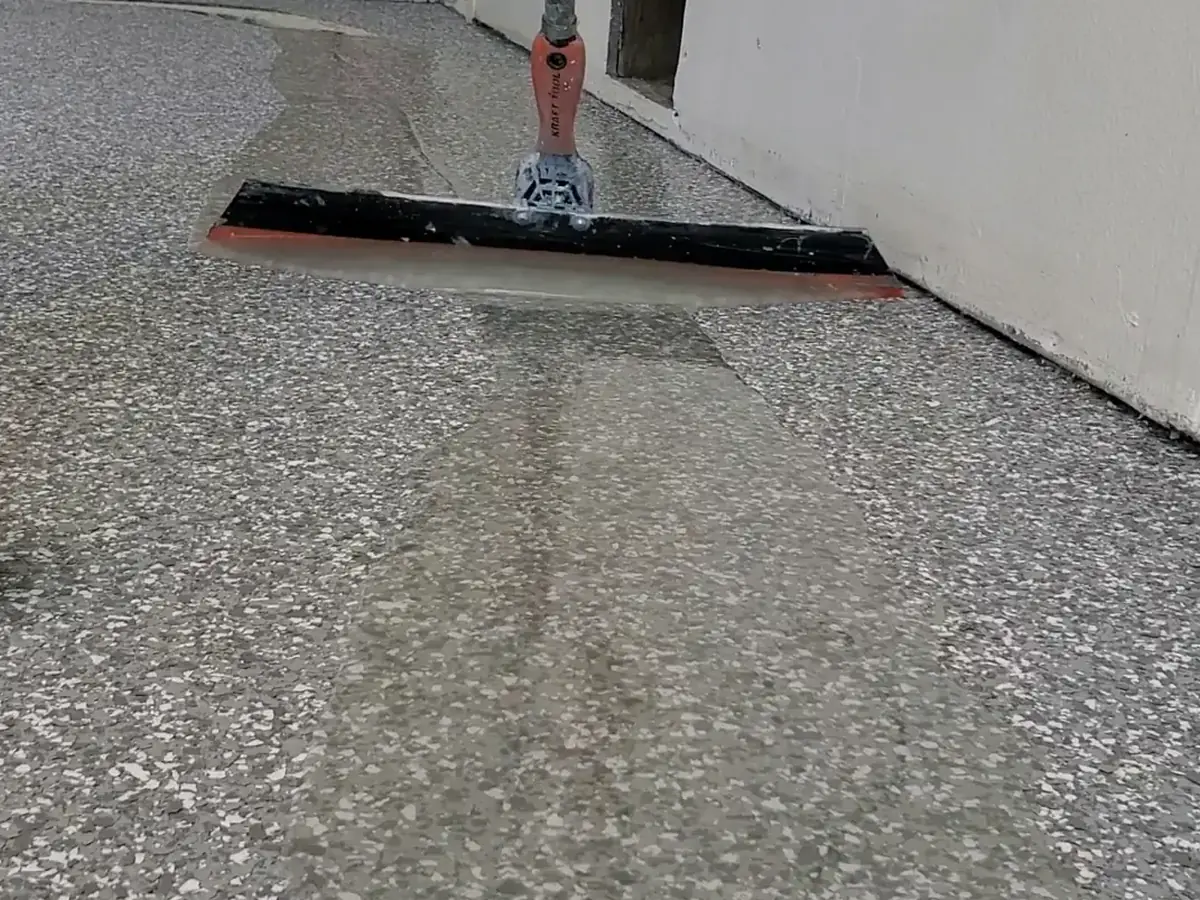
Prevention starts under the surface. Diamond grinding opens the concrete and creates a bonding profile that a coating can lock into, which is the single biggest factor. A quality basecoat, often a moisture-barrier epoxy when the slab calls for it, then bonds to that profile and builds a tough film. In a flake system, the full-rejection flake broadcast adds body and texture, and the topcoat locks everything in. A UV-stable polyaspartic topcoat is commonly used because it is hard, resists chemicals, and does not yellow in the sun. None of that works if a step is skipped. Cracks should be repaired, oil contamination dealt with, and each layer given the time it needs before the next goes down. When you compare quotes for a garage floor, ask the installer to describe the prep method, each product used, and how long before you can drive on it. Those answers tell you more than a brochure. Ask also whether the floor was tested for moisture before it was coated, and whether the installer will tell you what the test showed. A short test is cheaper than a failed floor.
Follow the return-to-service instructions exactly, even if it means parking in the driveway an extra day. The first days are when a new coating is most vulnerable, and a car that arrives early with hot tires is the classic way a good floor gets damaged. After that, a few habits help. Let the car sit in the driveway for a few minutes after a long drive so the tires cool before they roll onto the floor. Avoid turning the steering wheel while the car is stopped, since that twists the tire against the surface. Sweep up grit and small stones that stick to tires, because they act like sandpaper under load. Rinse away road salt and oil spills promptly. If a tire pad or small rubber mat suits your parking spot, it can add a layer of protection. These steps are optional on a well-built floor and worth the effort on a questionable one. If your garage floor is also used as a workshop, think about where the car sits relative to the jack stands and workbench so that one area does not carry all the load. Small habits like these add up over years of ordinary daily use.
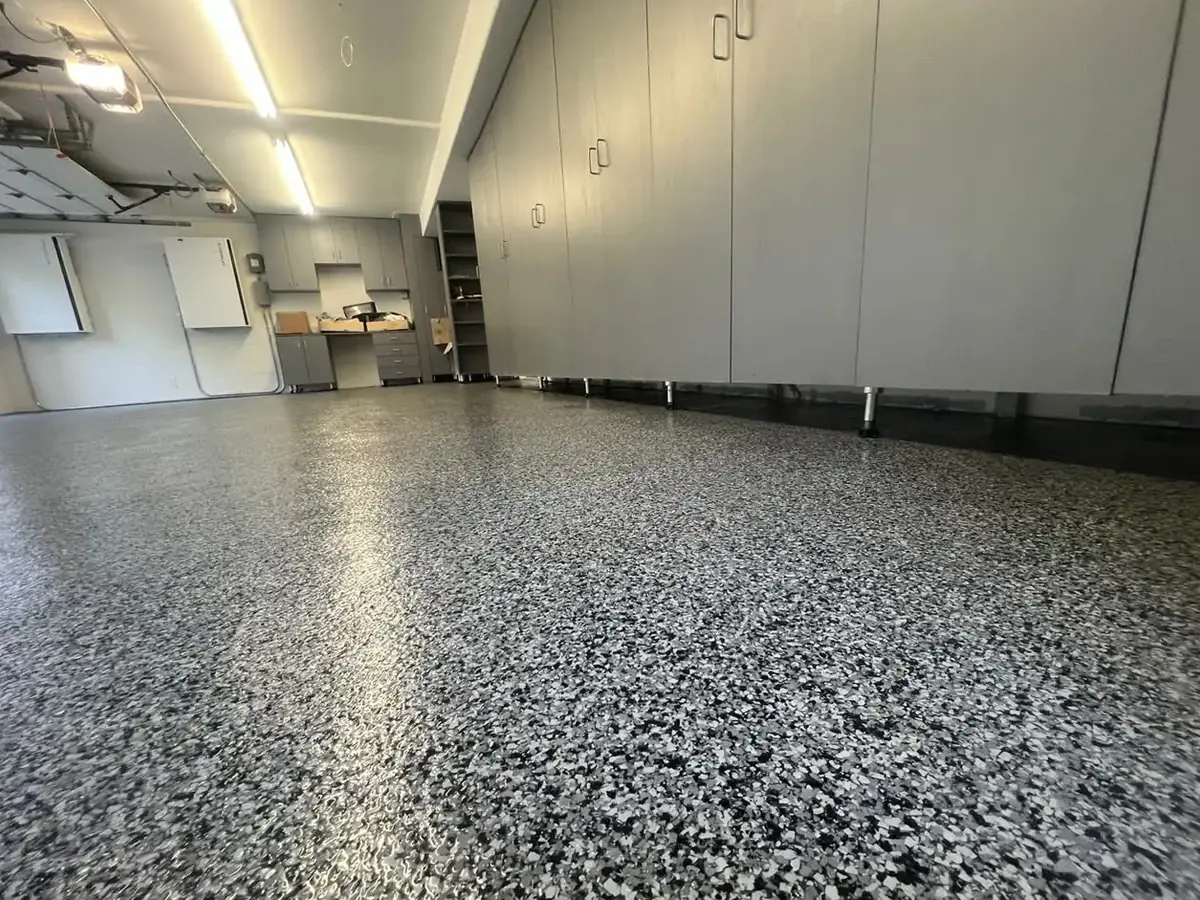
First work out how widespread it is. A single small mark in one tire position may be repairable by grinding the area and recoating it, though the repair patch can look slightly different from the rest. If lifting appears under every tire, along the door line, or across large sections, the cause is usually systemic, and the honest fix is to grind off the failed coating and rebuild the system correctly. It is worth checking for moisture and for contamination such as oil before any new coating goes down. Beware of quick fixes sold as sealers that simply go over a failing surface, because they tend to fail too. If your floor has a warranty, take photos and contact the installer promptly. Our limited lifetime adhesion warranty covers the bond on residential work, and we explain what is and is not included before anyone signs. A free estimate can include a look at your slab and the damage. If the old coating is peeling in sheets, read our guide on why epoxy peels, because the causes overlap and the fix often begins with the same diagnosis: grind, test, and rebuild the layers in the right order.
Hot tire pickup is a bonding and cure problem that shows up under the tire, not a tire problem. Good grinding, a quality basecoat, a UV-stable topcoat, and patience before parking prevent most of it. For a straight answer about your garage, call Elevate Epoxy Flooring at (661) 457-5812. Call (661) 457-5812 for a free estimate.
It happens when warm tires pull on a coating that is thin, poorly bonded, or not fully cured. Skipped diamond grinding, moisture in the slab, and parking too soon after installation are the usual reasons. Heat from summer driving makes a weak bond easier to expose.
It can, particularly with thin kit coatings or floors that were poorly prepared. A professionally installed system with diamond grinding, a quality basecoat, and a polyaspartic topcoat is much less likely to lift. Cure time before parking also matters a lot.
Follow your installer's written return-to-service guidance, which varies by system, temperature, and humidity. Foot traffic usually comes before vehicles. Parking early is one of the most common causes of damage, so waiting an extra day is cheap insurance.
Small cosmetic marks sometimes can be cleaned or spot repaired, but lifted coating means the bond has failed there. The reliable fix is grinding the area and recoating it. Painting over it usually fails again under the same tires.
A polyaspartic topcoat helps, but it is not a cure by itself. The bond to the concrete and the quality of the basecoat decide most outcomes. A topcoat over a failing foundation can still lift when a hot tire sits on it.
Durable, easy-to-clean garage floors that resist hot-tire pickup, oil and salt. Most two-car garages are done in one day.
Learn more →Full-rejection flake over a moisture-barrier epoxy basecoat, sealed with a UV-stable polyaspartic topcoat. Installed in one day.
Learn more →Diamond-ground concrete finished with a clear sealer for a natural, low-maintenance floor at the lowest installed price.
Learn more →Epoxy peels when it never bonded properly to the concrete. The usual causes are poor surface preparation, moisture vapor rising through the slab, a thin or low-quality coating, oil or old sealer left on the surface, and driving or parking on it before it cured. Fixing it means removing the failed coating and re-preparing the slab.
Read the answer →It depends on the coating system, the products used and the temperature, so get a return-to-service date in writing. Expect to walk on the floor first, drive on it later, and reach full cure after that. Install time is a separate number: flake takes one day, solid color three, metallic three to four, quartz two to three.
Read the answer →A properly prepared and fully cured floor generally handles Santa Clarita summers well, but heat exposes weak spots. The main risks are hot-tire pickup on a poorly cured or poorly prepped coating, yellowing near sun-facing doors, and hot surfaces underfoot. Diamond grinding and a UV-stable polyaspartic topcoat address most of them.
Read the answer →Call (661) 457-5812 or send the form at the top of the page. We reply the same day.