
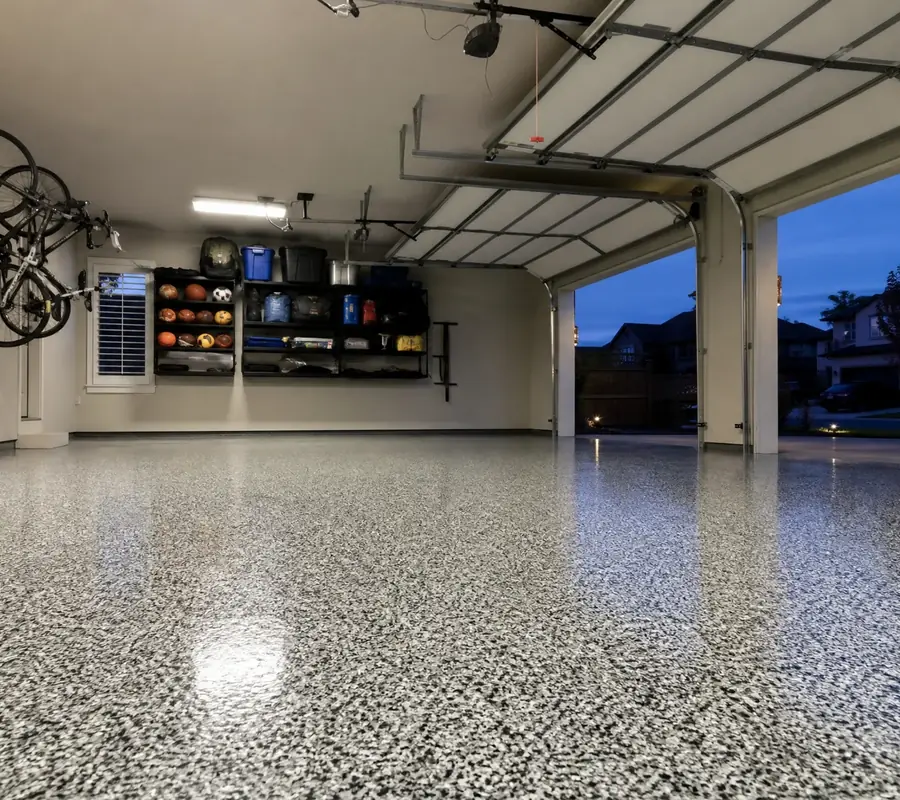
A properly prepared and fully cured floor generally handles Santa Clarita summers well, but heat exposes weak spots. The main risks are hot-tire pickup on a poorly cured or poorly prepped coating, yellowing near sun-facing doors, and hot surfaces underfoot. Diamond grinding and a UV-stable polyaspartic topcoat address most of them.
A properly prepared and fully cured floor generally handles Santa Clarita summers well, but heat exposes weak spots. The main risks are hot-tire pickup on a poorly cured or poorly prepped coating, yellowing near sun-facing doors, and hot surfaces underfoot. Diamond grinding and a UV-stable polyaspartic topcoat address most of them.
Summer in the Santa Clarita Valley is long and hot, and a closed garage can get hotter than the air outside. That is a fair worry for anyone about to put a coating on their floor, especially after reading online stories about peeling and soft spots. Heat does not ruin a well-built floor, but it does show where a bad one was cut short. Below we cover what heat actually does to epoxy, why hot tires are the real stress test, what sun does to color, and how installation timing and floor color choices affect how the floor feels and looks in July.
Cured epoxy and polyaspartic coatings are cross-linked plastics, and they are designed for garages and other spaces that swing in temperature. A fully cured floor does not melt or run in ordinary summer heat. What heat can do is soften a coating that has not fully cured, or one that was installed too thin or over a poorly prepared slab. In that case you may notice marks from tires or from a kickstand. Heat also makes the slab expand and contract through the day, which is one reason hairline cracks can show up in any garage. A good installer addresses this with diamond grinding to open the concrete, crack repair, and a proper bonding profile so the coating moves with the slab instead of letting go of it. We avoid absolute promises here. Every coating has limits, and the product data sheet, not a salesperson, is the place to find the temperature range for any system. If your current floor gets soft or sticky in summer, tell the estimator, since it can point to an earlier coating that was never fully bonded or a surface contaminated with oil. That detail helps decide whether the old layer has to be ground off completely.
If you ask what fails on a garage floor in July, the answer is hot-tire pickup. After a drive on summer asphalt, tires come back much hotter than the air, and they sit on one small patch of floor. A coating that is thin, poorly bonded, or not fully cured can lift or leave a mark where the tires sat. This is a common complaint with big-box kits and with floors parked on too early. It is not a reason to avoid epoxy altogether. A floor that is diamond ground, installed with a moisture-barrier epoxy basecoat when the slab calls for one, and left to cure fully before heavy use has a much better chance of staying put. If you park a hot car in the garage daily, tell your installer when you ask for an estimate. They can choose products with that in mind and give you straight guidance on how long to keep the car out after the work is done. Letting tires cool for a few minutes before parking, and wiping up grit tracked in from the street, also reduces the strain on the surface during the hottest weeks. These habits cost nothing and help any floor.
Heat is not the only summer issue, since Santa Clarita gets strong sun. An epoxy-only topcoat can slowly yellow where sunlight reaches the floor, especially in light colors, near a garage door with windows, or in a garage that stays open. A UV-stable polyaspartic topcoat is chosen to resist that. Flake systems, which are the most common choice for garages, hide small color shifts well because the pattern breaks up the light. Solid light colors and clear coats show change more. If your garage faces west or the door stays open much of the day, say so, because it affects topcoat choice. We would rather tell you honestly that a very light solid color near a sunny door will show more change than a mixed flake blend. Pick the color for how you live with the floor, not only for how it looks on the day it is installed. Window tint or a shade on the garage windows is a simple way to reduce sun on the floor, and it also helps keep the room cooler. This is useful for any color of floor. Ask your installer which topcoat they plan to use, and why.
Applying a coating on a hot slab is harder than in mild weather. Heat shortens the time you can work with the material, and a slab that is warming during the day can push trapped air up through the coating as bubbles or pinholes. Experienced crews plan around this by starting early, shading the garage, or scheduling work for cooler stretches. The same planning affects when you can drive on the floor again, since a coating applied in the heat may cure faster, but a hot floor is also easier to mark with hot tires. A flake system is finished in one day, solid color takes three, metallic three to four, and quartz two to three, and those windows can be adjusted around the weather. If you are booking in July or August, ask how heat is handled and whether the return-to-service date should be later than usual. A good answer is specific about timing and does not rely on promises. None of this makes summer installation a bad idea, and many floors in our area go in during the hottest months. It simply means the crew and the homeowner should agree on the plan, instead of treating a July job like an April one.
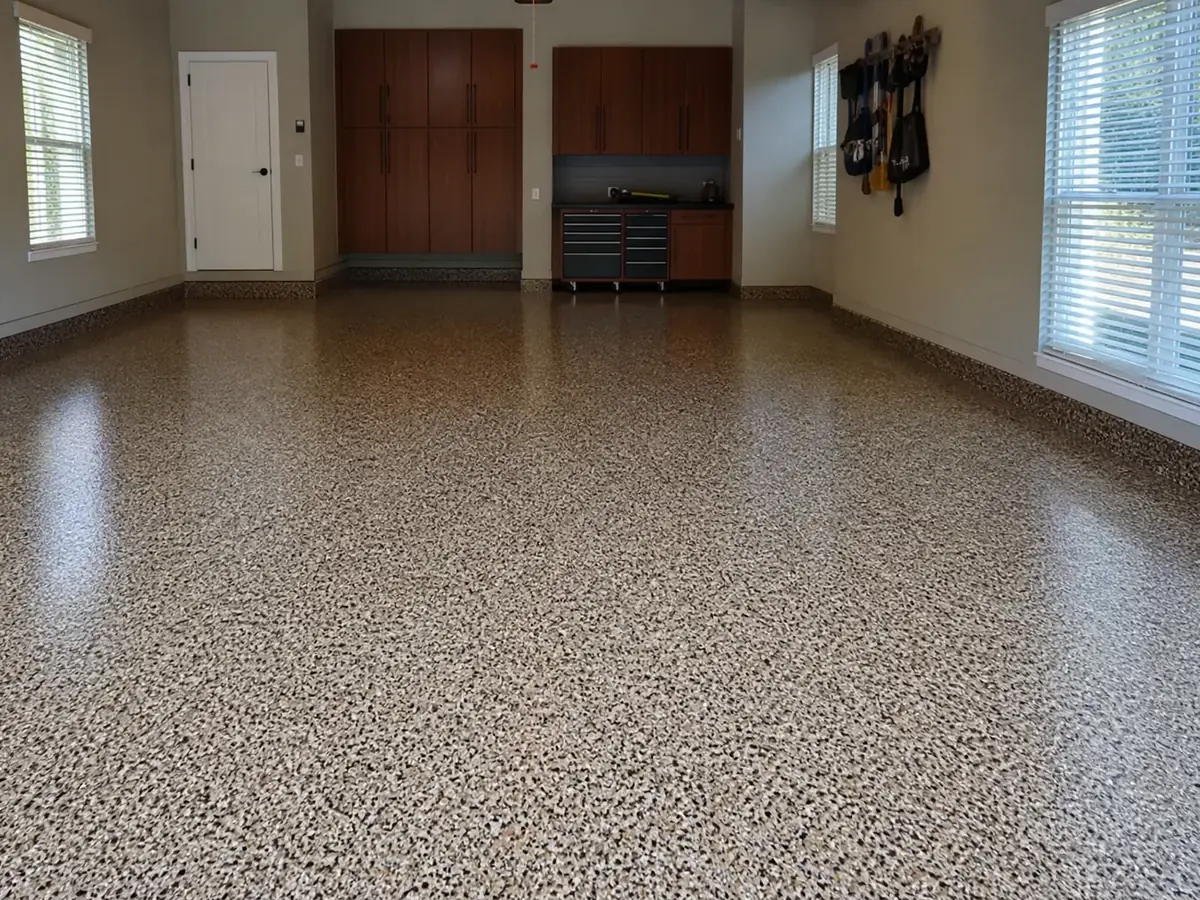
A coated floor will not heat your garage by itself, but a dark floor in direct sun can feel hot to bare feet or to pets near an open door. A mid-tone flake blend is a practical compromise: it hides dust and marks, does not show every footprint, and does not absorb as much heat as a black solid color in the sun. Texture matters in a different way, since a slip-resistant additive adds grip when you hose the floor down after a hot day. For a patio, pool deck or driveway, where the surface is outdoors and baking all day, ask specifically about heat and slip resistance, because outdoor coatings are a different job from a garage and are covered by a 3-year warranty rather than our limited lifetime adhesion warranty for residential interiors. Look at samples in your own garage light. You can compare options on our color chart before you decide. Texture, color and warranty terms are all easier to judge in person than in a description, so ask to see a sample in the same light your garage has. If you want help narrowing options, tell us how you use the space and we will say what we would choose.
Santa Clarita heat tests a garage floor, but a ground, properly bonded, fully cured system with a UV-stable topcoat is built for it. Mention your parking habits and sun exposure up front. Call Elevate Epoxy Flooring at (661) 457-5812 for straight answers. Call (661) 457-5812 for a free estimate.
A fully cured epoxy floor does not melt in a hot garage. A coating that is not fully cured, too thin, or poorly bonded can soften and show tire marks. Proper grinding, quality materials and a full cure make the difference.
Heat alone rarely causes peeling. Peeling usually traces to moisture, poor preparation or a thin coating, and heat can expose those problems. Diamond grinding and a moisture-barrier basecoat reduce the risk.
Hot tires soften and pull on a coating that is weak, thin or not fully cured, which is called hot-tire pickup. A well-prepared, fully cured floor resists it much better. Wait for your installer's go-ahead before parking.
Epoxy-only topcoats can yellow in direct sun, especially in light colors. A UV-stable polyaspartic topcoat is used to resist it. Tell your installer if your garage door gets strong sun so they can choose the right topcoat.
Yes, with planning. Crews often start early and manage garage temperature, and the return-to-service date may be later than in mild weather. Ask how heat is handled before booking a summer date.
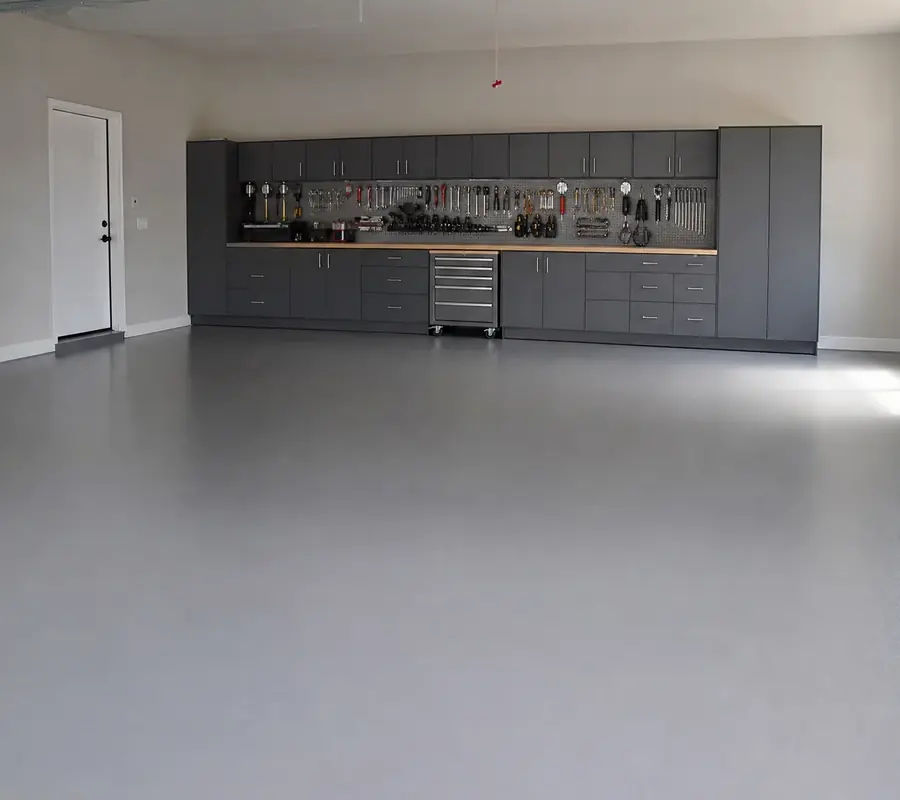
Durable, easy-to-clean garage floors that resist hot-tire pickup, oil and salt. Most two-car garages are done in one day.
Learn more →Full-rejection flake over a moisture-barrier epoxy basecoat, sealed with a UV-stable polyaspartic topcoat. Installed in one day.
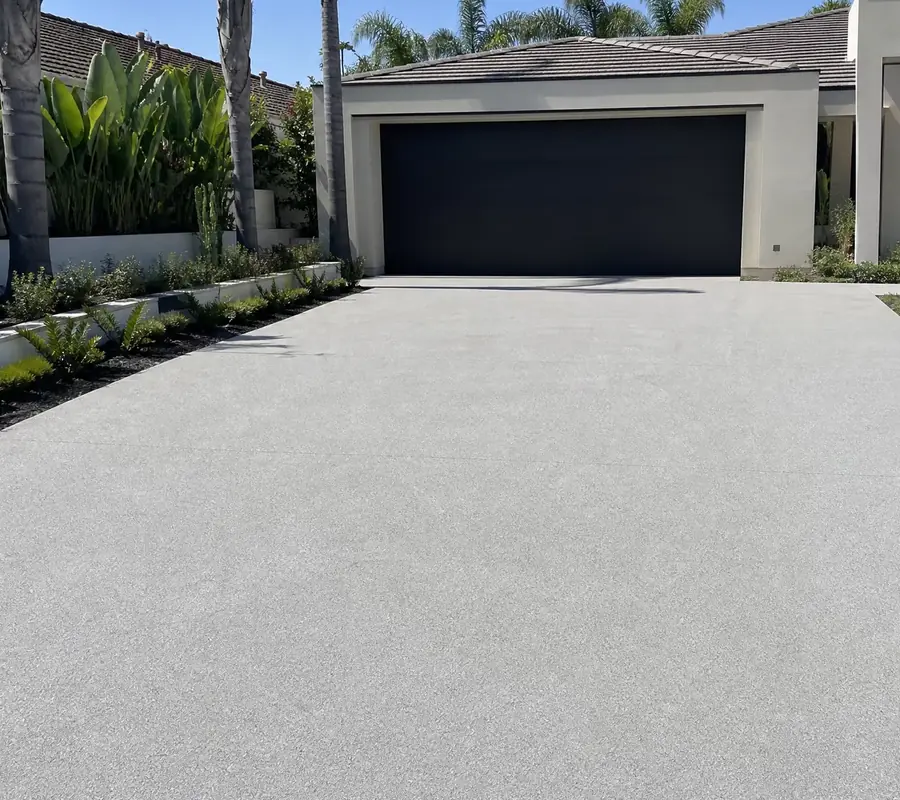
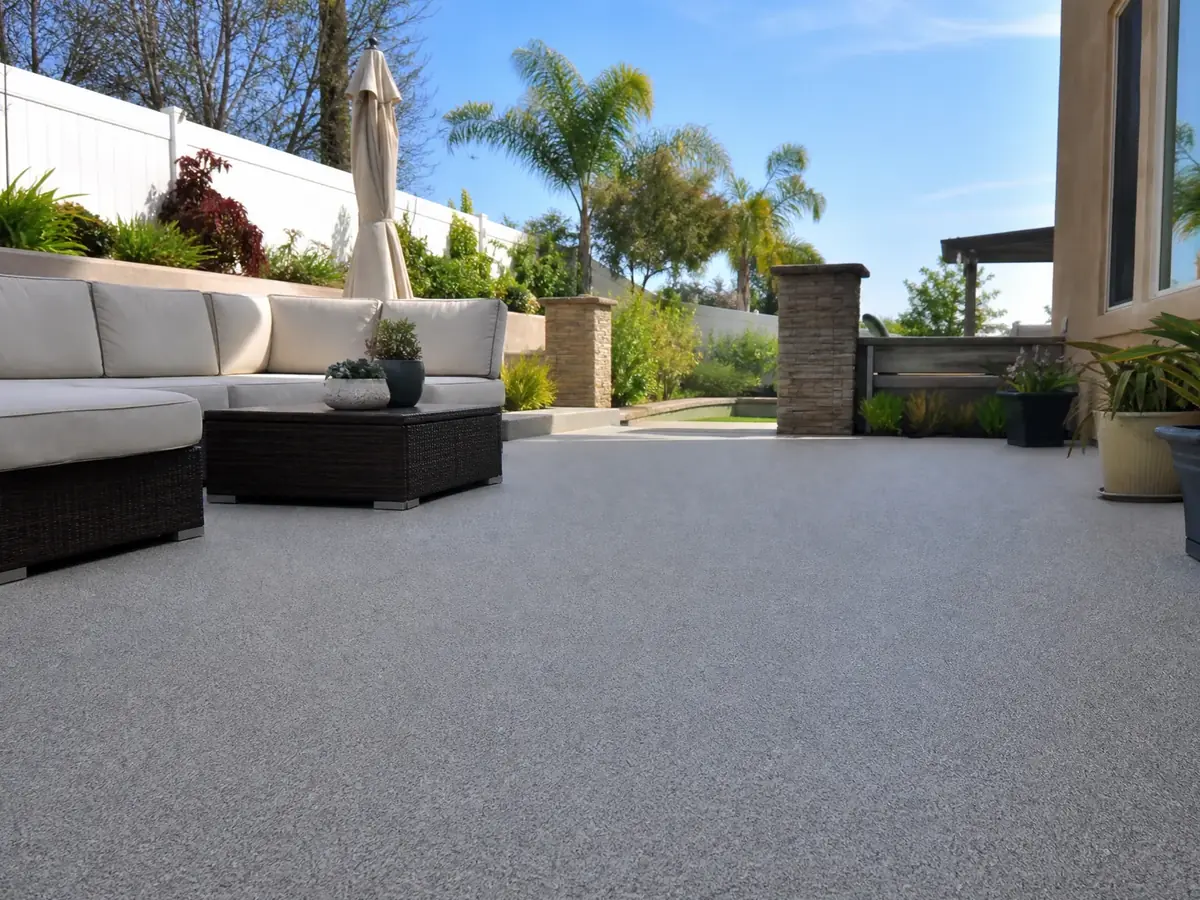
Learn more →UV-stable, slip-resistant coatings for patios, walkways, driveways and pool decks that stay cooler underfoot.
Learn more →Yes, you can epoxy a garage floor with cracks and stains, but not by simply rolling coating over them. Cracks should be repaired, oil stains need to be ground out or treated, and the slab must be prepared first. Wide or shifting cracks may need a closer look before any coating goes down.
Read the answer →It depends on your slab and your tolerance for risk. A DIY kit can work on a clean, dry, sound garage floor if you grind properly and follow cure times, but most kits are thin and offer no moisture protection. A professional flake system runs $6.50-$10 per square foot and is built to last longer.
Read the answer →There is no honest single number, because lifespan depends on the system and the conditions. A floor with proper diamond grinding, a moisture-barrier basecoat and a UV-stable topcoat can stay in good shape for a long time. Poor prep, moisture, sun and hot tires shorten it, and the topcoat usually wears first.
Read the answer →Call (661) 457-5812 or send the form at the top of the page. We reply the same day.