
There is no honest single number, because lifespan depends on the system and the conditions. A floor with proper diamond grinding, a moisture-barrier basecoat and a UV-stable topcoat can stay in good shape for a long time. Poor prep, moisture, sun and hot tires shorten it, and the topcoat usually wears first.
There is no honest single number, because lifespan depends on the system and the conditions. A floor with proper diamond grinding, a moisture-barrier basecoat and a UV-stable topcoat can stay in good shape for a long time. Poor prep, moisture, sun and hot tires shorten it, and the topcoat usually wears first.
Ask five contractors how long an epoxy garage floor lasts and you may hear five different numbers, most of them unsourced. We would rather explain what actually decides the answer. In Southern California the conditions are specific: strong sun, summer heat, dusty air, hard water and cars that come in hot off the asphalt. A floor in a shaded, closed garage lives a very different life from one beside a sunny open door. This post walks through the factors that matter, what wear looks like as it develops, and what you can do to get the most from the money you spend.
The biggest single factor in lifespan is how well the coating is bonded to the concrete. Diamond grinding removes the weak surface layer and creates the bonding profile that the basecoat grips. Cracks, divots and control joints need proper repair first, and any oil in the slab has to be dealt with before coating. When prep is skipped or rushed, the floor may look fine on day one and then fail at the edges, at the garage door or under the tires, because that is where stress concentrates. A floor built on thorough prep tends to wear gradually at the surface instead of lifting in sheets. That difference matters more than any product name. If a quote does not describe grinding, repair and how the edges will be handled, treat the long-term promises with caution, because the foundation is not covered. Edges deserve special attention. Garage door thresholds, walls and drains are where coatings first lift if the bond is weak, so a careful installer will grind right up to the edges and treat the joints. Looking closely at the edge work on a finished job tells you more about durability than the color or shine of the center of the floor.
Moisture vapor moving up through concrete is the quiet cause of many failed coatings. It can push on the underside of the film and eventually cause bubbles, blisters or peeling that has nothing to do with wear on top. Garage slabs in the Santa Clarita Valley can sit near irrigated landscaping, planters or sloped lots, and some older tract slabs have aged vapor barriers. A moisture-barrier epoxy basecoat is meant to resist that vapor, and testing the slab before coating helps decide whether it is needed. Nothing here is a guarantee, and no installer can promise that a slab will never have moisture trouble. What you can do is ask whether the slab was checked, what basecoat was chosen and why, and how the warranty treats moisture problems. Clear answers are a good sign. Testing is not a one-time idea either. Slab conditions can change over the years with irrigation, grading and plumbing leaks, and a floor that was dry at install can face new moisture later. That is why a barrier layer and a clear warranty are worth more than a promise that the slab will always stay dry.
Ultraviolet light is hard on plain epoxy, which can slowly amber and chalk where sun reaches the floor. A UV-stable polyaspartic topcoat is chosen to resist that, and it is one reason we use it over epoxy basecoats. Heat is the second pressure. Garages in our area can run hot in summer, and a car that has driven on baking asphalt arrives with hot tires. If a coating is weak or poorly cured, hot-tire pickup can lift it right where the tires rest. Good materials, proper cure and a clean floor reduce that risk. Parking choices also help. Keeping the door closed through the sunniest hours, using a mat under a work area and rinsing grit off the surface all lower the stress the coating has to carry day after day. Cleaning matters here as well. Grit tracked in from the driveway acts like sandpaper under tires and shoes, and over time it dulls the topcoat faster than the cars themselves. A door mat or a quick sweep at the entrance takes seconds and keeps that abrasive material off the floor surface.
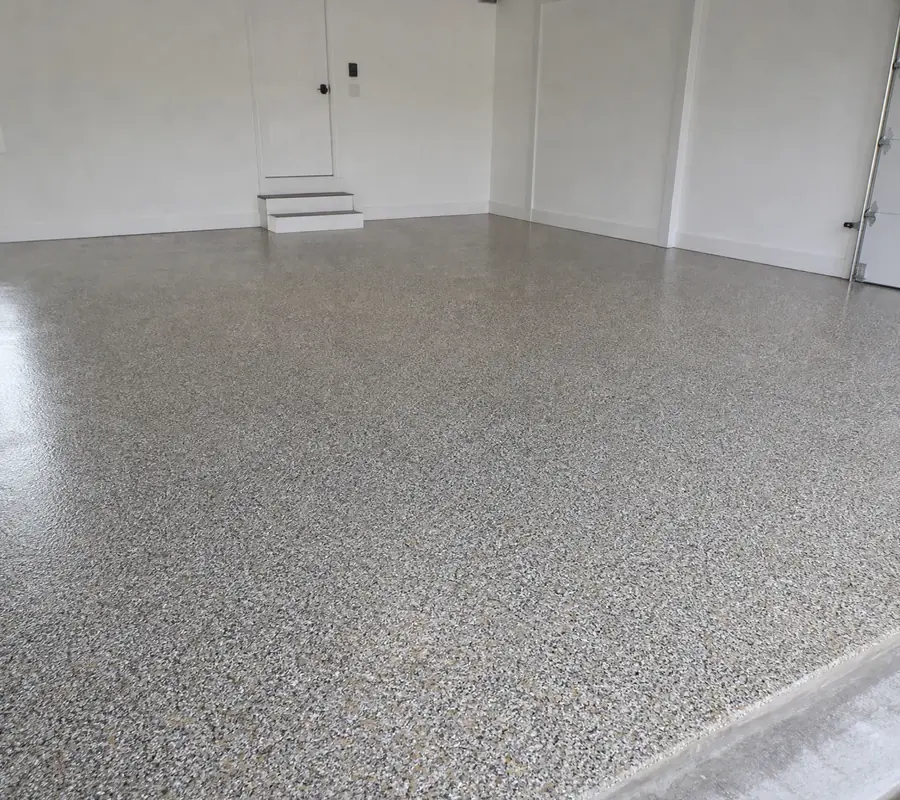
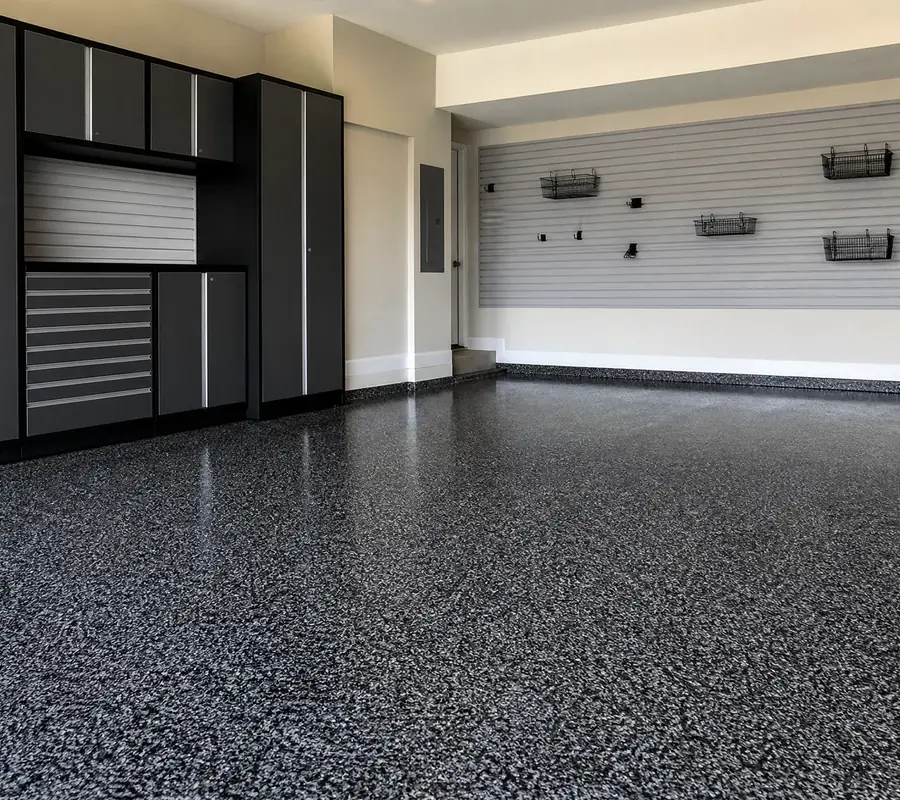
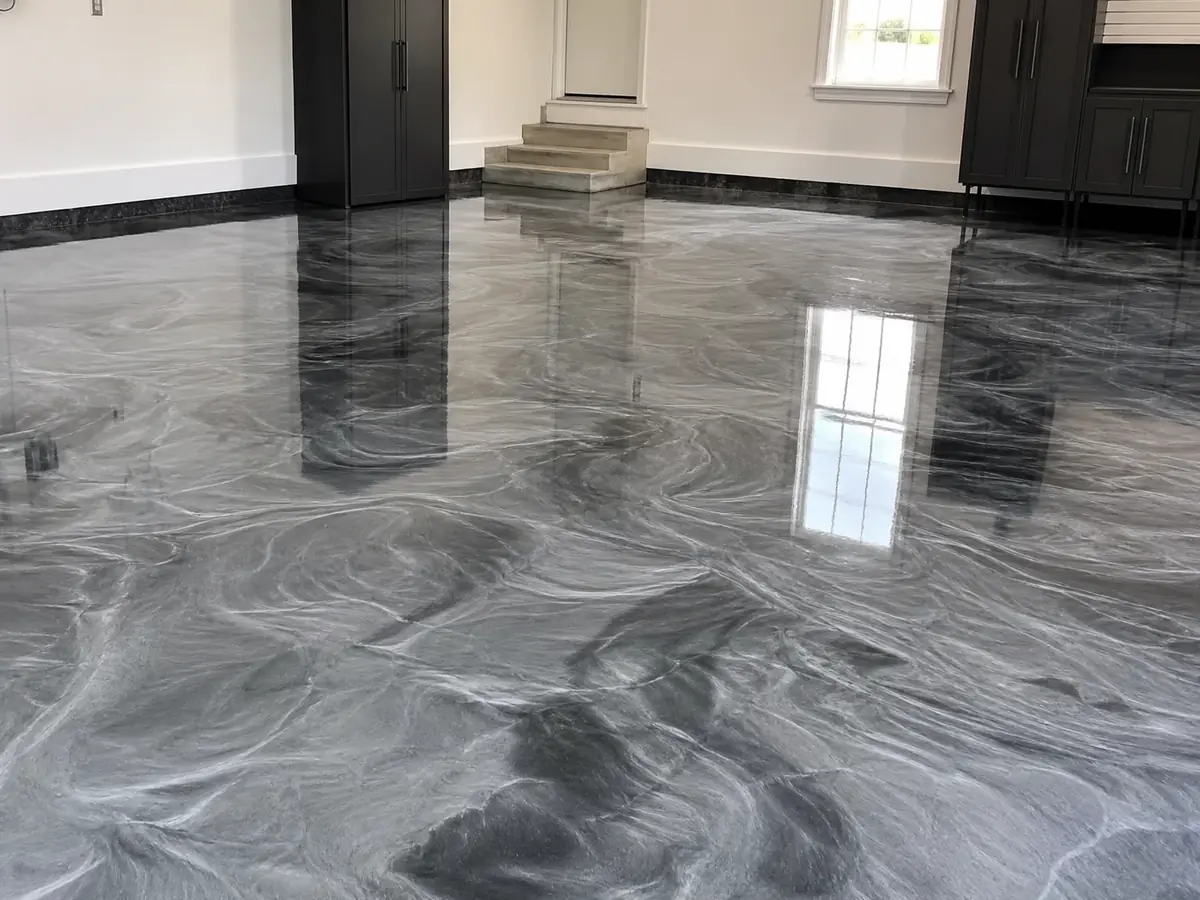
Coatings wear mostly at the surface, and the wear tends to show first in the places you use most: the tire path, the walkway from the car door and the area in front of a workbench. Gloss can dull, fine scratches can appear, and a dropped tool can chip the topcoat. Flake systems hide this better than smooth solid colors because the texture and color variation break up the light. Metallic floors look dramatic but show scratches more clearly. This is normal aging and not the same as failure, and a topcoat can often be refreshed without starting over. Dragging heavy toolboxes, using floor jacks without pads and spinning tires on turns all add up. Think of the surface as a protective layer that is meant to take wear, so it can be maintained and renewed over time. Chemicals also play a part. Brake fluid, battery acid and some degreasers can mark or soften a topcoat if they sit, so wipe spills promptly. Most routine garage liquids are not a problem for a cured, quality topcoat, but leaving them for days gives them time to do damage that a quick wipe would have prevented.
Maintenance is simple. Sweep or dust mop to remove grit, clean with a mild cleaner and a soft mop or pad, wipe up chemical spills, and avoid harsh solvents or abrasive pads. Hard water in our area can leave mineral spots on a glossy floor, and a quick wipe usually handles them. When you compare quotes, ask what the system is, how the slab will be prepared, whether a moisture-barrier basecoat is included, what the topcoat is, and what the warranty covers. Our residential work carries a limited lifetime adhesion warranty, and commercial and outdoor work carries 3 years. A warranty tells you what the installer stands behind, so read it. If you are curious how a floor looks after five years, ask to see older jobs, because photos of fresh work cannot show how a system ages. Seasonal habits help too. In the hottest weeks, letting a hot car cool outside for a few minutes before pulling into the garage, and rinsing the floor now and then, are small steps that spread wear out. Done consistently, they make a noticeable difference to how the surface looks as the floor ages.
Lifespan is not a fixed number. It comes from prep, moisture control, a UV-stable topcoat and sensible upkeep, and in Southern California sun and hot tires test every floor. For an honest read on your own slab, call Elevate Epoxy Flooring at (661) 457-5812. Call (661) 457-5812 for a free estimate.
It depends on prep, moisture, topcoat and use, so any single number would be a guess. A well-prepared flake system with a UV-stable topcoat can serve for a long time in a typical home garage. The topcoat is the layer that wears first.
A well-built floor usually shows light wear, such as dulled gloss and fine scratches in the tire path, but no peeling. A poorly prepared or sun-exposed floor can show yellowing, lifting or bubbling. Flake floors hide wear better than smooth solid colors.
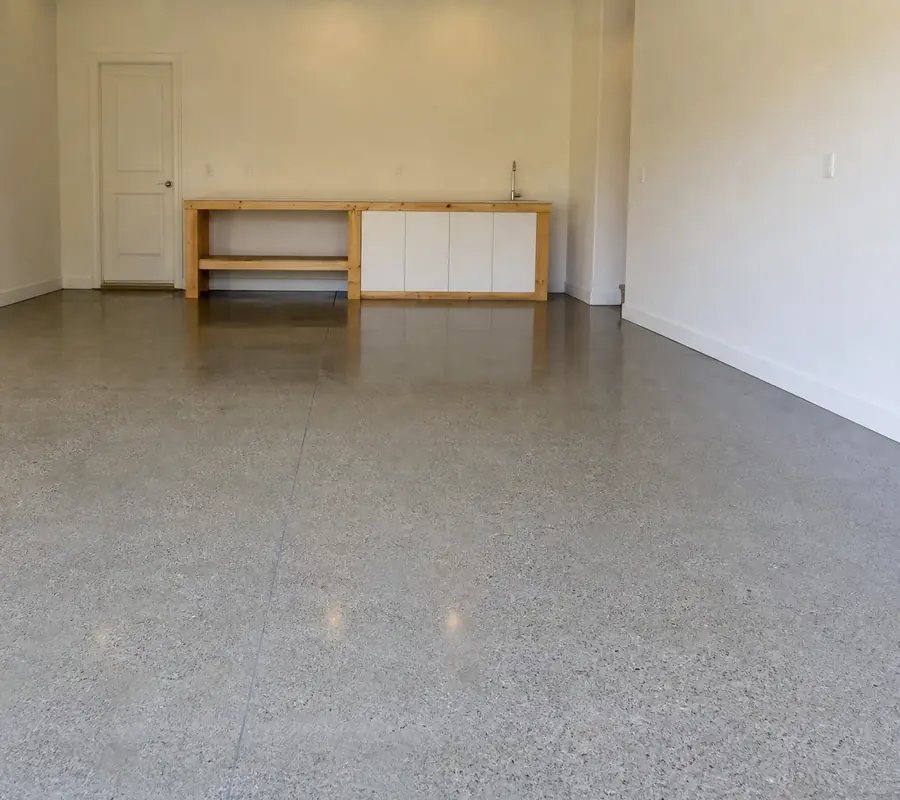
A grind and seal is a thinner, simpler system than a flake or metallic floor, so it generally wears faster under heavy traffic. Lifespan depends on the sealer used, the traffic and the upkeep. It is often chosen for budget or utility spaces.
Polyaspartic topcoats are chosen for UV stability and abrasion resistance, so they hold color and shine well in sun. Actual lifespan still depends on the slab, the prep and the layers beneath. We use it over epoxy basecoats to protect the system.
Yes, for most owners who want a cleaner, easier to maintain floor and are willing to pay for proper prep. It is less sensible over a slab with unresolved moisture problems. Ask the installer how any moisture will be handled.
Poor grinding, moisture through the slab, a topcoat without UV protection, hot tires on a weak coating and constant grit or impact all shorten it. Most of these can be addressed before the work starts, which is why prep and materials matter.
Durable, easy-to-clean garage floors that resist hot-tire pickup, oil and salt. Most two-car garages are done in one day.
Learn more →Full-rejection flake over a moisture-barrier epoxy basecoat, sealed with a UV-stable polyaspartic topcoat. Installed in one day.
Learn more →Diamond-ground concrete finished with a clear sealer for a natural, low-maintenance floor at the lowest installed price.
Learn more →We cannot tell you your association's rule, because HOA documents differ from one community to the next. Check your CC&Rs and ask the board or management company whether a garage floor coating needs approval. For permit questions, ask the City of Santa Clarita Building and Safety. Get every answer in writing before work starts.
Read the answer →An epoxy-based pool deck coating is a thin resin film bonded to prepared concrete, while cool deck resurfacing is usually a thicker, textured cementitious or similar overlay made to stay cooler underfoot. Both cover worn concrete. They differ in thickness, heat, grip, color options and repair. Outdoor concrete coatings here run $8-$12 per square foot.
Read the answer →A 20x20 garage is 400 square feet. Our installed prices for it run from $2,600 to $4,000 for a flake system, with solid color, quartz, metallic, and grind and seal falling in other ranges. The final number depends on the system you choose and the condition of the slab.
Read the answer →Call (661) 457-5812 or send the form at the top of the page. We reply the same day.