
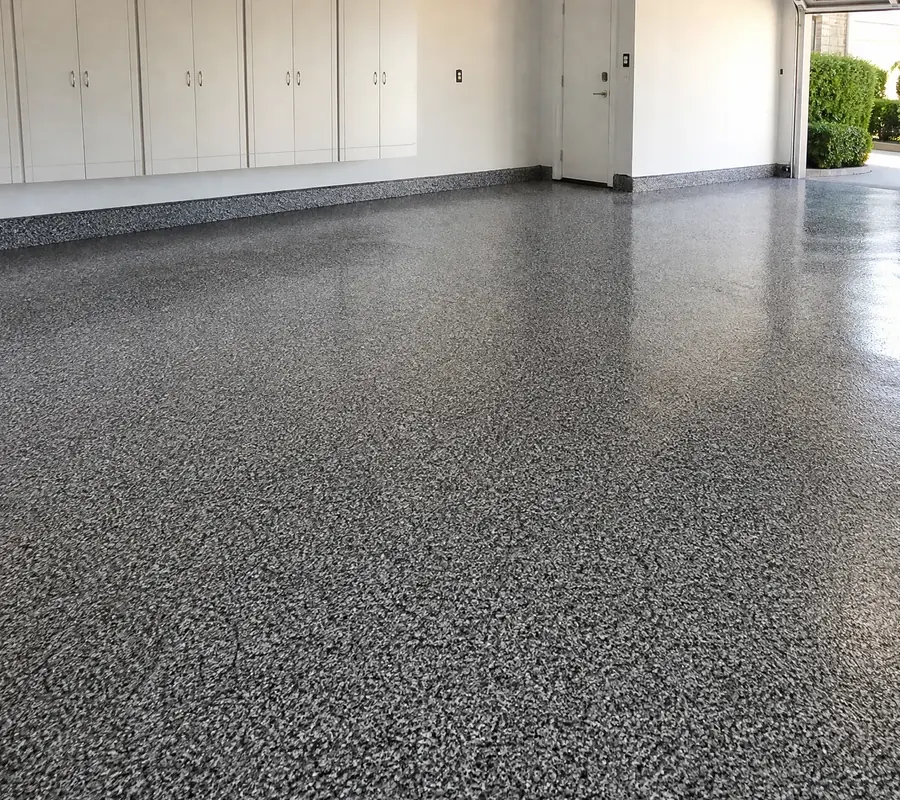
Yes, for most garages, epoxy is a good idea when the concrete is sound and the installer grinds the slab, repairs cracks, and uses a proper moisture-barrier basecoat with a UV-stable topcoat. A thin roll-on kit over unprepared concrete is where most disappointment comes from.
Yes, for most garages, epoxy is a good idea when the concrete is sound and the installer grinds the slab, repairs cracks, and uses a proper moisture-barrier basecoat with a UV-stable topcoat. A thin roll-on kit over unprepared concrete is where most disappointment comes from.
Homeowners across the Santa Clarita Valley ask this question for good reason. A coated garage floor can look sharp, clean up in minutes, and resist oil and tire marks. But the same word, epoxy, covers everything from a weekend kit to a ground, repaired, multi-layer system installed by a crew. The results are very different. This post explains what a coating actually does for a garage, who benefits most, who should wait or choose something else, and the three things that decide whether a floor lasts: preparation, the materials in each layer, and how the garage is used.
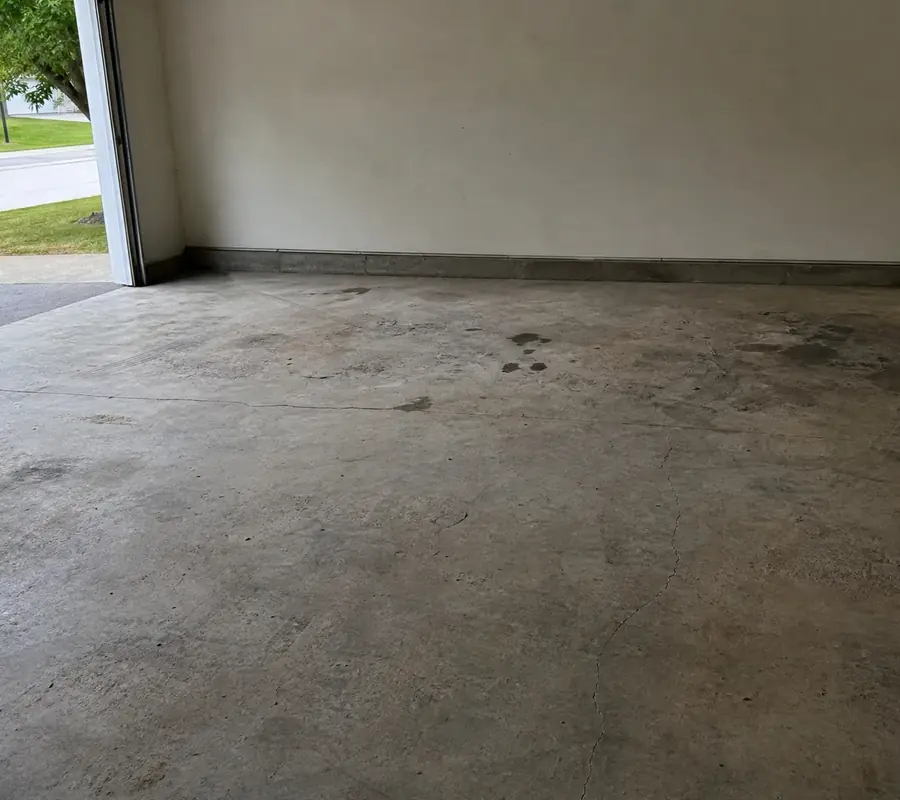
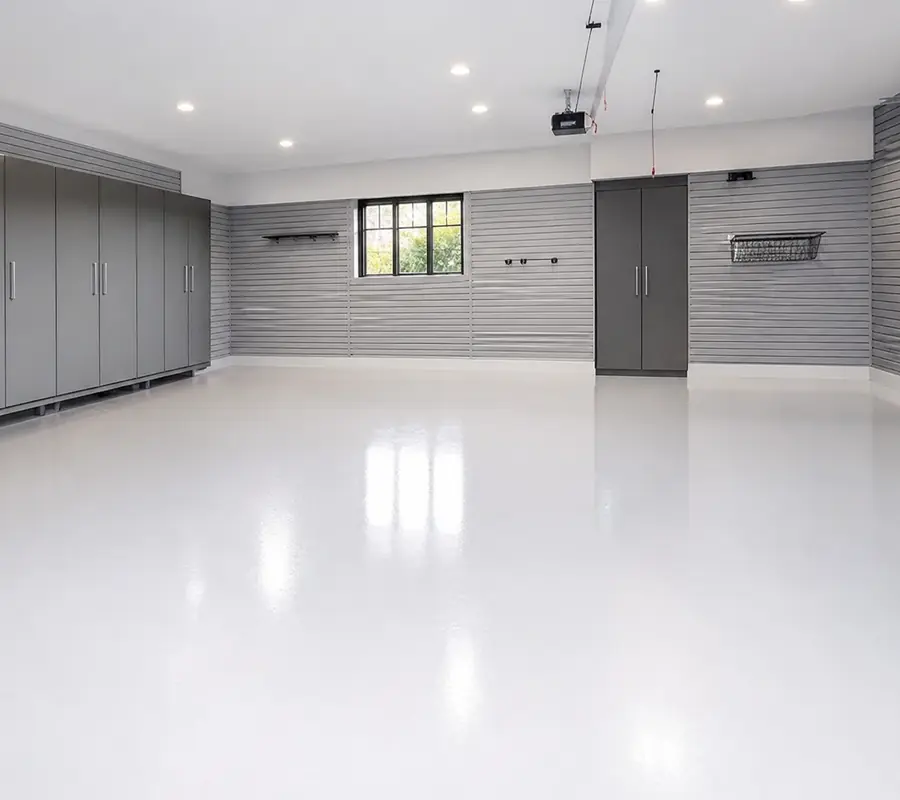
Bare concrete is porous. Oil, antifreeze, brake fluid, and road salts soak in and leave permanent stains, and the surface sheds fine dust that settles on everything stored nearby. A well-installed coating seals the surface so spills wipe up instead of soaking in. It also gives you a smooth, brighter floor that is easier to sweep and mop, and it can fill small surface flaws that make bare concrete look tired. What it does not do is repair a failing slab or make concrete indestructible. Think of it as a protective skin. The skin is only as good as what it is bonded to, which is why the preparation work underneath matters more than the color on top. It also helps keep the garage cooler to the touch underfoot in summer than a dark, stained slab looks, and it makes the whole room feel brighter when the light reflects off a clean surface.
A coating makes the most sense for a slab that is structurally sound, has only hairline or moderate cracks, and does not have heavy moisture coming up from below. It suits people who use the garage as a workshop, gym, or storage room, who park a daily driver inside, or who are tired of oil stains on their concrete. It also helps with resale appeal, since a finished garage reads as a maintained home. In our region, dry conditions generally help the application, though a slab can still hold moisture from irrigation, a high water table, or poor drainage nearby. A quick moisture check before any quote is a reasonable expectation. Ask your installer to walk the floor with you and point out any cracks, patched areas, or stains before quoting, so there are no surprises on the day of the work.
Some situations call for caution. If the slab is crumbling, heavily spalled, or has large structural cracks that keep moving, the concrete may need repair first, and a coating will not stop movement. If water regularly seeps through the floor, fix the source before coating. If you only need a basic sealed finish and do not care about color, a grind and seal can be a simpler option. And if the garage will be sold soon and the budget is tight, a thorough cleaning may do more for the money. A good installer will tell you this during the estimate rather than selling you a floor the slab cannot support. Honest advice at the estimate stage saves money for everyone, because a coating applied over a problem slab tends to fail and then has to be ground off and redone.
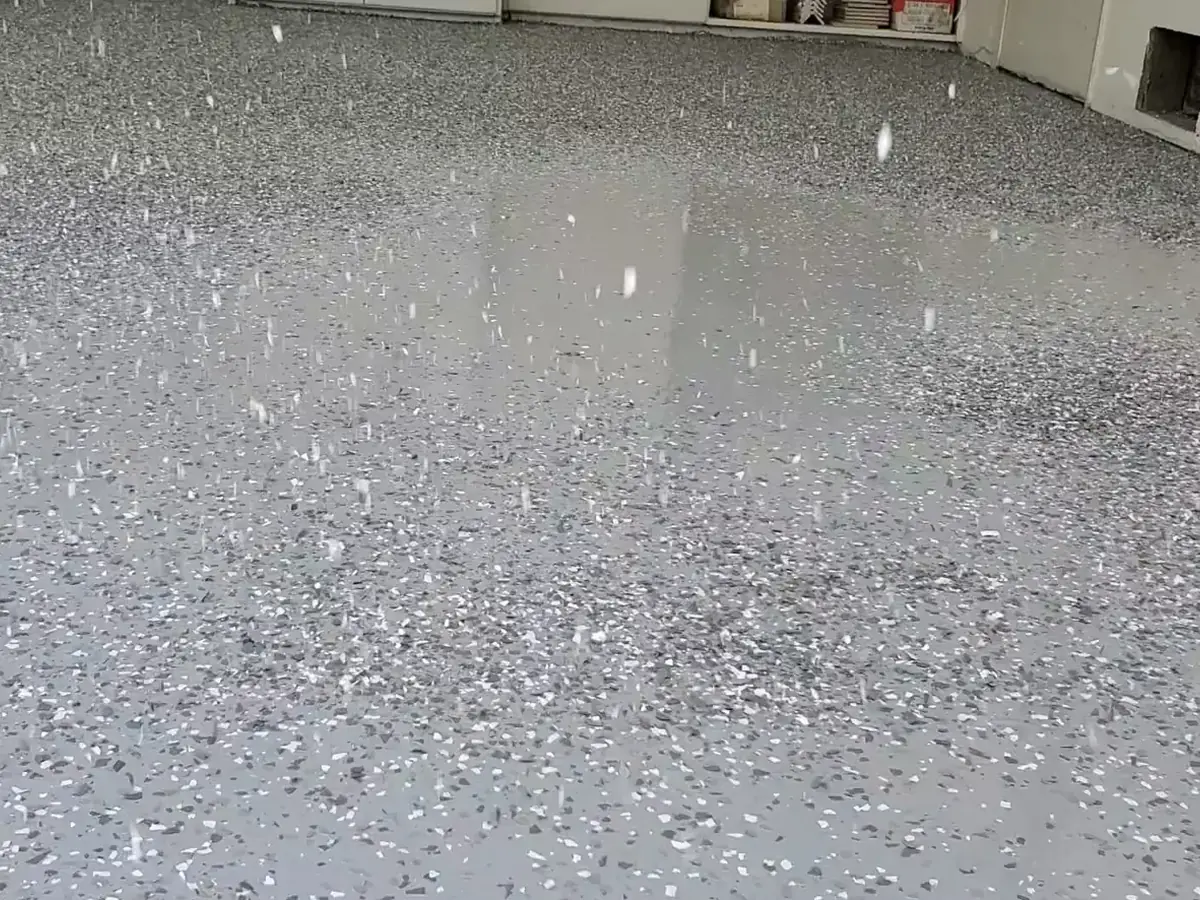
Most failures trace back to a short list of causes. The slab was not mechanically prepared, so the coating sat on top instead of bonding. Moisture vapor pushed up from below and formed bubbles. The product was a thin, low-solids kit that could not handle hot tires. Or the topcoat was a plain epoxy that yellowed under sunlight. Our standard system answers each of these. We use diamond grinding to create a bonding profile, repair cracks and joints, apply a moisture-barrier epoxy basecoat, broadcast flake to full rejection, and finish with a UV-stable polyaspartic topcoat. The materials are VOC-free, and the work is backed by a limited lifetime adhesion warranty. Each of these steps adds labor, which is part of why a professional floor costs more than a kit, but it is also why the finished floor can be backed with a real warranty.
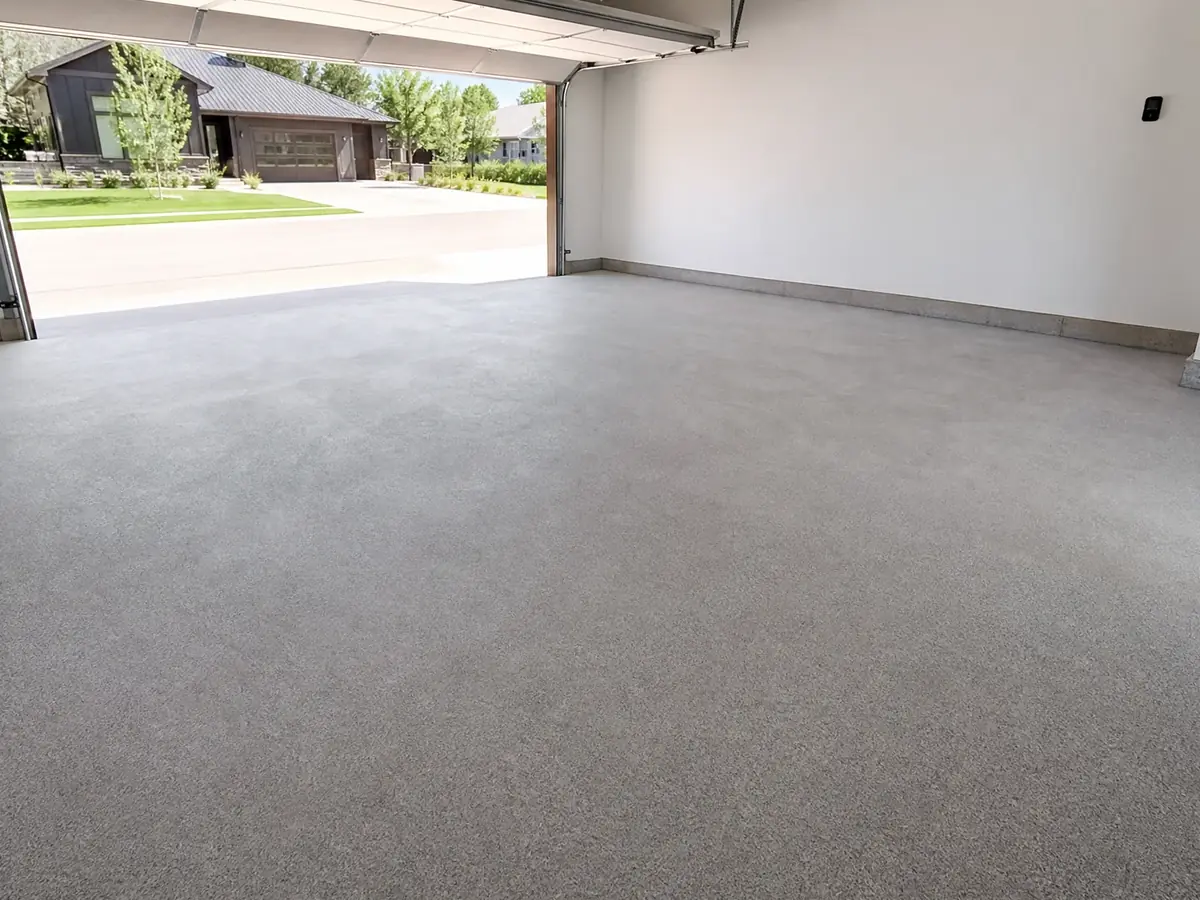
Ask how the concrete will be prepared, and listen for diamond grinding rather than acid etching or a quick cleaning. Ask what happens at cracks and control joints. Ask whether the slab will be tested for moisture and what the basecoat is designed to do about it. Ask what the topcoat is made of and whether it is UV stable. Ask how long the floor stays closed to foot and vehicle traffic, because a flake system can be finished in a day while other systems need several. Finally, ask exactly what the warranty covers and what it excludes. A contractor who answers plainly is usually one who does the work correctly. Write the answers down and compare them between companies. Vague replies, or a promise that the floor is maintenance free and indestructible, are good reasons to keep looking.
Epoxy is a good idea for a sound garage slab when the installer grinds, repairs, and uses the right layers. If you are in the Santa Clarita Valley and want an honest opinion on your floor, call Elevate Epoxy Flooring at (661) 457-5812 for a straightforward assessment. Call (661) 457-5812 for a free estimate.
It depends on the goal. A grind and seal gives a clean, protected surface with a simple look. A flake or solid color system adds color, texture, and a thicker, more stain-resistant finish. If appearance and heavy use matter, a full system is usually the better value.
Often yes, if the concrete is structurally sound. Hairline and moderate cracks and joints can be repaired before coating. Floors that are crumbling, badly spalled, or moving need concrete repair first, and an on-site inspection is the only reliable way to tell.
It depends on the system. A flake floor is usually completed in one day. Solid color takes about three days, quartz two to three days, and metallic three to four days. Your installer should give you a return-to-service timeline for foot and vehicle traffic.
Kits can work on small, clean, sound slabs, but they are thinner and rarely include real mechanical grinding. That is why many kit floors peel at the tires or the door line. A professional system costs more up front and generally lasts longer.
Durable, easy-to-clean garage floors that resist hot-tire pickup, oil and salt. Most two-car garages are done in one day.
Learn more →Full-rejection flake over a moisture-barrier epoxy basecoat, sealed with a UV-stable polyaspartic topcoat. Installed in one day.
Learn more →Diamond-ground concrete finished with a clear sealer for a natural, low-maintenance floor at the lowest installed price.
Learn more →The real downsides are installation downtime, scratches under sharp impact, yellowing when an epoxy-only topcoat sees sun, slipperiness when wet without texture, and failures caused by moisture or poor prep. Most can be reduced with proper grinding, a moisture-barrier basecoat, a UV-stable topcoat, and added texture.
Read the answer →A well-prepared floor with a UV-stable topcoat usually looks much like it did at install, with some loss of gloss and light surface marks where cars and tools see the most use. Floors with thin coatings, plain epoxy topcoats, or poor prep can show yellowing, scuffing, or lifting by year five.
Read the answer →Choose flake for the best value and the most forgiving look, solid color for a clean uniform floor, and metallic for a one-of-a-kind showpiece. Flake takes about one day, solid color three days, and metallic three to four. Flake costs $6.50 to $10 per square foot, solid $9.50 to $11.50, and metallic $12.50 to $18.50.
Read the answer →Call (661) 457-5812 or send the form at the top of the page. We reply the same day.