
Choose flake for the best value and the most forgiving look, solid color for a clean uniform floor, and metallic for a one-of-a-kind showpiece. Flake takes about one day, solid color three days, and metallic three to four. Flake costs $6.50 to $10 per square foot, solid $9.50 to $11.50, and metallic $12.50 to $18.50.
Choose flake for the best value and the most forgiving look, solid color for a clean uniform floor, and metallic for a one-of-a-kind showpiece. Flake takes about one day, solid color three days, and metallic three to four. Flake costs $6.50 to $10 per square foot, solid $9.50 to $11.50, and metallic $12.50 to $18.50.
When homeowners call about an epoxy floor, the first real decision is the finish. Flake, solid color, and metallic are the three most popular looks, and they differ in appearance, install time, upkeep, and cost. None is the best for everyone. A busy family garage and a showroom-style workshop call for different answers. This post compares the three using our real install times and approved price ranges, explains how each handles daily wear in Santa Clarita homes, and gives a simple way to choose so you can walk into your free estimate with a clear idea of what you want.
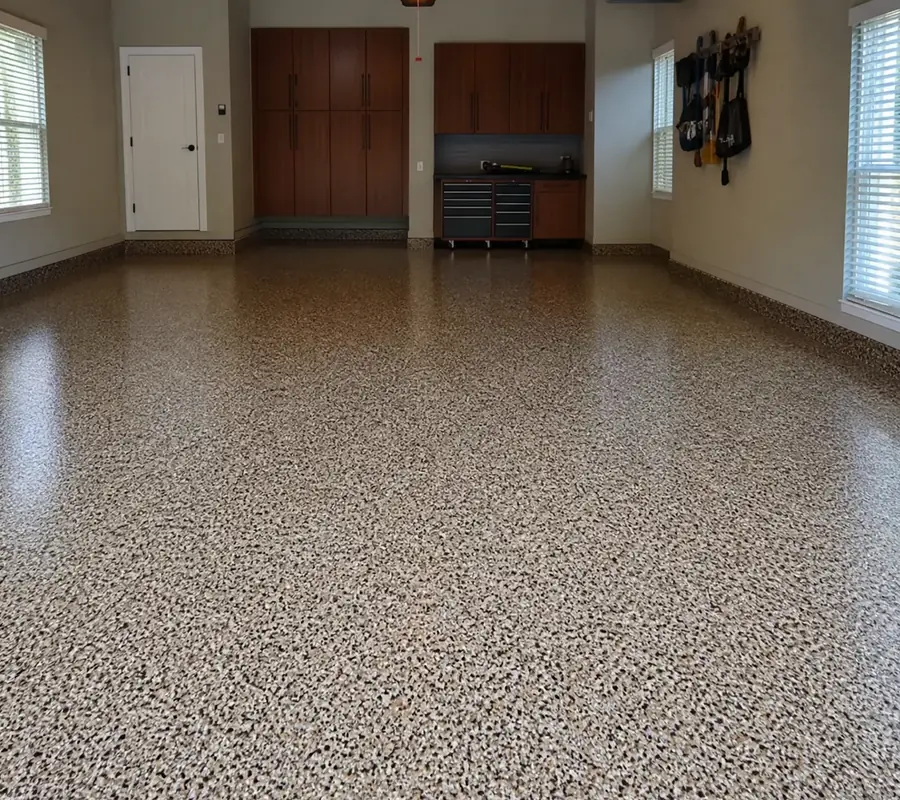
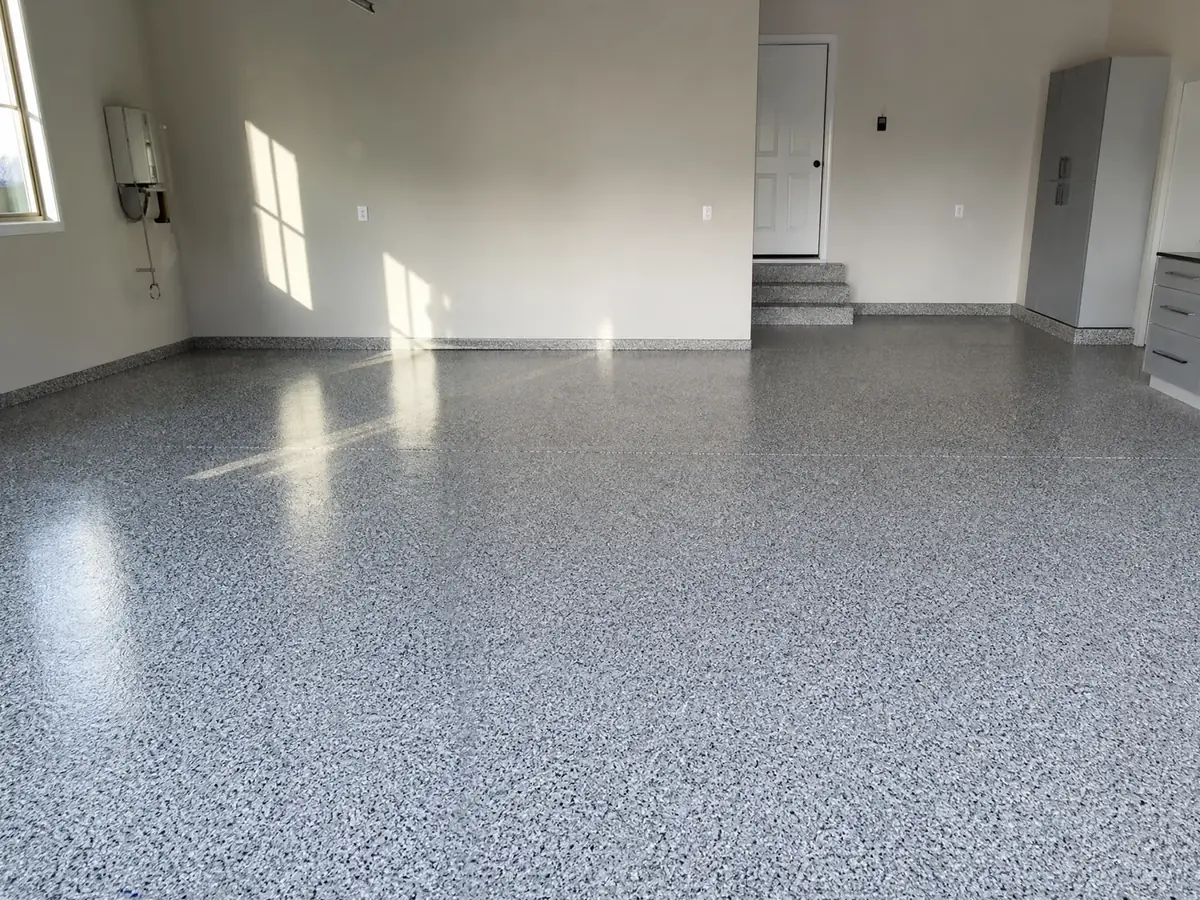
A flake epoxy floor starts with a basecoat, then colored vinyl flakes are broadcast over the wet surface until the floor is fully covered, a method called full-rejection flake broadcast. After the excess is swept away, a clear topcoat locks everything in. The result is a speckled, textured surface that hides dust, tire marks, and small scratches better than a plain color. The texture adds some natural grip, and you can add more with an anti-slip additive if you wish. Flake is also the fastest option, usually finished in one day, so your garage is back in service sooner. It is the most common choice for residential garages for good reasons: the price is lowest of the three, the look is forgiving, and the colors blend with almost any cabinet or wall color. The tradeoff is that it is less dramatic than metallic and less sleek than a smooth solid color. Flake sizes and blends vary, from small chips in earthy blends to larger mixed colors, and a color chart shows how each reads in the light of a garage rather than under a store bulb. Because the flake is broadcast to full rejection, the floor ends up with full coverage and no bare spots showing through the pattern.
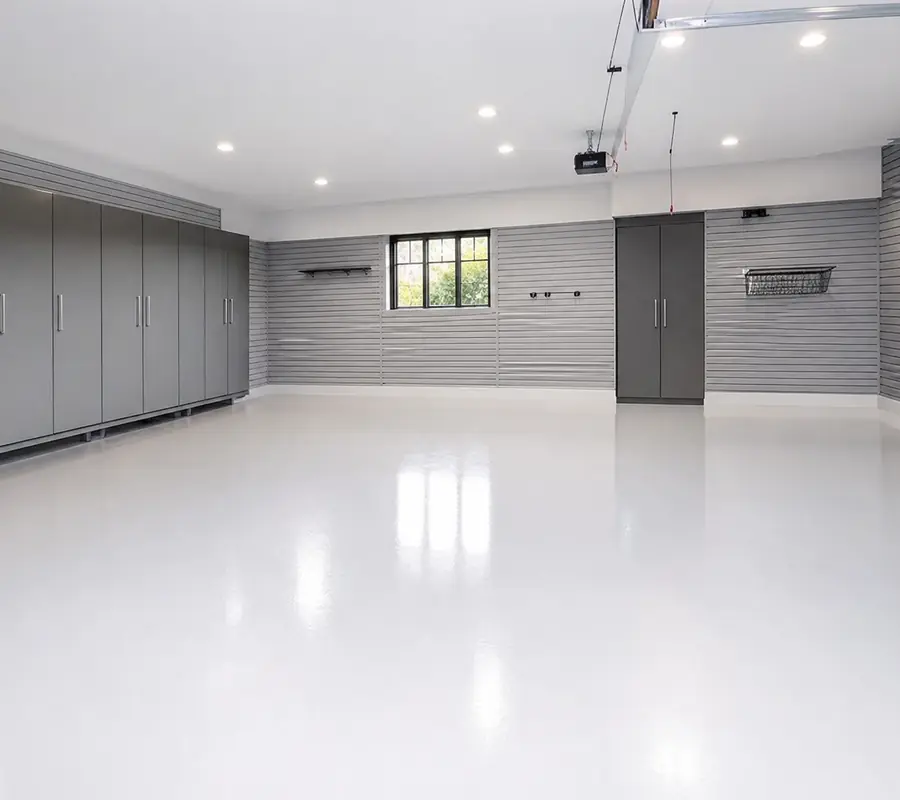
A solid color epoxy floor is a single pigmented color rolled across the ground slab and finished with a protective topcoat. It gives a smooth, even look that suits a modern garage, a studio, a workshop, or a commercial space where you want a bright, clean surface. Light colors reflect more light and make a dim garage feel larger. Because it has no flake to break up the surface, solid color shows dust, scuffs, and tire marks more readily than a flake floor, especially in darker shades, and it can be slicker when wet unless texture is added. Surface flaws in the slab can also show through more easily, so good repair work matters. Installation takes about three days. Solid color floors start at $3,800, and our approved range is $9.50 to $11.50 per square foot, or $3,800 to $4,600 for a typical two-car garage. A satin or matte topcoat softens glare and can help hide small marks, while gloss gives the brightest look. Tell us how you use the space and we can match the finish to it. Pigments also vary, and a color that looks right on a sample card can read very differently on a full floor, so check samples in your own garage light.
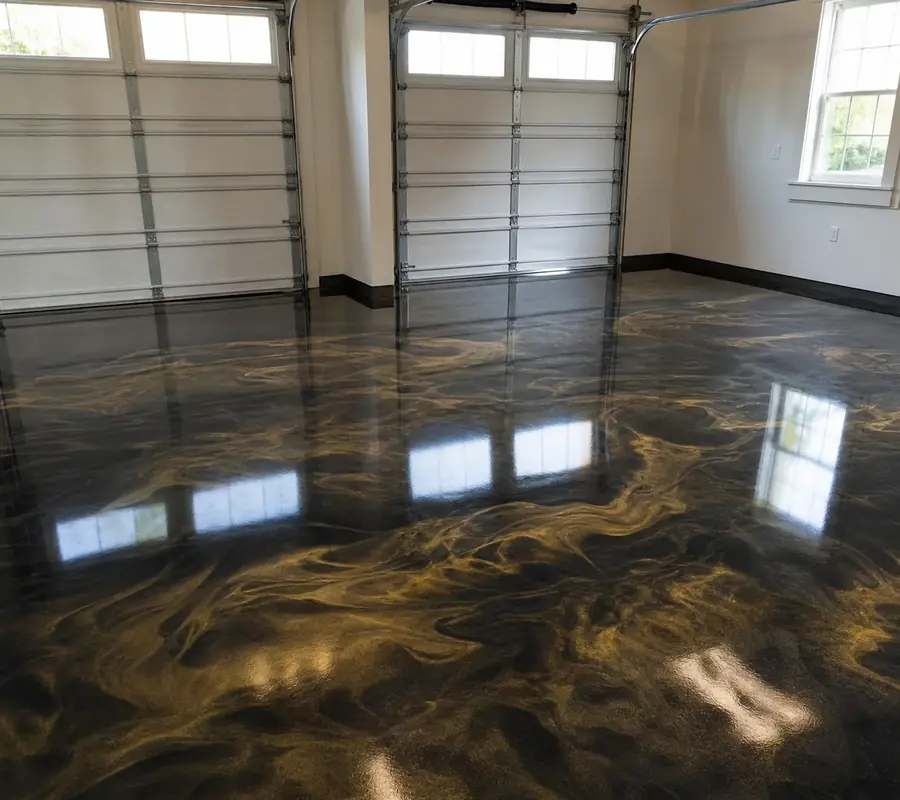
A metallic epoxy floor uses pigments that swirl and pool as the material is worked across the slab, producing depth and movement that looks like marble, water, or molten metal. No two floors are the same, so the result is truly one of a kind. It works well in showrooms, living spaces, entry areas, and any garage where appearance matters most. It also takes the most time and skill. Installation usually runs three to four days, and the price reflects that, at $12.50 to $18.50 per square foot, or about $5,000 to $7,400 for a two-car garage. Metallic floors are glossy and show scratches and dust more than flake, so they suit lighter use or owners willing to care for them. Colors and patterns also look different in person than in photos, so ask to see samples and review the color chart before you commit to a palette. Think of it as a decorative finish first and a work surface second. If you want to roll engine stands and heavy carts across the floor every weekend, a flake system may be easier to live with. If you love the idea but not the price, you can also use metallic in an accent area such as an entry or a showroom corner instead of the whole garage.
Here are the real numbers, side by side. A flake epoxy floor takes about one day and runs $6.50 to $10 per square foot, or $2,600 to $4,000 for a two-car garage up to 400 square feet. A solid color epoxy floor takes about three days and runs $9.50 to $11.50 per square foot, or $3,800 to $4,600. A metallic epoxy floor takes three to four days and runs $12.50 to $18.50 per square foot, or $5,000 to $7,400. Our minimum project is $2,600. If you want a quartz finish, install time is two to three days, with a range of $9 to $16.50 per square foot. These are the numbers to expect when you ask how much does epoxy cost, but your final price depends on slab condition, repairs, and square footage, which we confirm in a free estimate. Prices here are for residential garages. Outdoor surfaces and commercial floors are quoted separately after we look at the site. Where a sealed concrete finish is enough, grind and seal runs $6.50 to $9 per square foot, or $2,600 to $3,600. Patios, driveways, and pool decks run $8 to $12 per square foot, or $3,200 to $4,800.
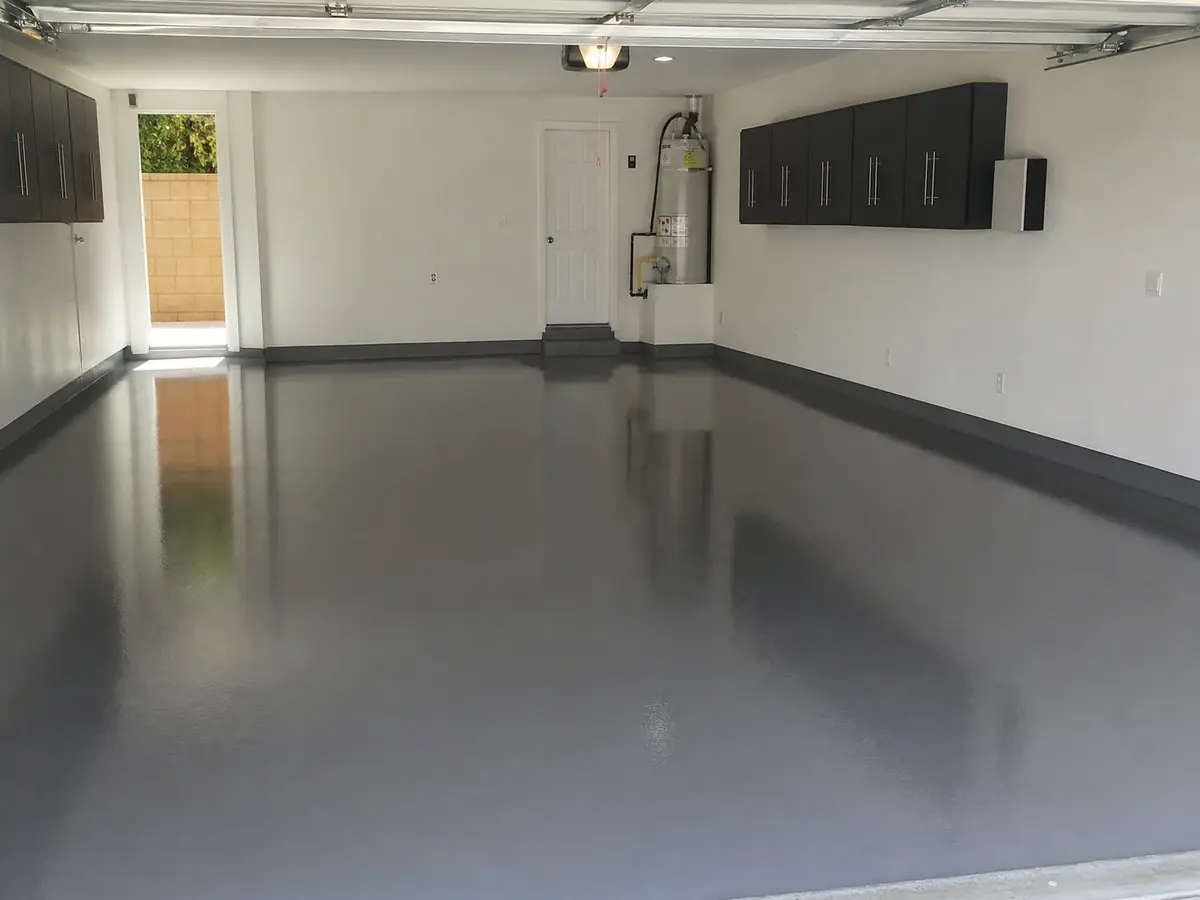
All three finishes use the same underlying idea, which is a diamond-ground slab, a bonded basecoat, and a protective topcoat, and a UV-stable polyaspartic topcoat is a common choice where sun reaches the floor. Differences show up in daily life. Flake hides the most, so a family garage with bikes, wet shoes, and tire marks tends to look cleaner for longer. Solid color needs more frequent wipe-downs to keep it looking crisp. Metallic looks best with regular sweeping, a soft mop, and avoiding dragging heavy items, since scratches show in a glossy finish. In summer heat, sweep grit off the floor because it grinds under tires and shoes. None of the finishes is scratch-proof or maintenance-free, and anyone who promises that should be treated with caution. Our limited lifetime adhesion warranty covers the bond on residential floors, and what a floor looks like after five years depends on use and care. Wipe up spills when they happen, avoid harsh solvents, and use a soft mop instead of abrasive pads. Pool deck and patio floors are a separate case and are quoted for outdoor exposure.
If you want the best balance of price, speed, and forgiving looks, choose flake. If you want a clean, simple, modern surface and you are comfortable with some extra upkeep, choose solid color. If the floor is part of the design of your space and budget allows, choose metallic. A few other questions help. How soon do you need the garage back? Flake wins. Is the floor in a workshop with tools and carts? Flake or a textured solid is easier to live with. Is the garage dim? A light solid color helps. Do you have a strong color theme? Check the color chart. Think about resale, too, since neutral flake blends are broadly appealing, while a bold metallic is more personal. If you cannot decide, send us photos or book a free estimate, and we will walk through the options with your actual slab, lighting, and budget in mind. Remember that the cheapest finish is not always the right one if it does not suit how you live, and the most expensive one is not always worth it either. We will give you an honest recommendation, even when that is the lower-priced option.
Flake is the practical favorite, solid color is clean and modern, and metallic is the showpiece. Pick based on how you use the floor and how much upkeep you want. For a free estimate and honest advice, call Elevate Epoxy Flooring at (661) 457-5812. Call (661) 457-5812 for a free estimate.
Flake is cheaper. Our approved range for flake is $6.50 to $10 per square foot, against $9.50 to $11.50 for solid color. A two-car garage up to 400 square feet runs $2,600 to $4,000 for flake and $3,800 to $4,600 for solid color.
A flake floor takes about one day, solid color about three days, and metallic three to four days. Quartz and sand finishes take two to three days. Follow the return-to-service guidance before parking on any of them.
Yes. Metallic runs $12.50 to $18.50 per square foot, or about $5,000 to $7,400 for a two-car garage. It takes longer and needs more skill to install, which is where the extra cost comes from.
It costs more, takes longer to install, and shows scratches and dust more readily because it is glossy. Each floor is also unique, so the finished look cannot be matched exactly to a photo. It rewards careful use and regular cleaning.
For most family garages, a flake epoxy floor is the best fit. It is the fastest and lowest-priced, hides dirt and tire marks, and gives some grip. Choose solid or metallic when appearance matters more than upkeep.
Yes, but it is not simple. A new color requires grinding or properly preparing the existing coating before a new system goes on. Picking a neutral blend you like for years saves effort and cost.
Full-rejection flake over a moisture-barrier epoxy basecoat, sealed with a UV-stable polyaspartic topcoat. Installed in one day.
Learn more →A clean, seamless pigmented floor in gloss, satin or matte for garages, workshops, interiors and commercial spaces.
Learn more →Hand-guided metallic pigments create marble and lava effects, so no two floors look alike. A statement floor for homes and showrooms.
Learn more →Neither is simply better. Epoxy bonds well to prepared concrete, builds thickness, and works as a moisture-barrier basecoat. Polyaspartic resists sun yellowing and cures fast, which makes it a strong topcoat. For most garages the best system pairs an epoxy basecoat with a polyaspartic topcoat, so each material does the job it does best.
Read the answer →Hot tire pickup is when warm tires soften or pull at a garage floor coating, leaving marks, ridges, or peeled patches where the tires sit. You prevent it with thorough diamond grinding, a well-bonded quality basecoat, a UV-stable polyaspartic topcoat, and giving the floor its full cure time before parking.
Read the answer →Epoxy peels when it never bonded properly to the concrete. The usual causes are poor surface preparation, moisture vapor rising through the slab, a thin or low-quality coating, oil or old sealer left on the surface, and driving or parking on it before it cured. Fixing it means removing the failed coating and re-preparing the slab.
Read the answer →Call (661) 457-5812 or send the form at the top of the page. We reply the same day.