
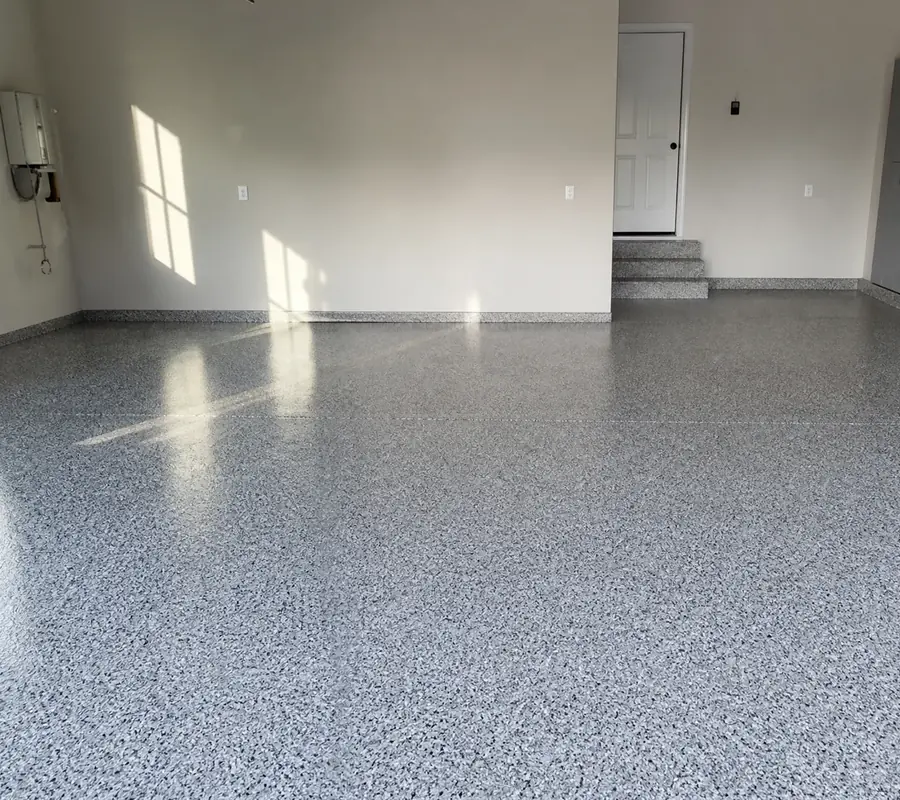
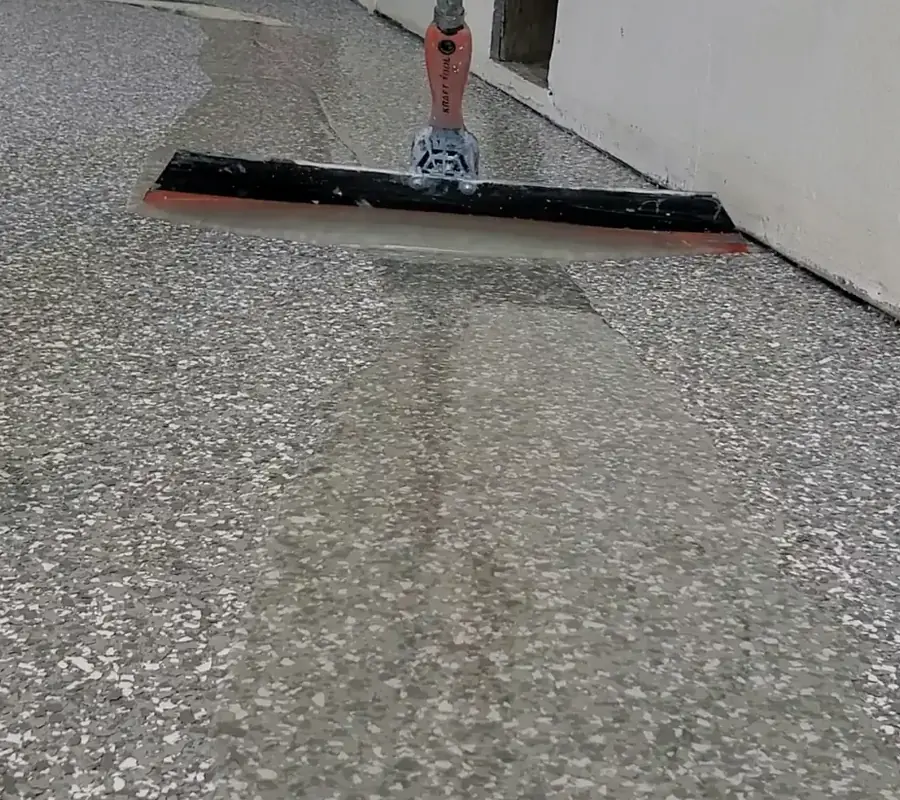
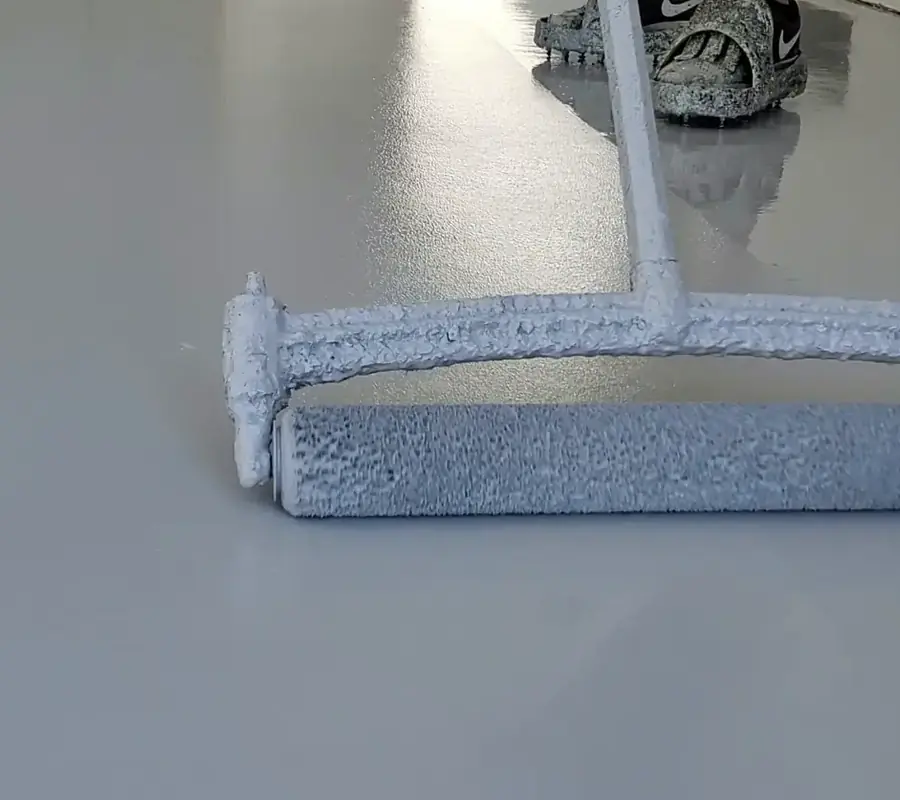
Neither is simply better. Epoxy bonds well to prepared concrete, builds thickness, and works as a moisture-barrier basecoat. Polyaspartic resists sun yellowing and cures fast, which makes it a strong topcoat. For most garages the best system pairs an epoxy basecoat with a polyaspartic topcoat, so each material does the job it does best.
Neither is simply better. Epoxy bonds well to prepared concrete, builds thickness, and works as a moisture-barrier basecoat. Polyaspartic resists sun yellowing and cures fast, which makes it a strong topcoat. For most garages the best system pairs an epoxy basecoat with a polyaspartic topcoat, so each material does the job it does best.
If you have been shopping for a garage floor coating, you have probably noticed that epoxy and polyaspartic are sold as rivals. Some sales pitches treat one as a miracle and the other as outdated. The truth is more useful and less dramatic. These are two different resins with different strengths, and the question is rarely which one to pick alone. It is which one belongs in which layer. This post compares them fairly, including where polyaspartic has real drawbacks, so you can judge any quote you receive in Santa Clarita with clear eyes.
Epoxy is a two-part resin that has been used on concrete for decades. You mix a resin with a hardener, apply it, and it cures into a hard, well-bonded film. It can be thinned to soak into a ground slab or built up thick to fill small imperfections. Polyaspartic is a newer relative of polyurea. It is also a two-part system, but it reacts much faster and is known for clarity and resistance to ultraviolet light. Both are chemistry choices made for a particular layer, not brands of quality. A badly prepared slab will fail under either one, and a well-prepared slab will give both a fair chance. When someone says one is simply better, ask which layer they mean, because the answer changes depending on whether they are describing the part that grips the concrete or the part that faces the sun and the tires. In practice that means the comparison only makes sense layer by layer. A basecoat has to grip, fill, and block moisture. A topcoat has to hold up to sun, chemicals, wheel traffic, and the occasional dropped tool. Epoxy and polyaspartic are each good at one of those jobs and merely acceptable at the other.
Epoxy earns its place at the bottom of the system. It penetrates and bonds into a diamond-ground slab, and it gives installers more working time to spread material evenly and broadcast flake across it. A moisture-barrier epoxy basecoat is also the usual answer when vapor rises through the slab, which can happen with any slab poured on grade, including many tract-home garages. Epoxy is also generally a lower-cost material, which helps keep a project near the approved ranges when you ask how much does epoxy cost. Its weak spot is sunlight. Epoxy on its own can slowly turn amber in direct UV, particularly in light colors or near an open garage door. That is a limit of the material, not a flaw in the install, and it is the main reason people look at a second product for the top layer. Epoxy is also the material used for the thicker build coats that cover small surface flaws, which is why a basecoat is rarely skipped on a slab with hairline cracks or old patches. If a quote lists only a thin single coat, ask what is being done about the bond and the moisture.
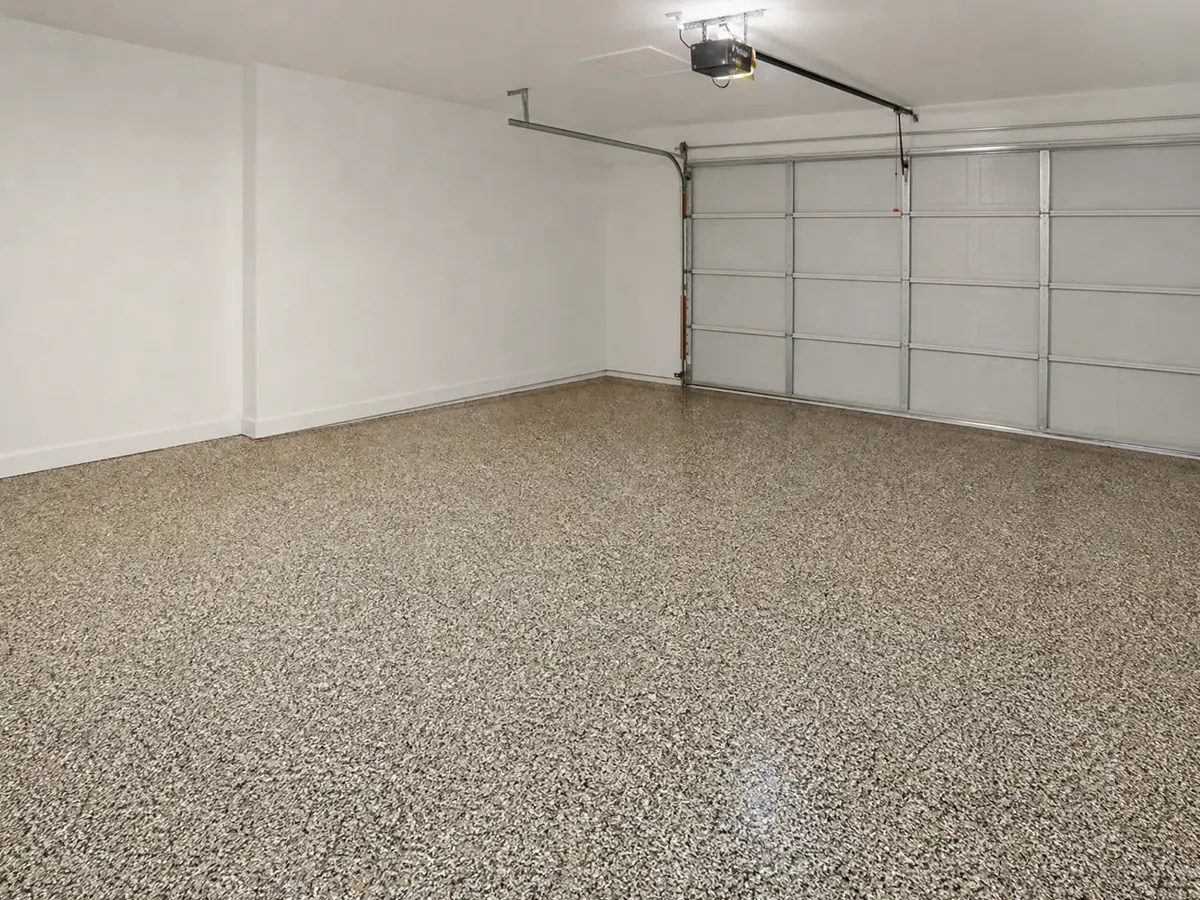
Polyaspartic shines as a topcoat. It stays clear under UV, so a flake floor near a sunny door is less likely to turn amber over time. It cures quickly, which can shorten the number of days your garage is out of service, and it can be applied in cooler weather than many epoxies. It also resists abrasion and chemicals well, and it can be formulated in gloss or matte. The drawbacks are real, though. Working time is short, so the crew has to be fast and experienced or the finish can show lap marks. Material cost is usually higher. It also does not replace a proper moisture-barrier basecoat on a damp slab. Used alone as a thin coat over poor prep, it can still lift. It is a very good top layer, not a shortcut around grinding. If you park a car in the driveway for most of the day and pull it in hot, a clear and tough topcoat matters more than almost any other choice you make. Matte versions also reduce glare and can feel less slick underfoot, with a texture additive available when you want more grip.
A common professional build is a diamond-ground slab, a pigmented or clear epoxy basecoat, full-rejection flake broadcast, and a UV-stable polyaspartic topcoat. The epoxy handles the bond and any moisture concern. The flake gives color, texture, and hides marks. The polyaspartic seals the surface against sun, chemicals, and tire marks. In Santa Clarita Valley, where summer sun, heat off the pavement, and hard-water spotting all test a garage floor, that division of labor makes sense. Each resin is used where its strengths matter and its weaknesses are protected. This is how our flake epoxy floor systems are built. Ask any installer to name the product in each layer, and be wary of an answer that is only a marketing term like hybrid or ceramic coating with no explanation of what sits under the topcoat. A simple test of an installer is whether they can explain, in plain words, why each layer is there and what happens if it is left out. That kind of answer tells you whether the crew understands the system or is simply following a script from a supplier. Also ask whether the topcoat is applied in one pass or two, and whether the floor is left to cure fully before cars return, since both affect how the finished surface wears.
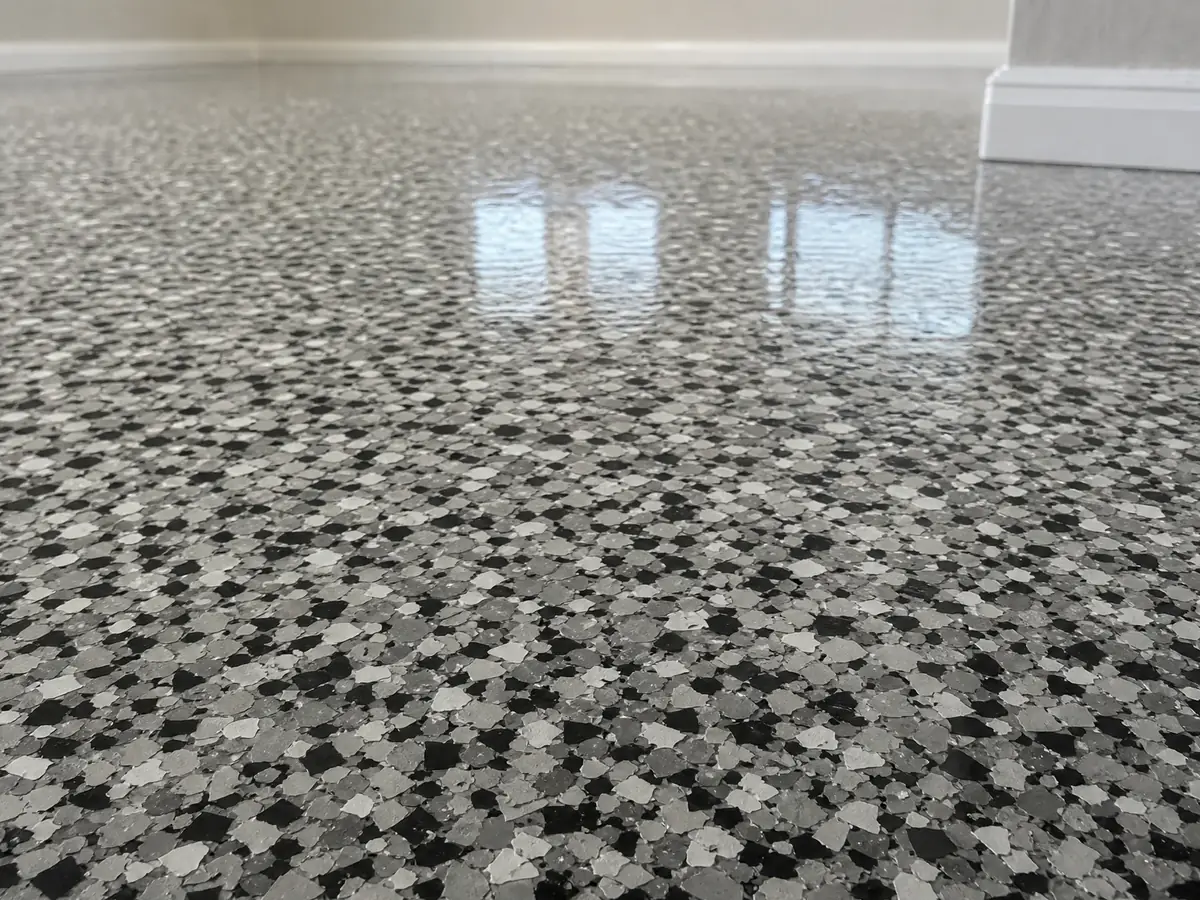
Because the pairing uses two materials, it can cost more than a single coat, but it is also the part of the system that protects the investment. Our approved ranges for a flake epoxy floor run from $6.50 to $10 per square foot, which is about $2,600 to $4,000 for a two-car garage up to 400 square feet, with a $2,600 minimum project. A flake system is typically finished in one day. Store-bought polyaspartic and epoxy kits exist, and a skilled homeowner can use them, but the fast cure of polyaspartic is hard on beginners, and most kits do not include diamond grinding equipment. The prep is where most home projects go wrong, not the resin. If you want to compare your own garage, a free estimate lets us measure the slab and talk through the layers before you decide. Whichever route you take, compare quotes by the system described, not by the name of the top layer alone. Remember also that the minimum project is $2,600, so very small areas are priced at that floor rather than by the square foot, and that large or heavily damaged slabs may need extra repair work that changes the total.
Start with how the garage is used. If it is a closed, mostly shaded space with light vehicle traffic, an epoxy and flake system with a quality topcoat will serve most families well. If the door faces west, stays open while you work, or the car comes in hot from summer pavement, a polyaspartic topcoat is a sensible upgrade. If your slab is damp, new, or has a history of moisture, focus first on testing and a moisture-barrier basecoat, because no topcoat fixes vapor pushing up from below. Then think about finish. A flake epoxy floor hides dust and tire marks better than a plain solid color, and a color chart helps you pick a blend that suits your walls and cabinets. Finally, ask about the warranty. Ours is a limited lifetime adhesion warranty on residential work, with a 3-year warranty for commercial and outdoor work, and we are happy to explain what it covers and what it does not. A short conversation about your slab, your parking habits, and your budget usually settles the choice faster than any comparison chart.
Epoxy and polyaspartic are not enemies. Use epoxy where bond and moisture matter, and polyaspartic where sun and wear matter. If you want a plain answer about your own garage, call Elevate Epoxy Flooring at (661) 457-5812. Call (661) 457-5812 for a free estimate.
Not across the board. Polyaspartic is better as a UV-stable, fast-curing topcoat, while epoxy is better as a bonding and moisture-barrier basecoat. Most good garage systems use both, with epoxy underneath and polyaspartic on top.
Usually yes, per gallon, and it can take more skill to apply. Because it is often used only as the topcoat, the extra cost on a full system is smaller than people expect. Ask for each layer to be listed on your quote.
It has a short working time, a higher material cost, and it still depends on proper prep. It is not a substitute for a moisture-barrier basecoat on a damp slab. Poorly applied coats can show lap marks.
It depends on preparation, traffic, sun, and how the system is built, so no honest installer can promise a number of years. We back residential work with a limited lifetime adhesion warranty, which covers the bond to the concrete.
A quality polyaspartic topcoat over a well-bonded, fully cured system resists hot tires well, but it is the whole system that matters. Poor grinding or an uncured basecoat can still let a coating lift under tires.
You can buy kits, but results depend on grinding the slab, testing for moisture, and working fast before the material sets. Many first-time projects fail on prep rather than product. Professional equipment makes a real difference.
Durable, easy-to-clean garage floors that resist hot-tire pickup, oil and salt. Most two-car garages are done in one day.
Learn more →Full-rejection flake over a moisture-barrier epoxy basecoat, sealed with a UV-stable polyaspartic topcoat. Installed in one day.
Learn more →Diamond-ground concrete finished with a clear sealer for a natural, low-maintenance floor at the lowest installed price.
Learn more →Hot tire pickup is when warm tires soften or pull at a garage floor coating, leaving marks, ridges, or peeled patches where the tires sit. You prevent it with thorough diamond grinding, a well-bonded quality basecoat, a UV-stable polyaspartic topcoat, and giving the floor its full cure time before parking.
Read the answer →Epoxy peels when it never bonded properly to the concrete. The usual causes are poor surface preparation, moisture vapor rising through the slab, a thin or low-quality coating, oil or old sealer left on the surface, and driving or parking on it before it cured. Fixing it means removing the failed coating and re-preparing the slab.
Read the answer →It depends on the coating system, the products used and the temperature, so get a return-to-service date in writing. Expect to walk on the floor first, drive on it later, and reach full cure after that. Install time is a separate number: flake takes one day, solid color three, metallic three to four, quartz two to three.
Read the answer →Call (661) 457-5812 or send the form at the top of the page. We reply the same day.